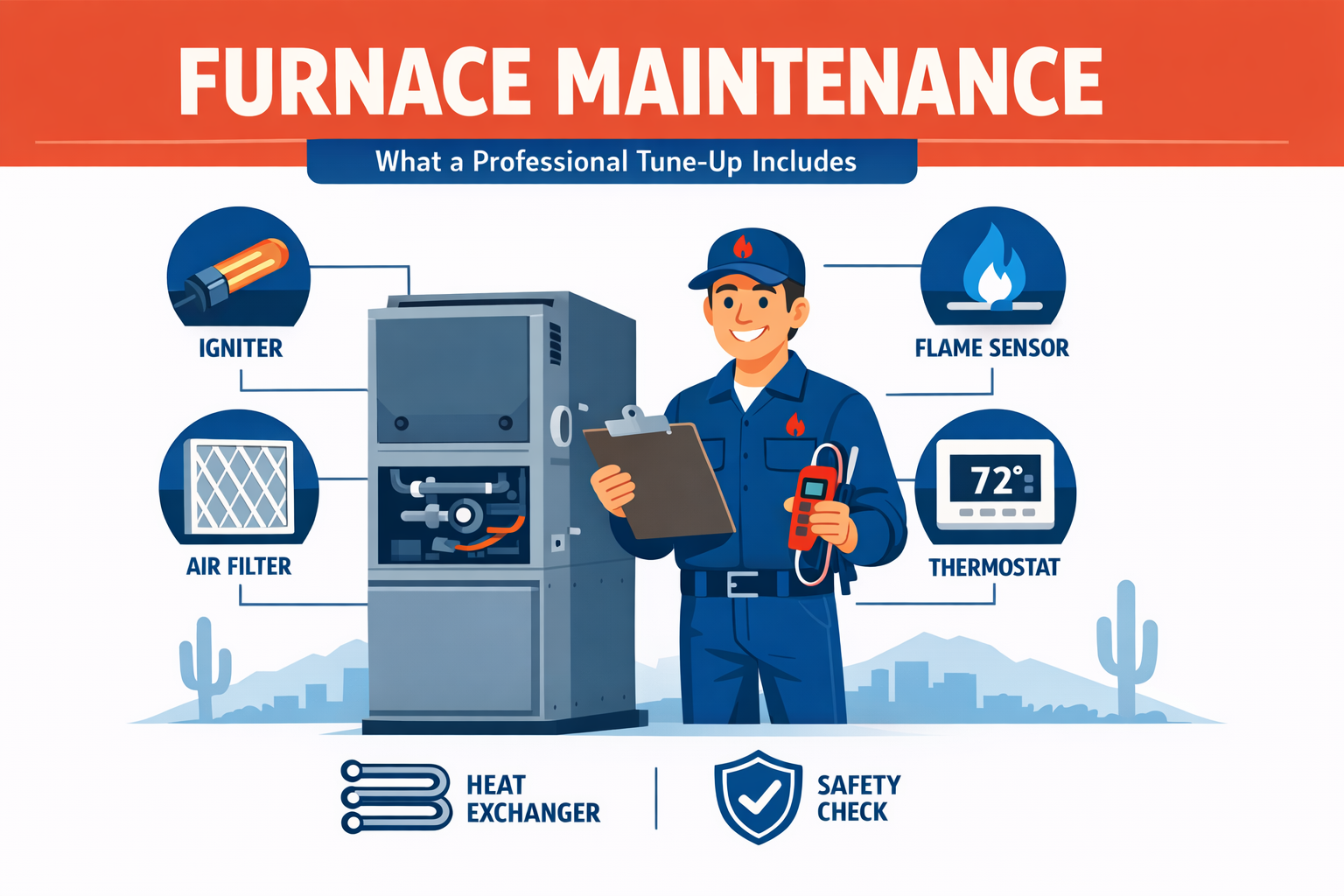
Furnace maintenance is the annual, professional tune-up that keeps your heating system safe, efficient, and reliable through Phoenix’s surprisingly chilly winter nights. In plain terms, it means a trained technician inspects, cleans, and tests the parts that actually make heat—the igniter, flame sensor, burners, heat exchanger, filter, blower, and safety controls—then confirms the whole system runs the way the manufacturer intended. Done once a year before the cold arrives, it lowers energy bills, prevents mid-season breakdowns, and protects your family from carbon monoxide risks. Below, we walk you through exactly what a real tune-up covers, the warning signs that tell you it’s overdue, and the best time to book. We’re Discount AC & Refrigeration of Phoenix, and heating is part of what our team handles every single day.
Why Furnace Maintenance Matters More Than Most Phoenix Homeowners Think
It’s easy to assume that a city famous for triple-digit summers doesn’t need to worry about heating. Yet our winter overnight lows regularly slip into the 30s and 40s, and most homes across the Phoenix metro area lean on a gas furnace or a heat pump for several months a year. Because those systems sit idle all summer, the first cold snap is exactly when hidden problems surface—usually at night, when nobody wants to lose heat.
Regular furnace maintenance protects four things at once: your comfort, your wallet, your equipment, and your safety. A clean, correctly tuned furnace uses less fuel to produce the same warmth, which shows up as lower utility bills all season. It also runs quieter and heats more evenly, so you stop chasing the thermostat room to room. Just as important, many manufacturers require documented annual service to keep the warranty valid—skipping it can quietly void coverage on an expensive part like the heat exchanger.
Then there’s safety, which we never take lightly. A furnace burns fuel, and worn or dirty components can lead to incomplete combustion or, in rare cases, a cracked heat exchanger that lets carbon monoxide into your air. Our technicians are trained to catch those issues early, and we treat every visit as a chance to verify your home is heating cleanly. That commitment to real, hands-on inspection is why so many families across Phoenix and Scottsdale trust us with both their cooling and their furnace service and repair.
| Component | Why It Matters | If It’s Skipped |
|---|---|---|
| Igniter / Ignition | Starts every heating cycle | No-heat calls on the coldest nights |
| Flame Sensor | Confirms the burner actually lit | Short cycling; furnace shuts itself down |
| Air Filter | Protects airflow & air quality | Overheating, higher bills, dusty rooms |
| Heat Exchanger | Separates combustion from your air | Carbon monoxide risk if cracked |
| Blower Motor | Moves warm air through the home | Weak, uneven heat and strain on parts |
| Thermostat | Tells the furnace when to run | Comfort swings and wasted energy |
| Safety Controls | Shut the system down if unsafe | Hidden hazards go undetected |
The Furnace Tune-Up: What the Technician Actually Checks
When homeowners ask us what furnace maintenance includes, they’re usually picturing a quick filter swap. A genuine tune-up goes much deeper. Our technicians follow a written, step-by-step checklist that mirrors industry best practices, so nothing gets missed and you get the same thorough visit every year. Here’s what happens once we arrive.
Igniter, Flame Sensor, and Filter—the Three That Cause the Most No-Heat Calls
If a furnace refuses to start on a cold morning, these three parts are the usual suspects, so we inspect them closely. The igniter is what lights each heating cycle. On most modern systems it’s a hot-surface igniter—a small ceramic element that glows red-hot. It’s fragile and wears out over time, so we test it, check its resistance, and look for cracks or hairline fractures that signal it’s about to fail. Catching a tired igniter during maintenance means we can replace it on our schedule instead of during an emergency.
The flame sensor is a thin metal rod that confirms the burner actually ignited. Over a season it develops a light coating of oxidation, and once that film builds up the sensor can no longer “see” the flame. When that happens, the furnace shuts the gas off as a safety measure and short cycles—turning on and off every few minutes. We carefully clean the flame sensor and verify the microamp signal, one of the simplest ways to prevent a frustrating shutdown.
The air filter is the most overlooked part of all, and it affects everything downstream. A clogged filter chokes airflow, forces the blower to work harder, can trip the high-limit switch, and drags down your indoor air quality. We inspect it, replace it when needed, and show you how to check it yourself between visits—most homes do best with a fresh filter every one to three months. Pairing a clean filter with well-sealed ductwork keeps warm air moving efficiently to every room.
From there, the visit continues through the rest of the system. We inspect the heat exchanger visually—and with a mirror or camera when access allows—for rust, cracks, or perforations, because this is the barrier that keeps combustion gases out of your breathing air. We clean and inspect the burners, check gas pressure and connections for leaks, and test the blower motor and its amp draw. We run a combustion and carbon monoxide check, confirm the flue is venting properly, tighten electrical connections, and calibrate the thermostat so the temperature you set is the temperature you feel. Finally, we cycle the furnace through a full startup and shutdown while watching the flame, then walk you through anything we found in plain language. This kind of transparent, hands-on diagnostic work is the same standard we bring to all of our residential HVAC services.
Warning Signs Your Furnace Needs Attention Now
Furnaces rarely fail without warning. Between annual tune-ups, it pays to know the signals that something is off so you can call before a small issue becomes a cold house. Here are the ones our team hears about most from homeowners in Mesa, Tempe, and Chandler.
- A yellow or flickering flame instead of steady blue. A healthy gas flame burns crisp blue. Yellow, orange, or flickering flames can point to incomplete combustion and deserve a prompt inspection.
- Unusual noises. Banging, rattling, screeching, or a delayed “whoomp” at startup often trace back to ignition problems, a loose blower, or debris in the system.
- Short cycling. If the furnace turns on and off every few minutes without reaching temperature, a dirty flame sensor, overheating, or a thermostat issue is usually to blame.
- Rising energy bills. A sudden jump in your gas or electric bill—without a change in the weather—means the system is working harder than it should.
- Weak or uneven heat. Cold rooms, weak airflow, or air that never feels quite warm enough can signal blower, filter, or duct problems.
- Strange odors or extra dust. A brief burning smell on the first run of the season is normal; a persistent musty, electrical, or gas-like odor is not.
One warning sign is different from all the others. If you ever smell rotten eggs or sulfur, suspect a gas leak: leave the home immediately, then call your gas utility and emergency services from a safe distance. Once you’re safe, our 24/7 emergency team is here to help you sort out the heating side. For anything less urgent—like a furnace that’s simply aging or a repair that keeps coming back—it may be time to talk about system replacement or a modern ductless mini-split option that fits your home better.
Frequently Asked Questions — Furnace Maintenance
How often should I schedule furnace maintenance? +
Once a year is the standard, ideally before the heating season begins. In Phoenix that means late summer through early fall—July, August, or September—so your system is ready before the first cold nights and you avoid the seasonal rush.
What’s the difference between a tune-up and a repair? +
A tune-up is preventive: we inspect, clean, and test the whole system to keep it running well and catch small problems early. A repair fixes something that has already failed. Consistent maintenance is how most homeowners avoid the surprise repair altogether.
Can I do any furnace maintenance myself? +
Yes—changing the air filter regularly, keeping vents clear, and testing your carbon monoxide detectors are great habits. Anything involving gas, the burners, the heat exchanger, or electrical components should be left to a licensed technician for safety.
Does maintenance really lower my heating bills? +
A clean, correctly calibrated furnace uses less fuel to deliver the same warmth, so most homes see steadier bills across the season. Maintenance also extends equipment life and helps keep manufacturer warranties valid, which protects you from larger costs down the road.
Do you service both furnaces and heat pumps? +
We do. Many Phoenix homes use heat pumps or dual-fuel setups, and our technicians are trained on both. Whether you have a gas furnace or a heat pump, we tailor the tune-up to your equipment and serve homes and businesses across the metro area.
How and When to Schedule Furnace Maintenance in Phoenix
The best time to book is before you need the heat—late summer through early fall, while our schedule is open and demand is light. Getting on the calendar in the off-season means we can perform a detailed inspection without the rush, and it gives you time to plan for any recommended fixes before the first cold night. Waiting until the furnace won’t start almost always means a longer wait and a colder house.
What can you expect from our team? Experience you can verify. Discount AC & Refrigeration of Phoenix has spent years serving Valley homeowners, and every technician we send is trained, background-checked, and committed to ongoing education as heating technology evolves. We arrive on time, protect your home, explain what we find with photos when it helps, and give you honest options instead of pressure. You can read more about our team and our story and see why our reputation across the community keeps growing.
Many customers choose to fold their tune-up into a maintenance program, which covers heating in the fall and cooling in the spring in one simple plan—so you never have to remember to call. Business owners can set up the same peace of mind through our commercial HVAC services. Wherever you are—from Gilbert to Glendale—we make it easy to get on the schedule. Just reach out to our office and we’ll find a time that works.
Ready for a Warmer, Safer Winter? Let’s Get Your Furnace Ready
Here’s the simplest way to think about furnace maintenance: it’s the difference between a heating system you trust and one you hope holds up. A single annual visit protects your comfort, trims your energy costs, and—most importantly—keeps your family safe from the hazards a neglected furnace can hide. If you found this helpful, our blog also covers how heat pump service differs from gas heating, which is worth a read if you’re weighing your options.
When you’re ready, we’d love to help. Call Discount AC & Refrigeration of Phoenix at (602) 889-1367, or contact us online, to schedule your furnace maintenance today. You can also find us and read real customer reviews on our Google Business listing here—stop by our Google Maps location to see the neighborhoods we serve and leave a review after your visit. Let’s make sure your home stays warm all winter, one thorough tune-up at a time.