

Air conditioner maintenance is the most affordable way to keep your cooling system reliable, efficient, and ready for triple-digit Arizona heat. In this annual guide, we walk you through exactly what needs to be done to your AC each season, what you can safely handle yourself, and when it pays to bring in a certified technician. At Discount AC & Refrigeration of Phoenix, our team has spent years servicing cooling systems across the Valley, and this is the same seasonal routine we follow on our own equipment. Whether you own a brand-new unit or a system pushing fifteen years, the checklist below will help you get through summer without surprises.
Why Air Conditioner Maintenance Matters in Phoenix
Phoenix is one of the hardest places in the country to own an air conditioner. From May through September, residential systems here often run ten to fourteen hours a day, and rooftop units bake under surface temperatures that can exceed 150°F. That workload is why we see so many preventable breakdowns during our 24/7 emergency AC repair calls in July — and why routine maintenance matters more in the Valley than almost anywhere else.
Regular air conditioner maintenance protects you in four measurable ways. First, it preserves efficiency: a system with clean coils and correct refrigerant charge simply uses less electricity to move the same amount of heat. Second, it extends equipment life — well-maintained units routinely outlast neglected ones by several years, delaying the cost of a full AC installation or replacement. Third, it catches small problems early. A worn capacitor or a slow refrigerant leak found in April is a quick fix; the same issue discovered on a 115°F afternoon becomes an emergency. Fourth, most manufacturers require documented annual maintenance to keep parts warranties valid, something our technicians explain in detail during every preventive maintenance visit.
There’s also a comfort and health component. A neglected system circulates dust, pollen, and monsoon-season debris through your home. Pairing seasonal tune-ups with indoor air quality services keeps the air your family breathes as clean as the air is cold. Our shop, which you can find on Google Maps, serves homeowners and businesses across the entire metro area, so this guide reflects what actually works in our desert climate — not generic national advice.
| Task | Frequency | DIY or Pro | Why It Matters |
|---|---|---|---|
| Replace air filter | Every 30–60 days | DIY | Protects airflow, coil, and air quality |
| Clear debris around condenser | Monthly (weekly in monsoon) | DIY | Prevents overheating and airflow loss |
| Flush condensate drain line | 2–3× per cooling season | DIY | Avoids water damage and shutdowns |
| Deep-clean condenser & evaporator coils | 1× per year (spring) | Pro | Restores cooling capacity and efficiency |
| Check refrigerant charge & leaks | 1× per year (spring) | Pro (EPA certified) | Low charge overworks the compressor |
| Test capacitors, contactors & electrical | 1× per year (spring) | Pro | #1 cause of summer breakdowns in Phoenix |
| Inspect ductwork & seal leaks | Every 1–2 years | Pro | Leaky ducts waste up to 30% of cooling |
| Calibrate thermostat & test heating mode | 1× per year (fall) | Pro | Ensures accurate comfort year-round |
Seasonal AC Maintenance Checklist
The desert gives us a predictable rhythm, and smart air conditioner maintenance follows it. We break the year into two working seasons: the spring/summer stretch when your AC does the heavy lifting, and the fall/winter window when it finally gets a rest and your heating system takes over.
Spring and Summer in Phoenix
March–April: the pre-season tune-up. This is the single most important appointment of the year. Before the first 100°F day, we recommend a full professional inspection: coil cleaning, refrigerant verification, electrical testing, blower inspection, and condensate drain treatment. Booking early matters — by mid-May, every reputable company in the Valley is running at capacity. Our maintenance program members get priority spring scheduling for exactly this reason.
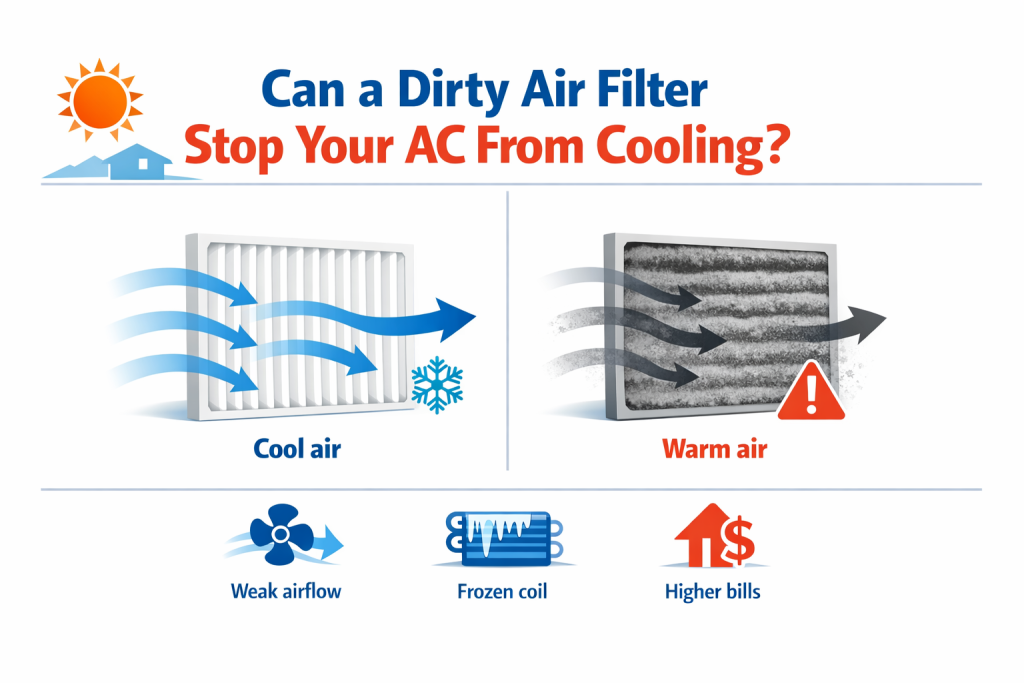
May–June: filter discipline. Once the system runs daily, check your filter monthly and replace it at least every 60 days — every 30 if you have pets or allergies. A clogged filter forces the blower to strain, ices up the evaporator coil, and can cut cooling output noticeably. This five-minute habit is the highest-value DIY task in this entire guide.
July–August: monsoon watch. Dust storms coat outdoor condenser coils with a fine film that acts like insulation, and wind-blown debris piles up against the unit. After every haboob, walk outside, clear at least two feet of space around the condenser, and gently rinse the fins with a garden hose (system off, spraying from a low angle). If cooling performance drops suddenly after a storm, schedule AC repair and diagnostics before a small issue cascades into a compressor failure.
September: the endurance check. By now your system has run essentially nonstop for four months. Listen for new noises, watch for longer cooling cycles, and glance at your utility bill — a sudden jump with no rate change is often the first sign of a failing component. Homeowners in outlying areas can find us throughout the metro via our service areas page, from Scottsdale to Goodyear.
Fall and Winter Prep
October–November: the recovery visit. Fall maintenance inspects the wear summer left behind — stressed capacitors, worn contactor points, loose electrical connections — and prepares your heating side. If you have a gas furnace, a combustion safety check through our furnace service and repair team is essential before the first cold night. Heat pump owners should have the reversing valve and defrost cycle tested as part of a heat pump service visit, since the same equipment that cooled your home all summer now has to heat it.
December–February: light-duty season. Keep changing filters (heating circulates air through the same filter), keep vegetation trimmed around the outdoor unit, and use this quiet season for bigger projects: duct sealing through our ductwork services, insulation upgrades, or planning a ductless mini-split for that garage or casita that never cools right. Off-season scheduling is easier and gives you time to make decisions without heat pressure.
DIY vs. Professional AC Maintenance
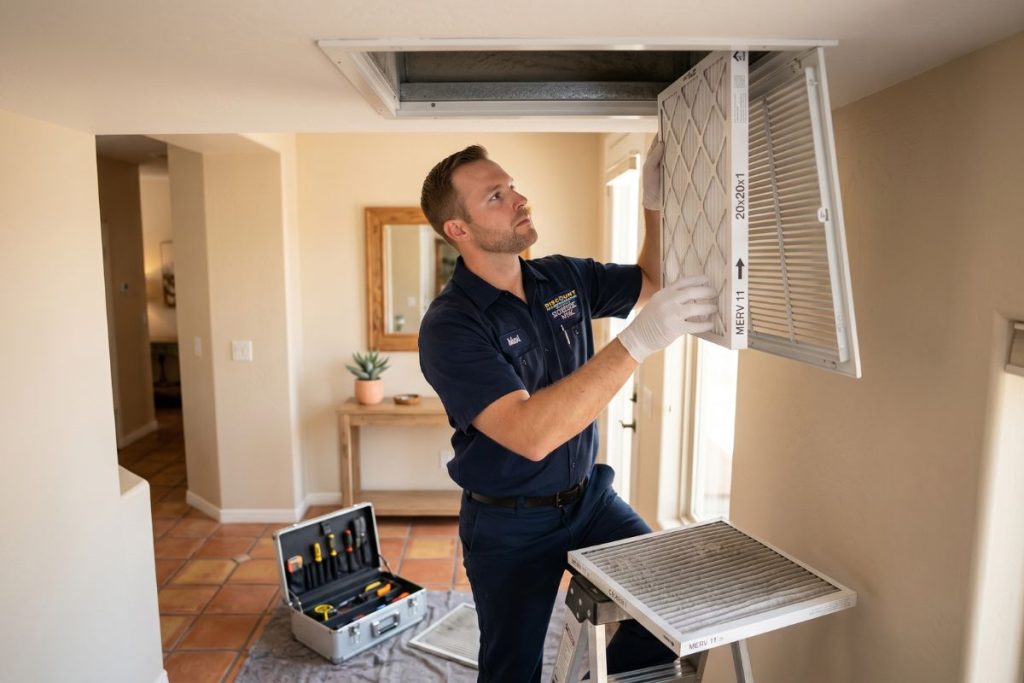
We’re big believers in homeowner involvement — the filter changes, condenser rinsing, and drain flushing described above genuinely extend equipment life, and anyone can do them safely. So let’s be clear about what belongs on your side of the line: replacing filters, keeping the outdoor unit clear, pouring a cup of distilled vinegar down the condensate line a few times each summer, testing thermostat batteries, and visually checking that vents are open and unblocked.
Everything else belongs to a professional, and not because we want the business — because the risks are real. Refrigerant circuits are sealed, pressurized systems that legally require EPA Section 608 certification to open. Capacitors hold a charge even when power is off and can deliver a dangerous shock. Coil cleaning done wrong (a pressure washer, bent fins, harsh chemicals) causes more damage than the dirt did. And an accurate refrigerant charge reading requires calibrated gauges plus an understanding of superheat and subcooling that comes from real training — the kind our technicians build through the ongoing training program we run in-house.
A professional tune-up also carries diagnostic value no checklist can match. When one of our certified technicians measures capacitor microfarads against spec, checks amp draw on the compressor, and inspects the contactor under load, they’re comparing readings against thousands of Phoenix systems they’ve serviced. That experience is how a $30 part gets replaced in April instead of stranding your family in July. You can read more about our team, our years in the industry, and our approach on our About Us page — and see what neighbors say in our reviews on our Google Business listing.
One honest caveat: maintenance reduces breakdowns dramatically, but no tune-up makes a system immortal. Compressors fail, monsoons strike, and 20-year-old units reach the end. What maintenance guarantees is that when something does happen, it happens to a documented, well-kept system — which makes repairs faster, warranty claims cleaner, and replacement decisions easier.
AC Maintenance Plans: What to Look For
If remembering two seasonal appointments per year sounds like one more thing on an already-full plate, a maintenance plan solves it. The concept is simple: you enroll once, and the company schedules, performs, and documents your tune-ups automatically. Our maintenance programs are built around the Phoenix climate calendar — a spring cooling tune-up and a fall heating check — with reminders handled by us, not you.
Whether you choose us or anyone else, here’s what a maintenance plan worth paying for should include. Two seasonal visits per year with a written multi-point checklist, so you can see exactly what was inspected and measured. Priority scheduling during peak season — this is the benefit members appreciate most when the summer rush hits. A discount on repairs and parts, typically 10–15%. Documented service history, which protects manufacturer warranties and adds credibility when you sell your home. And no high-pressure upselling: a good technician tells you what a reading means and lets the numbers speak.
For business owners, the math is even stronger. A restaurant dining room at 85°F or a server room over temperature costs revenue by the minute, which is why our commercial HVAC clients put every rooftop unit on a scheduled program, and why facilities that depend on cold storage pair it with commercial refrigeration maintenance for their walk-ins and ice machines. From Mesa and Chandler to Glendale, we tailor visit frequency to how hard each system actually works.
Is a plan worth it for a newer system still under warranty? In our experience, yes — arguably more so, because documented annual maintenance is precisely what keeps that warranty enforceable. And for older systems, the twice-yearly inspections become an early-warning radar that helps you plan replacement on your schedule instead of the equipment’s.
Frequently Asked Questions — Air Conditioner Maintenance
How often should I schedule air conditioner maintenance in Phoenix? +
Twice a year: a cooling tune-up in spring (March–April, before the first heat wave) and a heating check in fall (October–November). Because AC systems in the Valley run two to three times more hours than the national average, the once-a-year schedule that works in milder climates isn’t enough here.
How much does an AC tune-up cost? +
Most standalone tune-ups in the Phoenix metro run roughly $80–$150 depending on system type and accessibility, while maintenance plan memberships spread the cost and add repair discounts plus priority scheduling. Compare that with typical summer repair bills — or an emergency weekend call-out — and prevention is consistently the cheaper path. Contact us for current pricing.
Can I do air conditioner maintenance myself? +
Partially. Filter changes, clearing debris around the condenser, and flushing the condensate drain are safe, valuable DIY tasks. Refrigerant work, electrical testing, and coil deep-cleaning require certification, calibrated tools, and training — those belong to a licensed professional.
What happens if I skip annual maintenance? +
Efficiency drops a little every year as coils foul and components drift out of spec, energy bills creep up, small failures go undetected until they become big ones, and many manufacturers can deny warranty claims without documented service history. In the Phoenix heat, skipped maintenance also shortens overall equipment lifespan.
When is the best time to schedule a tune-up in the Valley? +
March and April are ideal — technicians have open calendars, and any problems found can be fixed before the heat arrives. Fall (October–November) is the second key window for the heating-side check. We serve the entire metro area; find our shop and reviews on Google Maps.
Your AC Is Ready for Summer — Are You?
Consistent air conditioner maintenance is what separates the Phoenix homeowners who cruise through August from the ones searching for emergency service at midnight. The routine in this guide isn’t complicated: stay on top of filters and debris yourself, book a professional tune-up each spring and fall, and let a maintenance plan handle the calendar for you. If cooling costs are still climbing even with good maintenance habits, your ductwork or an aging unit may be the real culprit — our residential services team can pinpoint which, and our blog has more guides like this one, including our seasonal HVAC checklists for homes and businesses across the Valley, from Phoenix to Tempe.
Ready to put your system on a schedule that actually fits the desert? Call Discount AC & Refrigeration of Phoenix today at (602) 889-1367, request your tune-up online, or stop by and see us — you’ll find our location, hours, and customer reviews on our Google Maps listing. Beat the heat before it beats you — we’ll keep you cool all year long.