
You flip the thermostat down to 72°F, but the living room still feels like 80°F. The system is running non-stop, your electric bill jumped 30% last month, and there’s a fine layer of dust on the coffee table you cleaned yesterday. The culprit is almost always the cheapest, most ignored component in your entire HVAC system: a clogged air filter. Knowing exactly when to change air filter units in your home is the difference between a system that lasts 15 years and one that fails in 7. This guide walks you through the 10 warning signs our Phoenix HVAC technicians see every single day.
Why Air Filters Matter More Than You Think
A 1-inch pleated filter costs less than $15, yet it protects a $7,000+ HVAC system. When that filter clogs, your blower motor strains against the restriction, your evaporator coil ices over, and your indoor air quality drops below outdoor levels. According to the U.S. Environmental Protection Agency, indoor air can be 2 to 5 times more polluted than outdoor air — and a failing filter is one of the top contributors. In Arizona’s dust-heavy climate, filters load up 2–3x faster than the manufacturer’s “90-day” sticker suggests. If you’re already noticing performance issues, our AC repair team can diagnose airflow restrictions on the same visit.
The 10 Warning Signs You Cannot Ignore
1. Visible Gray or Brown Discoloration
Pull the filter out and hold it up to a light bulb. If you cannot see light passing through the pleats, it’s done. A new filter should look bright white or light blue.
2. Weak Airflow at the Registers
Hold your palm 6 inches from a supply vent. If the airflow feels softer than a gentle breeze, the filter is restricting the system. Persistent weak airflow often signals deeper issues — schedule an HVAC inspection before the problem reaches the compressor.
3. Rising Energy Bills
A clogged filter forces the blower to work 15–25% harder. The U.S. Department of Energy confirms that replacing a dirty filter with a clean one can lower AC energy consumption by 5–15%.
4. Dust Accumulating Faster Than Normal
Dirty filters bypass particles instead of capturing them. If you’re dusting twice a week, the filter is letting debris recirculate. Consider an indoor air quality upgrade if dust persists after replacement.
5. Allergy or Asthma Flare-Ups Indoors
Sneezing, watery eyes, or coughing that improves the moment you leave the house points directly to filter failure. The American Lung Association lists clogged HVAC filters among the leading triggers of indoor allergy symptoms.
6. The System Runs Longer to Reach Set Temperature
Cycle times longer than 20 minutes in mild weather (75–85°F outdoor) indicate airflow restriction.
7. Warm Air from the Vents in Cooling Mode
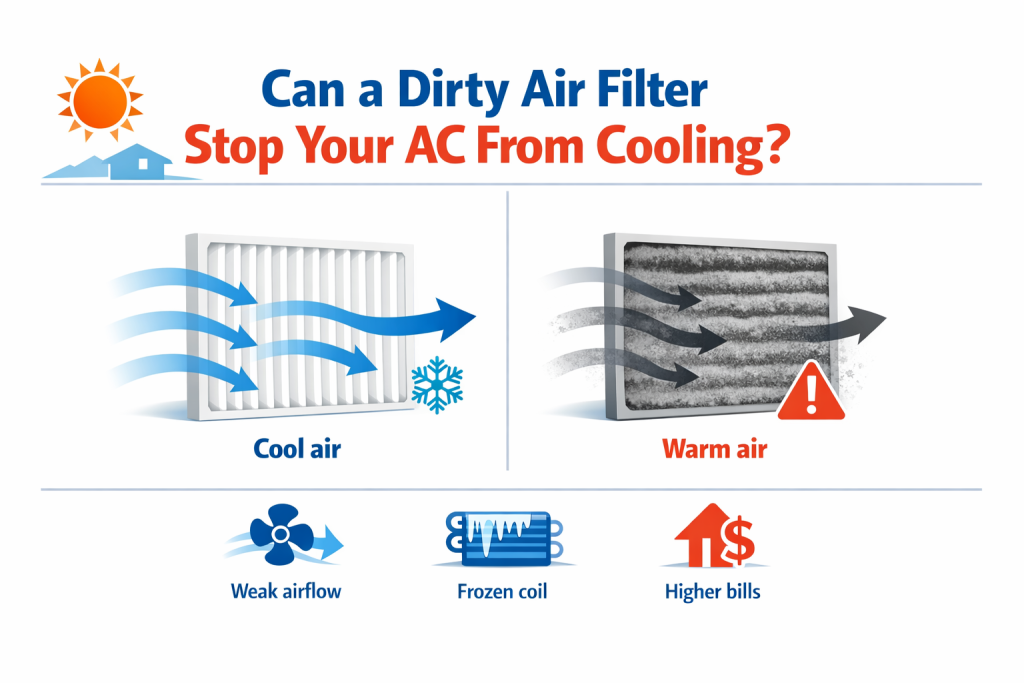
Restricted airflow causes the evaporator coil to freeze. The ice blocks heat transfer, and you get lukewarm air at 78°F instead of 55°F supply temperature. A frozen coil requires immediate attention — call our emergency AC service before the compressor sustains damage.
8. Strange Musty or Burning Smells
A musty smell means moisture trapped in the filter media. A faint burning smell means the blower motor is overheating from the strain.
9. Unusual Whistling or Whooshing Sounds
Air is being pulled hard through any gap it can find around the filter frame.
10. The Filter Is Past Its Manufacturer Date
Even if it “looks okay,” fiberglass loses its electrostatic charge after 60–90 days. The ASHRAE filtration standards recommend strict adherence to manufacturer replacement intervals.
Air Filter Replacement Schedule
By filter type and household conditions
| Filter Type | MERV | Standard Home | With Pets | Allergy Sufferers | AZ Dust Zones |
|---|---|---|---|---|---|
| 1″ Fiberglass | 1–4 | 30 days | 20 days | Not recommended | 15–20 days |
| 1″ Pleated | 8–11 | 60–90 days | 45 days | 30 days | 30–45 days |
| 4″ Media Filter | 11–13 | 6–12 months | 4–6 months | 3 months | 3–4 months |
| HEPA (Whole-House) | 16+ | 12 months | 8 months | 6 months | 6 months |
| Washable Electrostatic | 4–10 | Wash every 30 days | Wash every 20 days | Not recommended | Wash every 15 days |
Pro Tips From the Field
- Write the install date on the cardboard frame with a Sharpie the moment you slide it in.
- Never upgrade past MERV 13 on a residential system without verifying static pressure — higher MERV chokes airflow on undersized return ducts. Our HVAC maintenance specialists can measure static pressure during a tune-up.
- Check filters monthly during monsoon season (July–September) when airborne particulates spike.
- Keep two spares on the shelf so a clogged filter never sits in the system “just one more week.”
The Real Cost of Ignoring a Dirty Filter
Most homeowners think of an air filter as a $10 disposable item. In reality, it’s the first line of defense for every moving part inside your HVAC system. When airflow drops, three expensive failures begin stacking up simultaneously. First, the blower motor draws more amperage and overheats, shortening its lifespan from 15 years to as little as 5. Second, the evaporator coil — a $1,200–$2,400 component — accumulates a sticky film of dust mixed with condensation, which insulates the metal and destroys heat transfer efficiency. Third, the compressor (the most expensive part of the entire system at $1,800–$3,500) begins short-cycling, dramatically reducing its service life.
In Phoenix, where AC systems run 7–9 months a year, this damage compounds faster than in any other U.S. climate zone. A $15 filter replacement skipped for six months can easily translate into a $2,000+ repair bill — or in worst cases, a full system replacement years ahead of schedule. The math is simple: regular filter changes are the single highest-ROI maintenance task any homeowner can perform.
Frequently Asked Questions
How often should I really change my air filter in Phoenix?+
For most Phoenix homes with a 1-inch pleated filter, every 30–45 days during cooling season. Homes with pets, allergy sufferers, or properties near desert washes should check filters every 2–3 weeks. The monsoon months (July–September) push particulates so high that monthly inspections become mandatory regardless of filter type.
Can a dirty air filter actually damage my AC unit?+
Yes — and the damage is rarely covered by manufacturer warranties. Restricted airflow causes the evaporator coil to freeze, the blower motor to overheat, and the compressor to short-cycle. Most warranty claims denied by HVAC manufacturers list “lack of routine maintenance” as the primary reason, and a clogged filter is the most common evidence.
What MERV rating is best for a Phoenix home?+
MERV 8–11 is the sweet spot for most residential systems. MERV 13 offers superior filtration but requires verified static pressure measurements before installation. Anything above MERV 13 typically requires duct modifications. When in doubt, our Phoenix HVAC technicians can recommend the highest MERV rating your specific system can handle safely.
Is a reusable washable filter worth it?+
For most homeowners, no. Washable electrostatic filters trap fewer particles than a basic pleated filter and lose efficiency the moment they dry incompletely (which traps moisture and breeds mold). They make sense only in low-traffic homes without pets or allergy concerns.
Why is my new filter already dirty after two weeks?+
Three common causes: a leaky return duct pulling unfiltered attic air, an oversized return grille bypassing the filter frame, or unusually high outdoor particulate levels during construction or monsoon season. If a new filter darkens visibly within 14 days, request a duct inspection to identify the leak source.
Does changing the filter improve my electric bill immediately?+
Yes. Most homeowners notice a 5–15% reduction on the next billing cycle, according to the U.S. Department of Energy. The blower motor draws less amperage, run times shorten, and the system reaches the thermostat set-point faster.
Can I run my AC without a filter for one day?+
Never. Even a single day de unfiltered operation coats the evaporator coil with dust and pet dander that bakes onto the fins once condensation forms. Cleaning a contaminated coil costs $300–$600 — far more than buying an emergency filter at any hardware store.
Don’t Wait for a Breakdown — Call the Experts in Phoenix
If you’ve checked off two or more signs on this list, your HVAC system is already paying the price. The technicians at Discount AC & Refrigeration have been keeping Phoenix homes comfortable for over a decade. We offer same-day filter inspections, indoor air quality assessments, and full system tune-ups across the Valley — from Surprise to Mesa, Scottsdale to Chandler.
📍 Find us on Google Maps: Discount AC & Refrigeration — Phoenix Location
📞 Call 602-889-1367 today or schedule online for a no-obligation inspection. Breathe cleaner air, lower your bills, and extend the life of your system — starting this week.