
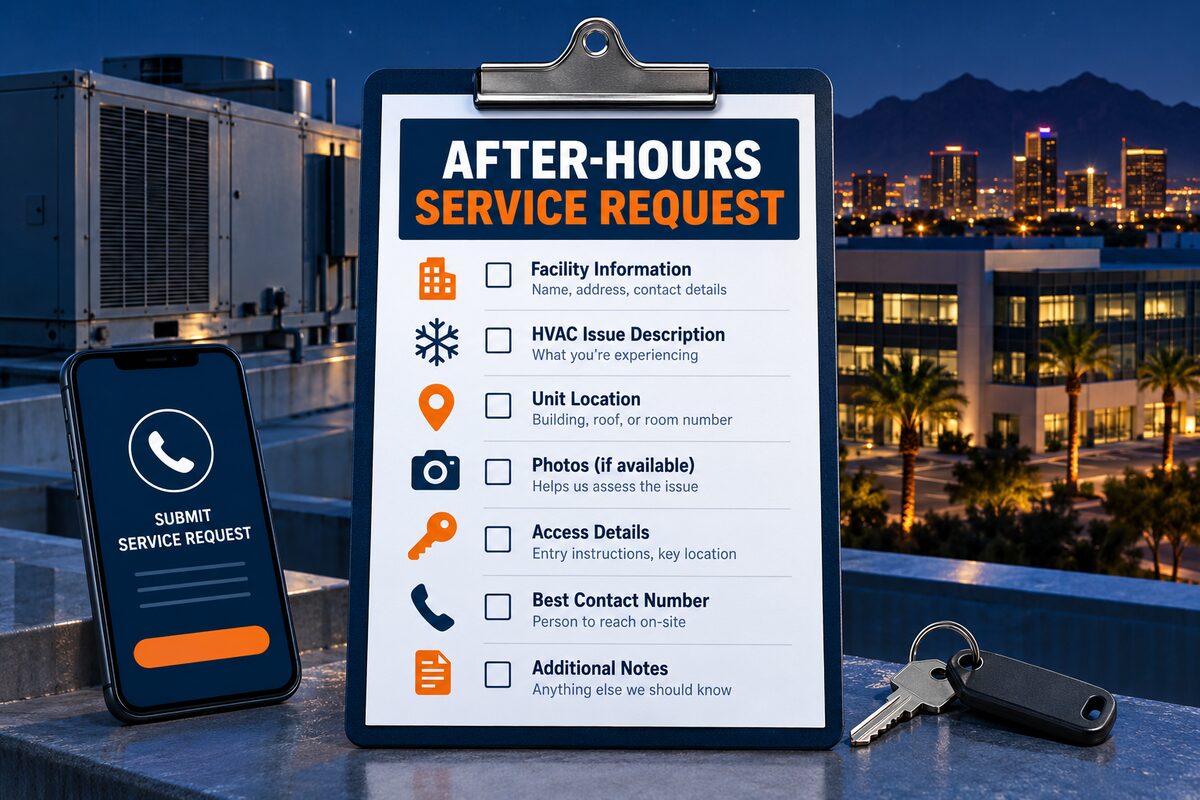
An after hours HVAC service request checklist helps Phoenix facility teams communicate safety conditions, affected zones, equipment identity, access, approvals, and operating context when normal staff may not be onsite. The goal is a complete handoff, not a remote diagnosis. Staff should never open panels, bypass controls, repeatedly restart equipment, or attempt electrical or refrigerant work while waiting for professional service.
Begin With the Site Escalation Plan
Determine whether the condition affects occupant safety, critical cooling, protected inventory, production, security, or building operations. Follow the approved continuity and emergency procedures. Smoke, arcing, electrical odors, damaged conductors, or unsafe water near equipment require immediate site safety actions and qualified personnel.
Name the Requester and Decision-Maker
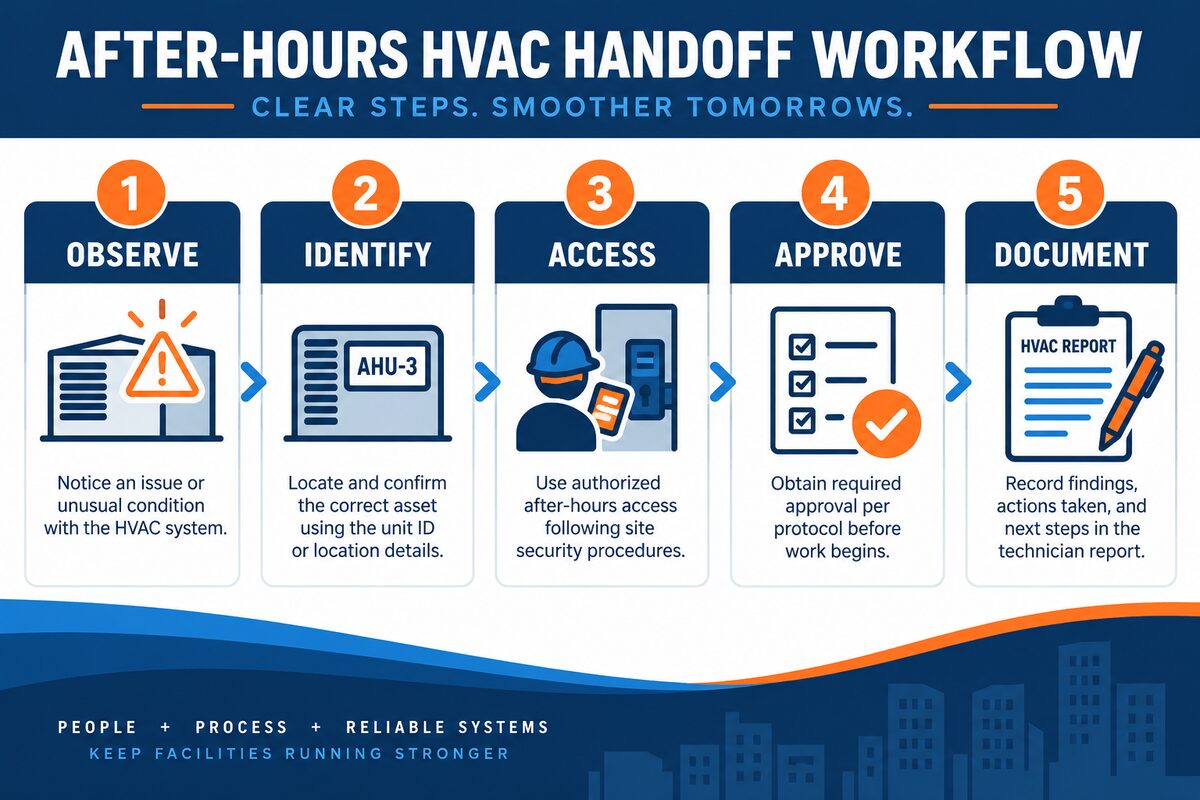
Record the person who observed the condition, the requester’s callback number, the onsite contact, the manager authorized to approve diagnostic work, and the person who will receive findings. Do not rely on a group message with unclear responsibility. Define how approval will be obtained if the scope changes.
Identify the Exact Equipment and Area
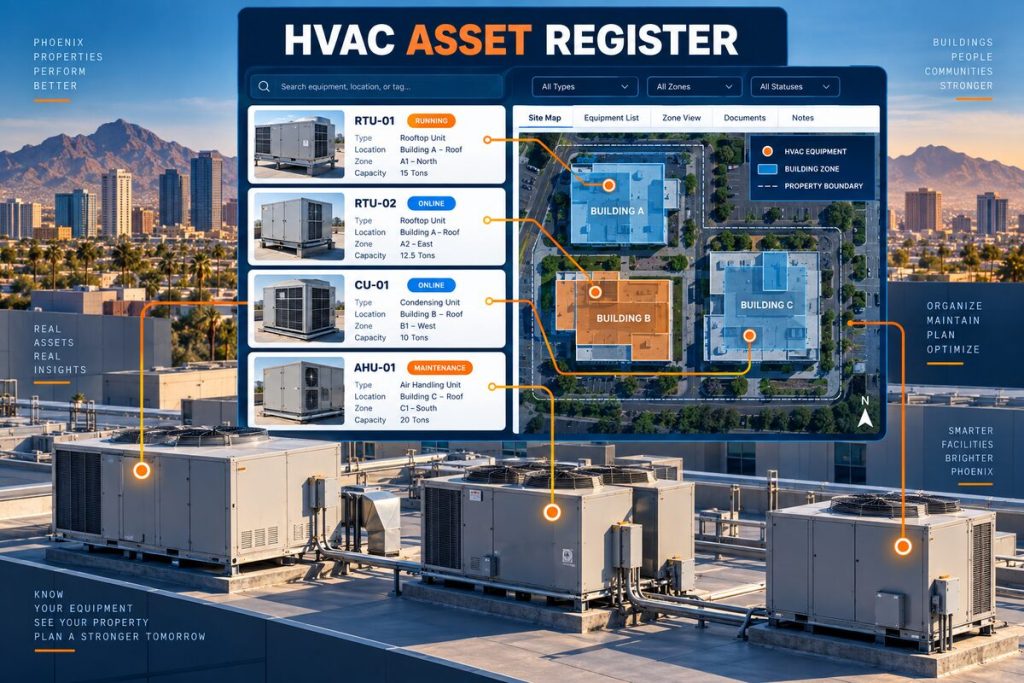
Provide the asset ID, building, suite, floor, roof or mechanical-room location, served zones, and equipment type. State whether one room, one tenant, several zones, or an entire operation is affected. Avoid vague labels such as “the big unit” or “the office AC.”
Describe the Observation and Timeline
Record what changed, when it began, whether it is continuous or intermittent, thermostat or building-control displays, accessible airflow, alarms, sounds, odors, visible water, occupancy, weather, and recent work. Describe evidence instead of declaring a failed part.
Document Approved Actions Already Taken
List every authorized action and time, including a schedule check, an approved shutdown, inventory protection, relocation under the continuity plan, or a control acknowledgement. Never hide resets or changes. Do not keep restarting equipment, defeat a safety, or improvise a temporary repair.
Prepare Safe, Authorized Access
Confirm gate codes or key coordination through secure channels, roof or room access, escorts, parking, security check-in, ladder requirements, lighting, tenant entry, and restricted areas. Do not leave unsafe access open or distribute credentials in the public work order. Identify weather or roof conditions that could delay safe access.
Clarify Business and Operating Constraints
Explain critical spaces, occupied areas, noise limits, refrigeration inventory, production schedules, server or medical-support spaces, and approved shutdown windows. These details help the technician plan observations and communicate risks, but they do not guarantee a particular completion time.
Define the Communication and Approval Path
State who may approve diagnostics, receive measurements, authorize additional scope, and sign the work order. Ask for findings tied to the observed condition and testing. If work is deferred, record the operating limitation, responsible person, and follow-up owner.
Close the Handoff the Next Business Day
Transfer the report, readings, photographs, actions, recommendations, and verification to the asset record. Inform the daytime facility team what changed and what remains open. Confirm whether the original symptom returned under normal occupancy and conditions.
Quick Reference Table
| Handoff item | Required information | Common gap |
|---|---|---|
| Safety/operations | Hazards, critical areas, continuity action | Treating every call as only comfort |
| Asset and zone | ID, location, served spaces | Vague equipment description |
| Evidence | Timeline, settings, alarms, airflow, weather | Assumed failed component |
| Access | Escort, roof/room rules, security contact | Technician cannot reach equipment |
| Approval | Authorized contact and communication path | No one can approve diagnostics |
Why Phoenix Conditions Belong in the Record
Phoenix commercial buildings operate through prolonged heat, rooftop solar exposure, dust, monsoon debris, changing occupancy, and long cooling seasons. These conditions influence load, airflow, heat rejection, controls, and recovery, but they do not prove a particular component failed. Record outdoor conditions, building activity, and the time the symptom appears so a technician can compare evidence with measured performance.
Use the property’s established baseline instead of relying on memory. Delivery periods, full dining rooms, tenant events, construction, after-hours schedules, and unusually dusty days can change system behavior. The record should identify normal hours, known schedules, typical complaints, and which equipment serves each area.
Turn Complaints Into Useful Evidence
“It is warm,” “the cooler is alarming,” or “the air smells different” are starting points. Record where the change is noticed, when it begins, how long it lasts, what displays show, which asset serves the area, and what changed operationally. Separate observed facts from assumptions and label safe photographs with asset ID and time.
Consistent terminology helps different shifts and vendors understand the same record. Distinguish a displayed value from an independent reading, an alarm from a complaint, and an authorized action from a technician finding. Preserve original screenshots and reports instead of rewriting them into a shorter conclusion.
Create a Repeatable Documentation Standard
Use the same required fields on every shift: asset ID, date and time, observer, exact location, displayed value, approved independent reading when applicable, alarm text, operating context, visible condition, action taken, and escalation owner. A consistent form makes records comparable across employees, properties, and service visits. Free-form notes can add detail, but they should not replace the core fields.
Train staff to leave fields blank or mark them unknown instead of guessing. Define where photographs, screenshots, work orders, and technician reports are stored. Review the process when a record cannot be connected to an asset or when repeated complaints arrive without enough context to compare them.
Protect Diagnostic Evidence
Well-intended changes before a technician arrives can remove the condition that needs to be evaluated. Unless safety, product protection, or an approved procedure requires action, preserve current settings, alarm history, schedules, loads, and visible conditions. If staff must act, record the exact action and time so the service professional can reconstruct the sequence.
Do not clean internal components, disconnect sensors, force dampers, bypass safeties, repeatedly cycle power, add refrigerant, or open electrical panels. These actions create risk and can change the evidence. Safe exterior housekeeping should follow the property plan and manufacturer requirements, never an improvised troubleshooting step.
What Professional Evaluation May Include
A qualified technician may compare the history with airflow, electrical performance, controls, sensors, motors, drainage, heat rejection, refrigeration conditions, and the equipment sequence. The exact testing depends on the asset and evidence. Ask for findings tied to measurements, the proposed scope, exclusions, and verification after approved work.
Recommendations should explain the observed condition, testing completed, and why the proposed action addresses the findings. When alternatives exist, facility managers can compare safety, reliability, compatibility, operating role, service history, and business priorities without relying on an unsupported remote diagnosis.
Coordinate the Service Visit
Confirm tenant, roof, mechanical-room, kitchen, loading-area, and after-hours access. Identify escorts, keys, secure gate instructions, parking, safety orientation, and the person authorized to approve diagnostic work. Clear ordinary storage from approved access paths without moving guards, wiring, controls, or equipment.
Share business-critical timing and operating constraints. Equipment may need to be observed under the conditions that create the complaint. Do not clean, reset, shut down, or alter settings immediately before the visit unless safety, product protection, or an approved procedure requires it; document every action.
Evaluate Recommendations in Operational Context
A facility decision should connect the measured condition to the role of the equipment. Consider the areas served, redundancy, occupancy, inventory, compatible controls, maintenance history, access, and the effect of planned building changes. One symptom or the age of a unit alone does not establish the correct scope.
Ask what was tested, what was not tested, how the conclusion was reached, what verification will follow approved work, and what operating limitations remain. When work is deferred, document the reason, responsible person, review date, and any temporary operating guidance supplied by the qualified service professional.
Keep the Record Useful After Service
Store readings, photographs, recommendations, approved work, deferred items, verification notes, and operating limitations under the correct asset ID. Continue observing whether the original condition returns. Close the work order only when the property team understands what was tested, what changed, and what remains open.
Communicate relevant changes to each shift, tenant contact, or department that monitors the system. Retain prior records rather than replacing them with the newest report. A complete history helps future technicians compare patterns and helps managers plan maintenance without treating every visit as an isolated event.
Related Services and Resources
- Commercial HVAC services
- Rooftop unit service
- Commercial HVAC preventive maintenance
- Commercial HVAC emergency service
- Commercial AC installation
- Contact us
Frequently Asked Questions
What makes an HVAC request after-hours?
The facility’s staffing and service process define it; the checklist focuses on a complete handoff whenever normal contacts are limited.
Should every comfort complaint trigger escalation?
No. Follow the facility plan and document affected zones, recovery, occupancy, and operational impact.
Can staff reset equipment before service?
Only when an approved procedure authorizes it. Record the action and never reset repeatedly.
What hazards require prompt site action?
Smoke, arcing, electrical odors, damaged wiring, unsafe water, or critical cooling loss under the facility plan.
What access information is essential?
Building and equipment location, secure entry coordination, escorts, roof or room rules, parking, and onsite contact.
Who should approve additional work?
A named authorized representative following the property’s approval policy.
What should be recorded after the visit?
Findings, measurements, work, deferred items, verification, operating limits, and follow-up ownership.
Does an after-hours request guarantee completion that night?
No. Safety, access, diagnostics, equipment condition, and approved scope determine the service process.
Request Professional Commercial HVAC Service
Discount AC & Refrigeration of Phoenix can review the equipment history, operating pattern, and site conditions before recommending an appropriate diagnostic or maintenance scope.