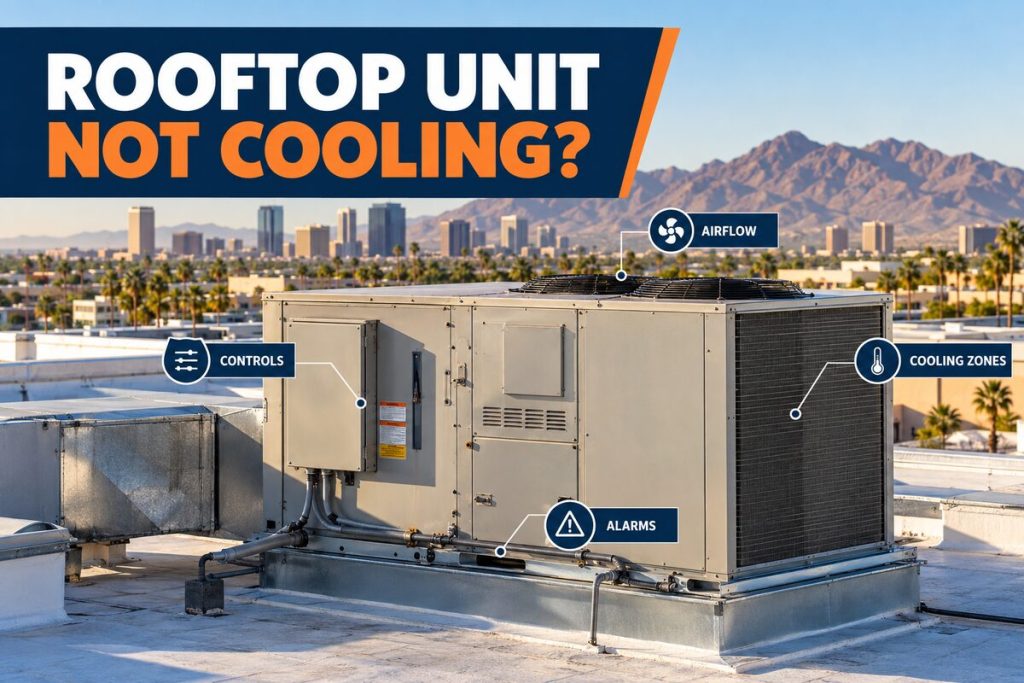

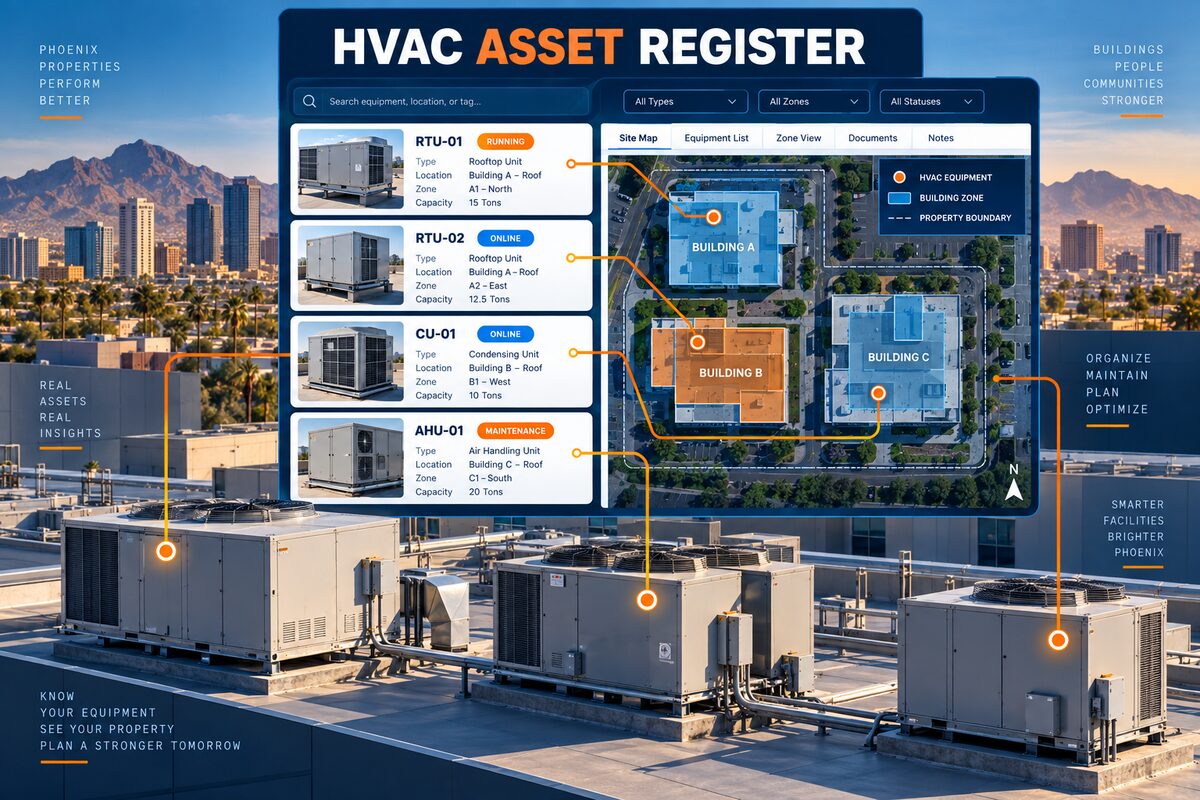
A commercial HVAC asset register connects each piece of equipment to its location, served zones, controls, access requirements, service history, and current recommendations. For Phoenix property managers, a reliable register makes tenant complaints easier to trace and helps maintenance planning reflect heat, dust, rooftop exposure, occupancy, and building changes. It is a management record—not a substitute for technical inspection.
Give Every Asset a Unique, Durable Identity
Assign a concise ID that staff can read on the equipment list, roof map, controls, work orders, and service reports. Avoid labels such as “main AC” or “back unit.” Include rooftop units, split systems, package units, air handlers, condensers, thermostats, major exhaust or make-up air equipment, and other assets relevant to the property’s operating plan.
Record Manufacturer and Configuration Data
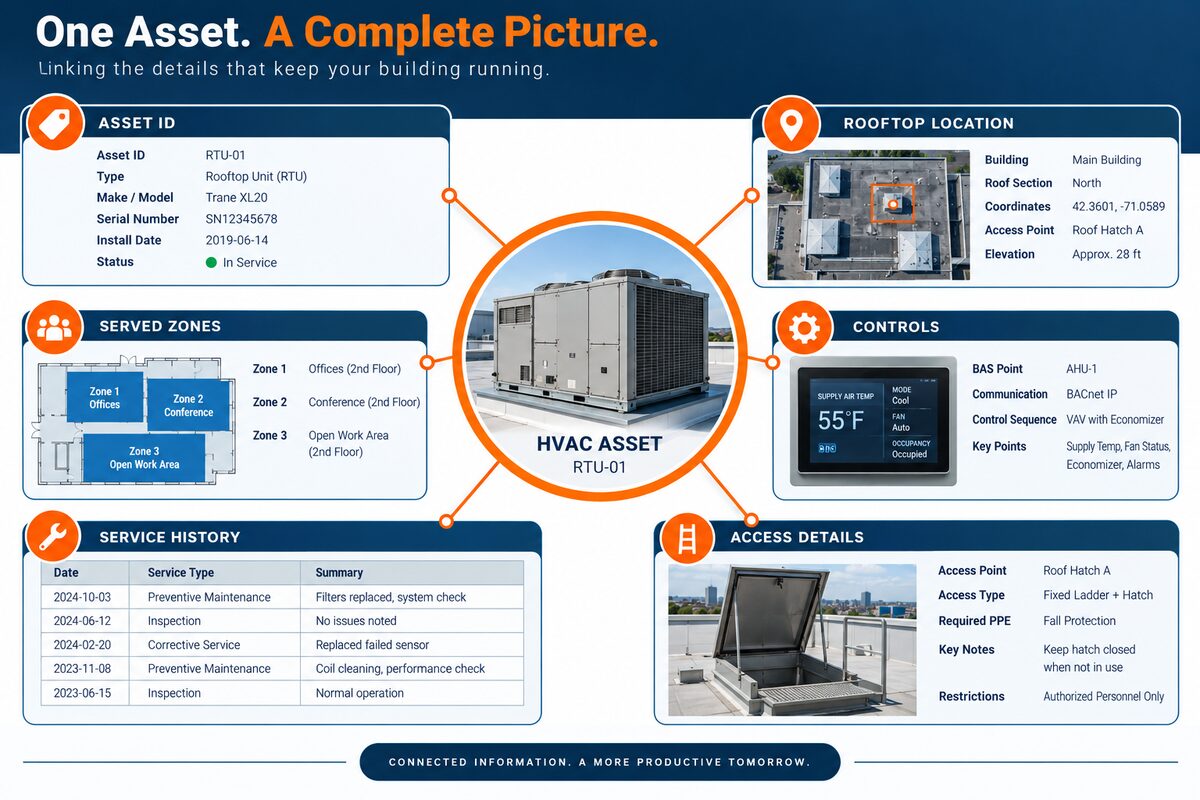
Capture manufacturer, model, serial number, equipment type, approximate installation date when supported by records, filter information, voltage or capacity only when taken from authoritative documentation, and associated controls. Do not guess missing nameplate data. Photograph labels safely and flag unreadable or conflicting information for professional confirmation.
Map Location, Access, and Served Areas
Link each asset to a roof grid, mechanical room, suite, floor, or exterior location and list the zones it serves. Document keys, gates, escorts, ladder or roof-access rules, parking restrictions, safety orientation, and after-hours contacts. Keep security-sensitive details within the property’s authorized system.
Connect Thermostats and Building Controls
Identify the thermostat, sensor, controller, or building automation reference associated with each asset. Record the normal schedule owner and approved contacts for changes. Do not store shared passwords in an open spreadsheet or allow uncontrolled overrides. Control changes should be traceable by date, person, and reason.
Attach Service History to the Correct Equipment
Log service date, complaint, observed conditions, measured findings, work performed, parts or recommendations, verification, deferred items, provider, and report link. Separate verified findings from tenant descriptions and management assumptions. Older records should remain available so recurring patterns can be compared.
Track Recurring Complaints by Zone and Condition
Connect complaints to asset ID, zone, time, occupancy, weather, settings, and recovery. This helps distinguish one-time operational events from repeat patterns. Phoenix peak heat, dust events, tenant build-outs, and schedule changes belong in the context but do not prove equipment failure.
Include Maintenance and Documentation Status
Record the applicable maintenance program, last completed scope, next planning review, filter responsibility, open recommendations, and documentation gaps. Avoid turning the register into an unverified calendar promise. Frequency should follow equipment requirements, operating hours, site conditions, and the approved professional program.
Control Ownership, Updates, and Version History
Assign one accountable owner and define who may edit technical fields, access notes, control records, and vendor documents. Use required fields, change dates, and consistent naming. Preserve prior versions or an audit trail so important identifiers and recommendations are not silently overwritten.
Use the Register During Service and Capital Planning
Before a visit, share the relevant asset record, complaint history, access information, and open recommendations. For planning, compare condition evidence, service history, compatibility, operating role, and business risk. Do not use age alone to declare that replacement is required.
Quick Reference Table
| Asset field | Why it matters | Control rule |
|---|---|---|
| Unique ID and location | Connects reports to the correct equipment | Use the same label everywhere |
| Model/serial/type | Supports parts and documentation review | Do not guess missing data |
| Served zones/controls | Links complaints to equipment | Track authorized changes |
| Service history | Reveals repeat patterns and findings | Preserve reports and measurements |
| Access and responsibility | Reduces coordination gaps | Restrict sensitive information |
Why Phoenix Conditions Belong in the Record
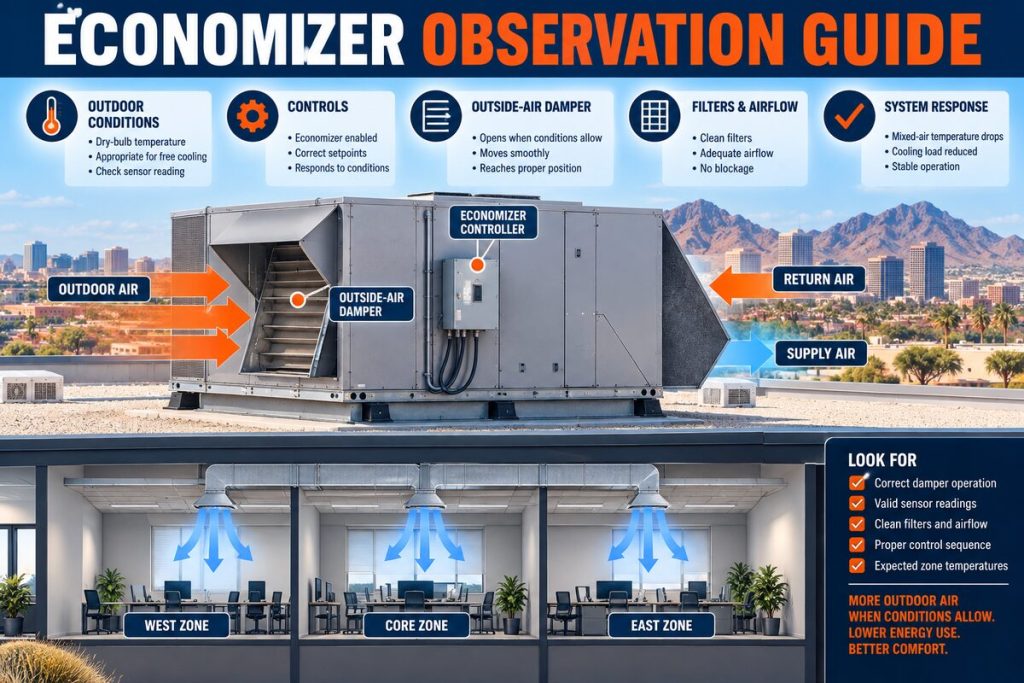
Phoenix commercial buildings operate through prolonged heat, rooftop solar exposure, dust, monsoon debris, changing occupancy, and long cooling seasons. These conditions influence load, airflow, heat rejection, controls, and recovery, but they do not prove a particular component failed. Record outdoor conditions, building activity, and the time the symptom appears so a technician can compare evidence with measured performance.
Use the property’s established baseline instead of relying on memory. Delivery periods, full dining rooms, tenant events, construction, after-hours schedules, and unusually dusty days can change system behavior. The record should identify normal hours, known schedules, typical complaints, and which equipment serves each area.
Turn Complaints Into Useful Evidence
“It is warm,” “the cooler is alarming,” or “the air smells different” are starting points. Record where the change is noticed, when it begins, how long it lasts, what displays show, which asset serves the area, and what changed operationally. Separate observed facts from assumptions and label safe photographs with asset ID and time.
Consistent terminology helps different shifts and vendors understand the same record. Distinguish a displayed value from an independent reading, an alarm from a complaint, and an authorized action from a technician finding. Preserve original screenshots and reports instead of rewriting them into a shorter conclusion.
Create a Repeatable Documentation Standard
Use the same required fields on every shift: asset ID, date and time, observer, exact location, displayed value, approved independent reading when applicable, alarm text, operating context, visible condition, action taken, and escalation owner. A consistent form makes records comparable across employees, properties, and service visits. Free-form notes can add detail, but they should not replace the core fields.
Train staff to leave fields blank or mark them unknown instead of guessing. Define where photographs, screenshots, work orders, and technician reports are stored. Review the process when a record cannot be connected to an asset or when repeated complaints arrive without enough context to compare them.
Protect Diagnostic Evidence
Well-intended changes before a technician arrives can remove the condition that needs to be evaluated. Unless safety, product protection, or an approved procedure requires action, preserve current settings, alarm history, schedules, loads, and visible conditions. If staff must act, record the exact action and time so the service professional can reconstruct the sequence.
Do not clean internal components, disconnect sensors, force dampers, bypass safeties, repeatedly cycle power, add refrigerant, or open electrical panels. These actions create risk and can change the evidence. Safe exterior housekeeping should follow the property plan and manufacturer requirements, never an improvised troubleshooting step.
What Professional Evaluation May Include
A qualified technician may compare the history with airflow, electrical performance, controls, sensors, motors, drainage, heat rejection, refrigeration conditions, and the equipment sequence. The exact testing depends on the asset and evidence. Ask for findings tied to measurements, the proposed scope, exclusions, and verification after approved work.
Recommendations should explain the observed condition, testing completed, and why the proposed action addresses the findings. When alternatives exist, facility managers can compare safety, reliability, compatibility, operating role, service history, and business priorities without relying on an unsupported remote diagnosis.
Coordinate the Service Visit
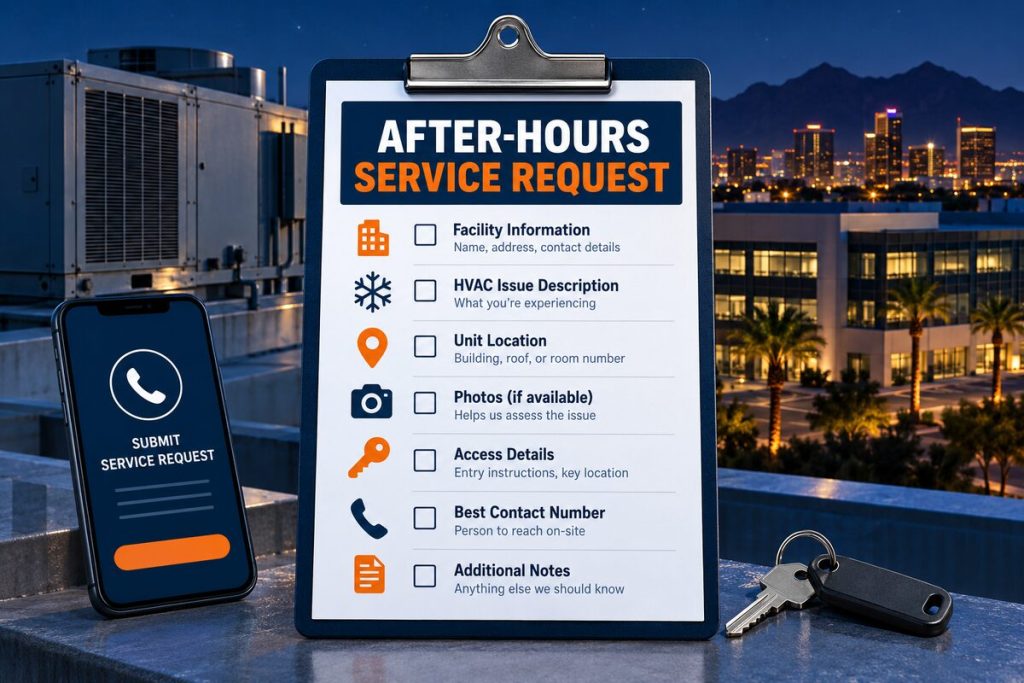
Confirm tenant, roof, mechanical-room, kitchen, loading-area, and after-hours access. Identify escorts, keys, secure gate instructions, parking, safety orientation, and the person authorized to approve diagnostic work. Clear ordinary storage from approved access paths without moving guards, wiring, controls, or equipment.
Share business-critical timing and operating constraints. Equipment may need to be observed under the conditions that create the complaint. Do not clean, reset, shut down, or alter settings immediately before the visit unless safety, product protection, or an approved procedure requires it; document every action.
Evaluate Recommendations in Operational Context
A facility decision should connect the measured condition to the role of the equipment. Consider the areas served, redundancy, occupancy, inventory, compatible controls, maintenance history, access, and the effect of planned building changes. One symptom or the age of a unit alone does not establish the correct scope.
Ask what was tested, what was not tested, how the conclusion was reached, what verification will follow approved work, and what operating limitations remain. When work is deferred, document the reason, responsible person, review date, and any temporary operating guidance supplied by the qualified service professional.
Keep the Record Useful After Service
Store readings, photographs, recommendations, approved work, deferred items, verification notes, and operating limitations under the correct asset ID. Continue observing whether the original condition returns. Close the work order only when the property team understands what was tested, what changed, and what remains open.
Communicate relevant changes to each shift, tenant contact, or department that monitors the system. Retain prior records rather than replacing them with the newest report. A complete history helps future technicians compare patterns and helps managers plan maintenance without treating every visit as an isolated event.
Related Services and Resources
- Commercial HVAC services
- Rooftop unit service
- Commercial HVAC preventive maintenance
- Commercial HVAC emergency service
- Commercial AC installation
- Contact us
Frequently Asked Questions
What is an HVAC asset register?
A controlled inventory connecting equipment identity, location, zones, controls, access, history, and recommendations.
Should thermostats have separate IDs?
Yes when it helps connect controls, sensors, zones, and service history to the correct system.
Can staff estimate model or capacity?
No. Use authoritative labels or records and flag uncertain information for verification.
Who should own the register?
One accountable property role should manage standards, permissions, updates, and review.
Does the register replace maintenance reports?
No. It links to professional reports and summarizes status without replacing technical findings.
How should complaints be recorded?
By asset or zone with time, occupancy, weather, settings, description, and recovery.
What access details belong in the register?
Authorized roof or room access, escorts, contacts, restrictions, and safety requirements.
How often should it be reviewed?
Review it whenever equipment, controls, tenants, schedules, access, or service recommendations change.
Request Professional Commercial HVAC Service
Discount AC & Refrigeration of Phoenix can review the equipment history, operating pattern, and site conditions before recommending an appropriate diagnostic or maintenance scope.