
A central air conditioner is the single most effective way to cool an entire home in Phoenix, Arizona. It uses one outdoor condenser, an indoor evaporator coil, and a network of ducts to deliver even, filtered, whole-home comfort — exactly what desert summers over 110°F demand.
In this guide, we explain what a central air conditioner is, how each component works, why it performs so well in Arizona’s climate, and how to handle installation, maintenance, and repair the right way. At Discount AC & Refrigeration of Phoenix, we’ve spent more than 20 years installing and servicing these systems across the Valley, and everything below comes from that hands-on field experience. You can see what our neighbors say about our work on our Google Business Profile.
What Is a Central Air Conditioner and How Does It Work?
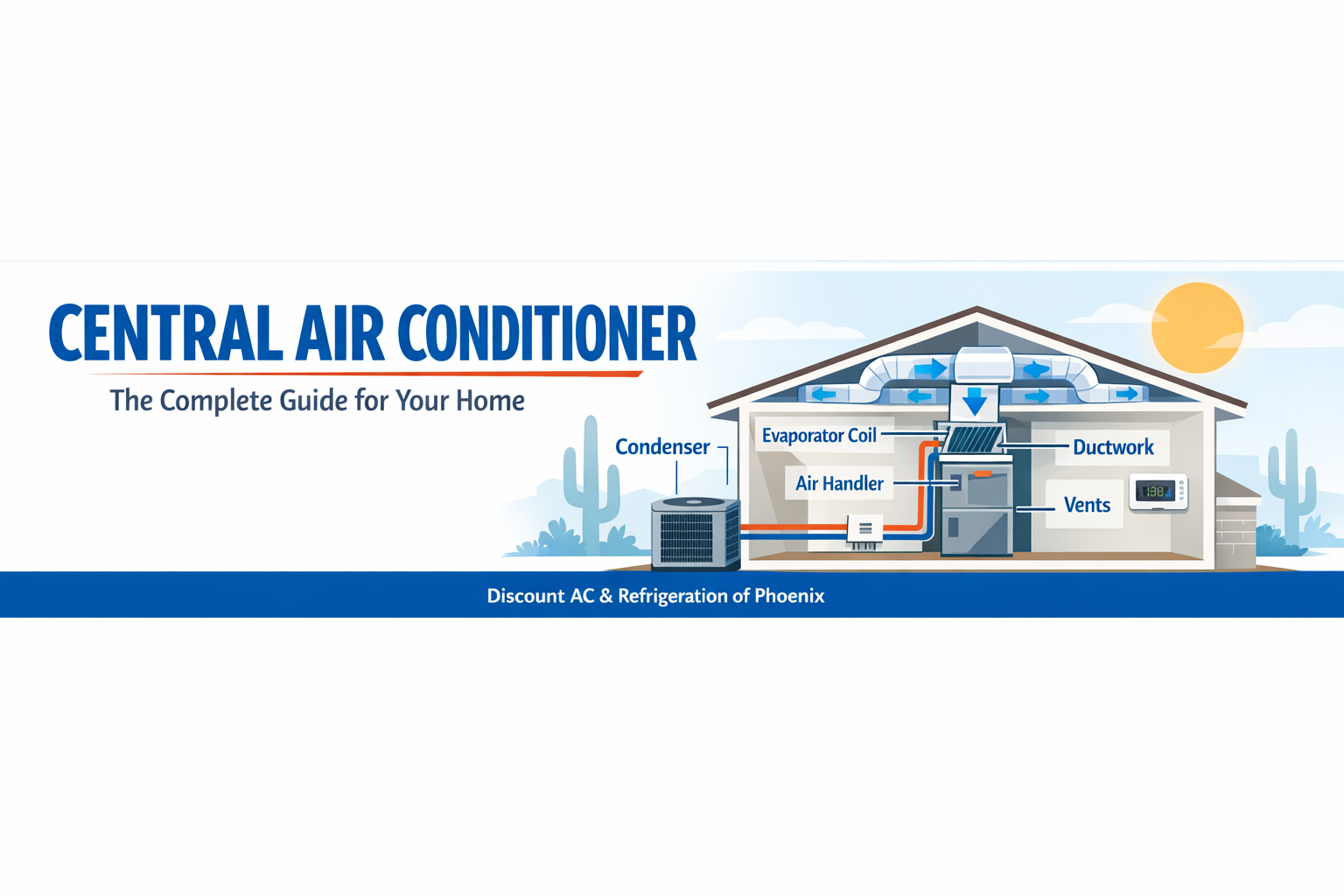
A central air conditioner is a whole-home cooling system that removes heat from indoor air and releases it outside. Instead of cooling one room at a time, it conditions air at a central point — the air handler — and distributes it through ductwork to every room in the house. That’s the key difference between central AC and window units or ductless mini-split systems, which cool single zones.
The process runs on the refrigeration cycle. Refrigerant absorbs heat from your indoor air at the evaporator coil, travels to the outdoor unit, and releases that heat outside as the compressor and condenser coil do their work. A blower fan then pushes the newly cooled air back through the ducts. The cycle repeats until your thermostat reaches its set temperature.
Most homes in the Phoenix metro area use one of two configurations: a split system, with the condenser outside and the coil and air handler inside, or a packaged unit, where everything sits in one cabinet — usually on the roof, a very common setup our technicians service throughout Phoenix and Mesa.
| System Type | How It Works | Best For | Typical Lifespan in AZ |
|---|---|---|---|
| Split System | Outdoor condenser + indoor coil/air handler connected by refrigerant lines | Most single-family homes with existing ductwork | 12–15 years |
| Packaged Unit | All components in one cabinet, usually roof-mounted | Homes with limited yard space; very common in Phoenix | 10–14 years |
| Heat Pump System | Central AC that reverses to provide heating in winter | Year-round comfort with one system; mild AZ winters | 10–15 years |
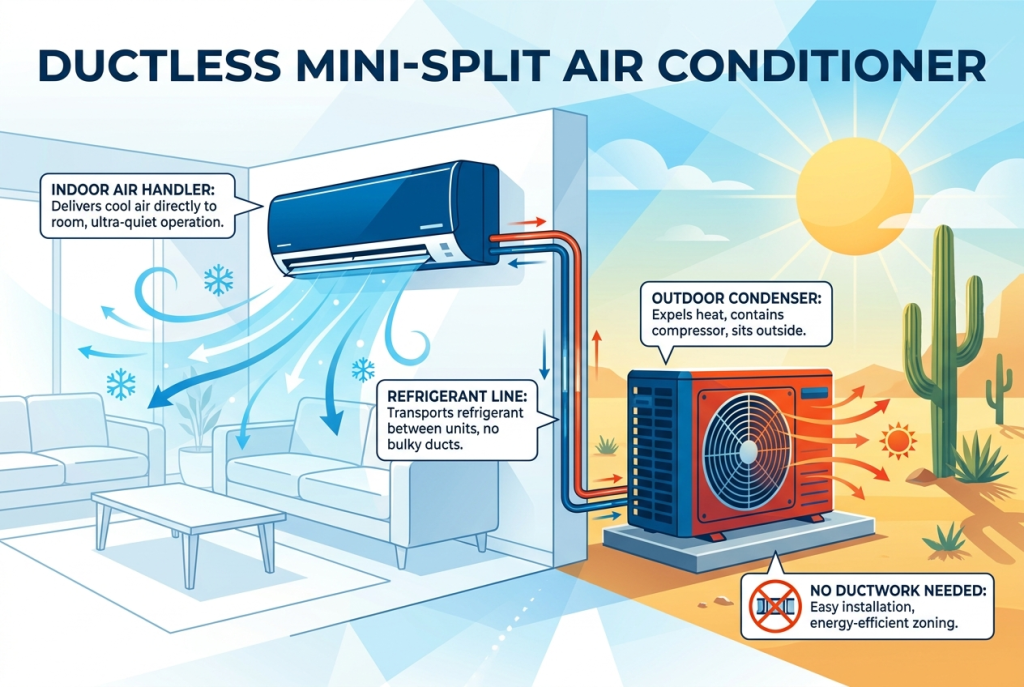
| Ductless Mini-Split | Individual wall units per zone, no ductwork required | Additions, garages, casitas — a complement to central AC | 15–20 years |
| High-SEER2 Central System | Variable-speed compressor adjusts output to demand | Lowest operating costs during long cooling seasons | 12–16 years |
Main Components of a Central Air Conditioning System
Understanding the main parts of your system helps you describe problems accurately, catch warning signs early, and make informed decisions when a technician recommends a repair. These are the components our certified team inspects on every service call.
Outdoor Condenser Unit
The condenser is the large cabinet outside your home. It houses the compressor — the heart of the system — plus the condenser coil and a large fan. Its job is to release the heat collected from inside your home into the outdoor air. In Arizona, condensers work under brutal conditions: airborne dust, monsoon debris, and ambient temperatures that regularly exceed 110°F. Keeping the coil clean and the area around it clear is one of the simplest ways to protect efficiency, and it’s a core step in our residential maintenance programs.
Evaporator Coil and Air Handler
Inside the home, the evaporator coil absorbs heat and humidity from the air passing over it. The air handler — often paired with the furnace — contains the blower motor that circulates air through the house. When homeowners call us about weak airflow or ice forming on the unit, the evaporator coil is frequently involved. Because the coil often sits above or beside the furnace, we routinely check both during furnace service visits so heating and cooling seasons both start clean.
Ductwork and Vents
Ducts carry conditioned air to every room and pull return air back to the system. Leaky or poorly insulated ducts are one of the most common efficiency problems we find in Valley homes — attic ducts can lose a significant share of cooling before the air ever reaches your rooms. Our ductwork services cover sealing, insulation, repair, and cleaning, which also supports healthier indoor air quality by keeping dust out of the airstream.
Thermostat and Refrigerant Lines
The thermostat is the command center that tells the system when to run, while insulated copper refrigerant lines connect the indoor and outdoor units. A properly charged refrigerant circuit is critical: low charge from a leak makes the system run longer, cool less, and strain the compressor. Modern smart thermostats, which we install and configure regularly, can meaningfully reduce runtime during Arizona’s long cooling season.
Why a Central Air Conditioner Makes Sense in Arizona’s Climate
Phoenix averages more than 100 days above 100°F each year. In that environment, cooling isn’t a luxury — it’s essential infrastructure for your home and family. Central air conditioning fits Arizona’s climate for several practical reasons we see proven in the field every summer.
First, whole-home consistency. A correctly sized central system keeps bedrooms, kitchens, and living areas within a tight temperature range even at 5 p.m. in July, something window units simply can’t match. Second, filtration: every pass of air moves through a filter, which matters during dust storms and high-pollen weeks. Third, efficiency at scale — modern high-SEER2 systems cool an entire home using far less energy per square foot than multiple room units running at once.
Dry desert air also works in your favor. Because humidity is low, central systems in Arizona spend nearly all their capacity on temperature rather than moisture removal, so a well-maintained unit delivers strong performance — provided the ducts are sealed and the refrigerant charge is correct. Homeowners from Scottsdale to Chandler and Glendale rely on us to keep those variables in check.
There’s a resale angle, too. A documented, well-maintained central air conditioner is a genuine selling point in the Arizona housing market, and service records from a licensed contractor (our license is ROC 361623) give buyers confidence. Learn more about who we are on our About Us page.
Central Air Conditioner Installation, Maintenance, and Repair
How long a central air conditioner lasts in Arizona — and how much it costs to run — depends heavily on three things: the quality of the original installation, the consistency of maintenance, and how quickly problems get repaired. Here’s how we approach each one.
Professional Installation and Sizing
Correct sizing is everything. An oversized unit short-cycles and wears out early; an undersized one runs nonstop and never catches up on a 115°F afternoon. Our installers perform load calculations based on your home’s square footage, insulation, window exposure, and duct condition before recommending equipment. We handle the full process — equipment selection, permits, removal of the old unit, and commissioning — through our AC installation and replacement service. For businesses, our commercial AC installation team applies the same discipline at larger scale.
Preventive Maintenance That Actually Prevents
In our experience, the majority of summer breakdowns we respond to were preventable. A proper spring tune-up includes cleaning the condenser coil, verifying refrigerant charge, testing capacitors and contactors, checking the blower, clearing the condensate drain, and calibrating the thermostat. We recommend service every spring before the heat arrives — it’s the same preventive philosophy behind the preventive maintenance plans our commercial HVAC clients use to protect their businesses. Between visits, replace your air filter every 30–60 days during cooling season.
Repairs: When to Call and What to Expect
Warning signs worth a call: warm air from the vents, ice on the refrigerant lines, grinding or screeching sounds, water around the air handler, breakers that trip repeatedly, or energy bills that climb without explanation. Our diagnostic process pinpoints the actual fault before we quote a fix, with upfront pricing and no surprises. If your system quits at midnight in August, our 24/7 emergency AC repair team covers the Valley, including Tempe, Gilbert, and Peoria. Every technician on our crew trains through our in-house training program with EPA-certified instructors before working solo — that’s how we keep quality consistent.
Frequently Asked Questions — Central Air Conditioners
How much does it cost to run a central air conditioner in Phoenix? +
During peak summer, cooling typically represents the largest share of a Phoenix home’s electric bill. Actual costs depend on system efficiency (SEER2 rating), home insulation, duct condition, and thermostat habits. A tuned-up high-efficiency system with sealed ducts can cost substantially less to run than an aging unit — which is why annual maintenance usually pays for itself.
How often should I service my central AC in Arizona? +
At least once a year, ideally in spring before temperatures climb. Because Arizona systems run far more hours than the national average, many of our customers add a fall check as well. Between professional visits, replace the air filter every 30–60 days during cooling season and keep the outdoor condenser clear of debris.
What size central air conditioner does my home need? +
Sizing depends on square footage, ceiling height, insulation, window exposure, and duct design — not a simple rule of thumb. An oversized unit short-cycles and wears out early; an undersized one never keeps up in July. A licensed technician should perform a load calculation before any installation or replacement to determine the correct tonnage.
Why is my central air conditioner running but not cooling? +
The most common causes we diagnose are a clogged air filter, a dirty condenser coil, low refrigerant from a leak, a failed capacitor, or a frozen evaporator coil. Start by checking the filter and thermostat settings. If warm air continues, shut the system off to prevent compressor damage and call a professional for a proper diagnosis.
How long does a central air conditioner last in Arizona’s heat? +
With consistent annual maintenance, most central systems in the Valley deliver 12–15 years of reliable service. Extreme heat, dust, and long runtimes shorten equipment life compared to milder climates, so upkeep matters more here. Neglected systems often fail several years earlier — usually during the hottest week of the year.
Is it better to repair or replace an old central AC unit? +
A useful guideline: if the system is over 12 years old and a repair would cost more than about one-third of a comparable new installation, replacement is usually the better long-term value. Newer high-efficiency equipment lowers monthly bills and comes with fresh warranties. We give customers both numbers honestly so they can decide with full information.
When to Replace Your Central Air Conditioner in Phoenix
Even a well-cared-for central air conditioner eventually reaches the end of the road — in Arizona’s heat, typically after 12–15 years of service. The decision point usually arrives when repairs stack up: if a repair costs more than a third of a new system’s price, if your unit runs on refrigerant that has grown expensive to source, or if it’s over 12 years old and struggling through peak season, replacement is often the smarter investment. Newer high-efficiency systems can cut summer cooling costs noticeably, and pairing a new unit with sealed ductwork multiplies the benefit. If your current system pairs with an aging heat pump, our heat pump service team can evaluate both sides of the equation. And if you’re weighing options for a guest house or a room addition, a mini-split may be the right complement — a topic we cover regularly on our blog.
When you’re ready for an honest assessment, we’ll tell you plainly whether your central air conditioner has more good years left or whether replacement pays for itself. Call Discount AC & Refrigeration of Phoenix at (602) 889-1367, request a visit online, or find us on Google Maps — and while you’re there, check out the reviews from homeowners across the Valley on our local listing. From residential services to full commercial projects, our family-owned team is ready to keep you cool.