
Short answer: Most commercial heating repair Glendale AZ calls in winter trace back to a rooftop gas pack or heat pump that won’t ignite, a thermostat or controls problem, a dirty filter, a failed inducer or blower motor, or a heat pump stuck in defrost. Check the thermostat schedule, breaker and filters first. If the unit still blows cold air, trips or smells of gas, shut it down and call a technician. Call (602) 889-1367.
The first cold mornings of the season are when most commercial heating repair Glendale AZ requests come in. Rooftop units that ran only in cooling mode since March are switched to heat, and problems that went unnoticed all summer show up at once: an igniter that cracked, a heat pump reversing valve that sticks, a thermostat schedule nobody updated.
This guide covers the heating problems we see most in Glendale offices, retail stores and warehouses, what a facility manager can safely check, what a repair visit involves and how to keep heat steady through the winter.
How Commercial Buildings in Glendale Are Heated
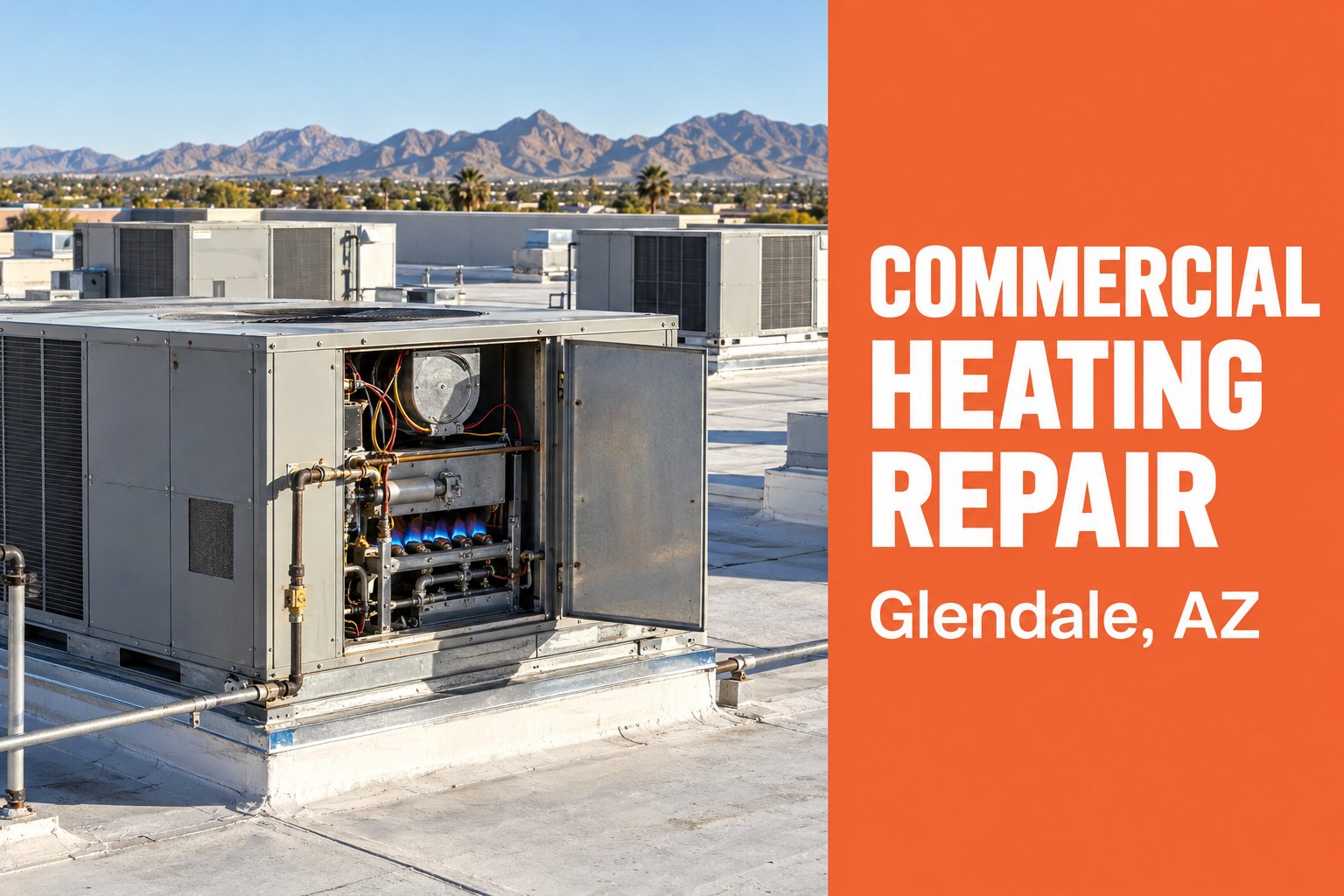
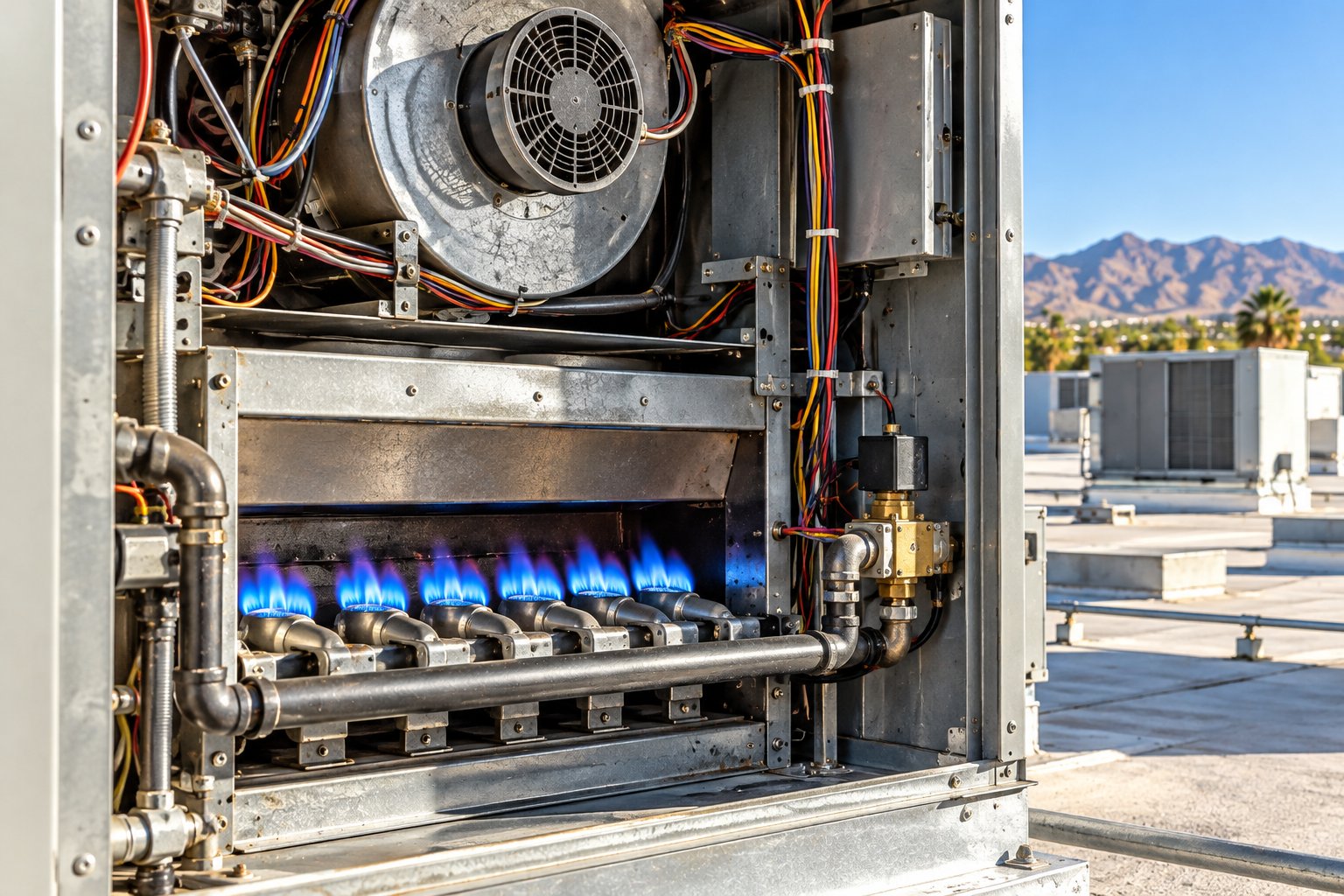
Most small and mid-size commercial buildings in Glendale use packaged rooftop units (RTUs). A gas pack combines cooling with a gas-fired heat section, while a heat pump RTU uses the refrigeration circuit in reverse and often adds electric heat strips for backup. Larger buildings may also use boilers, makeup air units or unit heaters hung from the ceiling in warehouses.
Because Glendale winters are mild, heating sections run only a few months a year. That short season is exactly why parts fail at startup, and why commercial heating repair Glendale AZ building owners plan for is mostly about the first few weeks of cold weather.
7 Commercial Heating Problems We Fix Most in Glendale
1. Gas pack won’t ignite
A cracked hot surface igniter, a dirty flame sensor or a failed gas valve can keep burners from lighting. The unit may try several times and then lock out. A technician tests each part in the ignition sequence before replacing anything.
2. Heat pump blowing cool air
Heat pumps deliver warmer air than you expect but not hot air like a gas furnace. If air is clearly cold, the cause may be low refrigerant, a stuck reversing valve, a failed defrost control or heat strips that don’t engage.
3. Thermostat or building controls
Many heating calls are schedules set for summer, occupancy settings that shut heat off, or a building automation point that lost its setpoint. Checking controls first saves time and money on commercial heating repair Glendale AZ visits.
4. Inducer motor or pressure switch faults
On gas packs, the inducer fan must prove draft before burners light. A weak motor, blocked flue or failed pressure switch will stop the heat cycle and often shows as an error code on the control board.
5. Blower or belt problems
Worn belts, bad bearings or a failed blower motor mean heat is produced but not delivered, a frequent commercial heating repair Glendale AZ finding. Squealing at startup is a common early warning.
6. Dirty filters and coils
Clogged filters reduce airflow, which trips high-limit switches on gas packs and lowers output on heat pumps. Monsoon dust makes this one of the most common commercial heating repair Glendale AZ causes by fall.
7. Heat exchanger or venting damage
Cracks, rust-through or loose flue connections on a gas pack are safety issues, not comfort issues. If you notice soot, a gas smell or carbon monoxide alarms, shut the unit down and call for service.
Symptoms and Likely Causes
Use this table to match what tenants report with the likely cause before commercial heating repair Glendale AZ technicians arrive:
| Symptom | Likely cause | First step |
|---|---|---|
| No heat, fan runs | Ignition failure or heat strips off | Check thermostat mode and breaker |
| Heat starts, then shuts off | High limit or flame sensor | Replace dirty filters |
| Cool air from heat pump | Defrost, refrigerant or reversing valve | Call a technician |
| Squealing at startup | Belt or blower bearings | Schedule service soon |
| Gas smell or CO alarm | Venting or gas leak | Shut down and call for help |
What Facility Managers Can Check First
- Confirm the thermostat or building controls are in heat mode with the right occupied schedule.
- Check the breakers and the unit disconnect on the roof (only if roof access is safe and permitted).
- Replace filters that look gray or clogged.
- Note any error codes, sounds or smells and when they happen.
- Write down which zones are cold so the technician can go straight to the right unit.
What Happens During a Repair Visit
A commercial heating repair Glendale AZ visit starts with the controls: the technician confirms the call for heat is reaching the unit. On the roof, they check power, read any fault codes and watch a full heating cycle. On gas packs that means checking the inducer, igniter, flame sensor, gas pressure, limit switches and venting. On heat pumps it means checking refrigerant pressures, the reversing valve, defrost controls and heat strips.
Once the cause is found, you get an explanation in plain language and a clear quote. Common parts are often on the truck, so many repairs can be finished in one visit. If the unit is old or has a cracked heat exchanger, the technician will tell you so you can compare repair with replacement.
Getting Your Building Ready Before Winter
The commercial heating repair Glendale AZ owners never need is the one a fall check prevents. A fall heating check covers ignition, burners, venting, belts, filters and thermostat schedules before tenants need heat. For buildings with several RTUs, scheduling all of them in October or early November means problems show up while the weather is still mild.
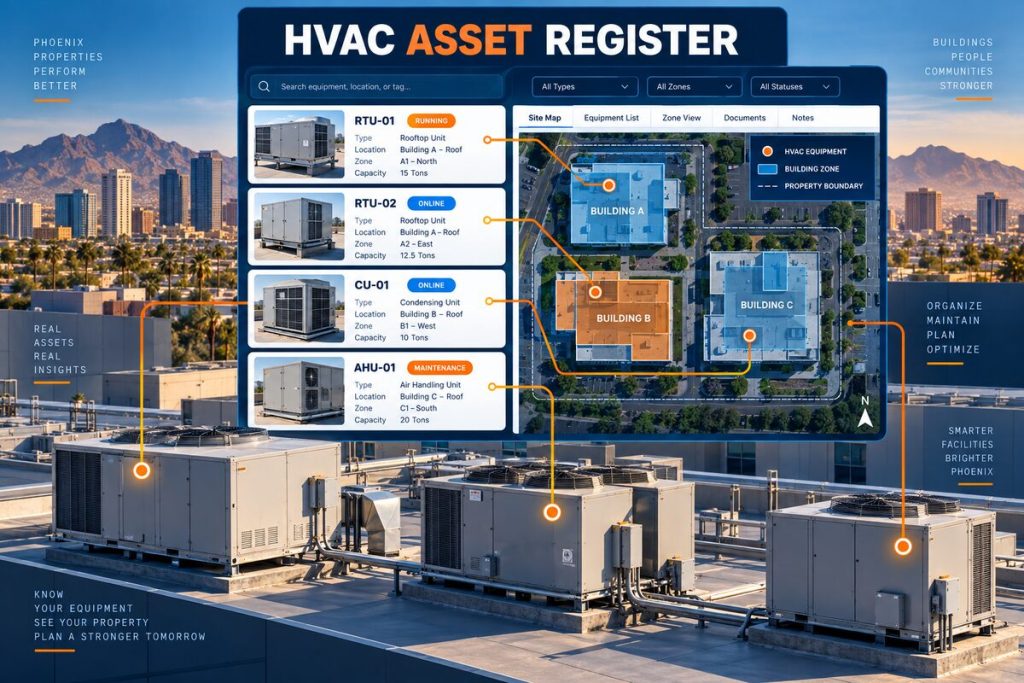
Keep a simple log of each unit: its age, last service date, parts replaced and any recurring faults. That record speeds up every future commercial heating repair Glendale AZ technicians handle on your roof and helps you plan replacements.
What Not to Do
- Don’t keep resetting a unit that locks out; repeated resets can hide a safety problem.
- Don’t bypass limit or pressure switches.
- Don’t use space heaters on extension cords in offices or warehouses as a long-term fix.
- Don’t send untrained staff onto the roof.
- Don’t ignore a gas smell; evacuate and call the gas utility.
Tenants cold in your Glendale building?
Our licensed, bonded and insured technicians repair rooftop units, gas packs and commercial heat pumps and give you a clear quote before any work begins.
What Affects the Cost of Commercial Heating Repair
The price of commercial heating repair Glendale AZ businesses pay depends on the type of unit, the part involved, unit age and parts availability, roof access, the number of units and whether the visit is after hours. We explain what we find and give you a clear quote before any work begins. Pairing repairs with a preventive maintenance plan helps avoid repeat calls.
Heating Season in the West Valley
Glendale nights drop into the 30s and 40s for several weeks each winter, while afternoons can still be warm. Many buildings switch between heating in the morning and cooling by midday, which is hard on heat pumps and controls. For retail around Westgate and Arrowhead, and for warehouses along the Loop 101 corridor, a cold morning can mean a commercial heating repair Glendale AZ call before the doors open.
The U.S. Department of Energy’s rooftop unit toolkit is a useful read if your RTUs are near the end of their life and you’re weighing repair against replacement.
Where We Serve
We provide commercial heating repair Glendale AZ businesses rely on, plus service across Phoenix, Peoria, Surprise and Avondale. Visit our Glendale service page, learn about our commercial heating services and rooftop unit service, or see when to call a commercial HVAC technician. For after-hours problems, see our emergency commercial service.
Written by the Discount AC & Refrigeration of Phoenix team
Our licensed, bonded and insured HVAC technicians work across Phoenix, Glendale, Peoria, Surprise and Avondale every day, and this guide comes from what we see on real calls. Questions about your building’s system? Call (602) 889-1367.
Frequently Asked Questions About Commercial Heating Repair in Glendale, AZ
What causes most commercial heating repair Glendale AZ calls?
Gas packs that won’t ignite, heat pumps blowing cool air, thermostat or control settings, dirty filters and worn blower parts, usually on the first cold mornings of the season.
Why is my rooftop heat pump blowing cool air?
It may be in defrost, low on refrigerant, stuck in cooling because of the reversing valve, or its backup heat strips may not be working. A technician can test each one.
Is it safe to keep resetting a rooftop unit that locks out?
No. Repeated lockouts usually mean a safety control is stopping the unit for a reason. Leave it off and have it checked.
What should I do if I smell gas near a rooftop unit?
Shut the unit down if it is safe, keep people away, call the gas utility and then call a technician.
Do you repair gas packs and heat pump RTUs?
Yes. We repair gas packs, heat pump rooftop units, makeup air units and ceiling unit heaters in offices, retail stores and warehouses.
How much does commercial heating repair Glendale AZ businesses need cost?
It depends on the unit type, the part, roof access, the number of units and the visit time. We give a clear quote before any work begins.
Should I repair or replace an old rooftop unit?
If the unit is near the end of its life, has a cracked heat exchanger or needs repeated major repairs, replacement often makes more sense. We help you compare both.
When should commercial heating be serviced in Glendale?
October or early November, before the first cold mornings, so problems are found while the weather is still mild.
Can you help with after-hours commercial heating repair Glendale AZ problems?
Yes. Call us and we will explain availability and next steps for your building.
Do you serve the rest of the West Valley?
Yes. We serve Glendale, Phoenix, Peoria, Surprise and Avondale.