

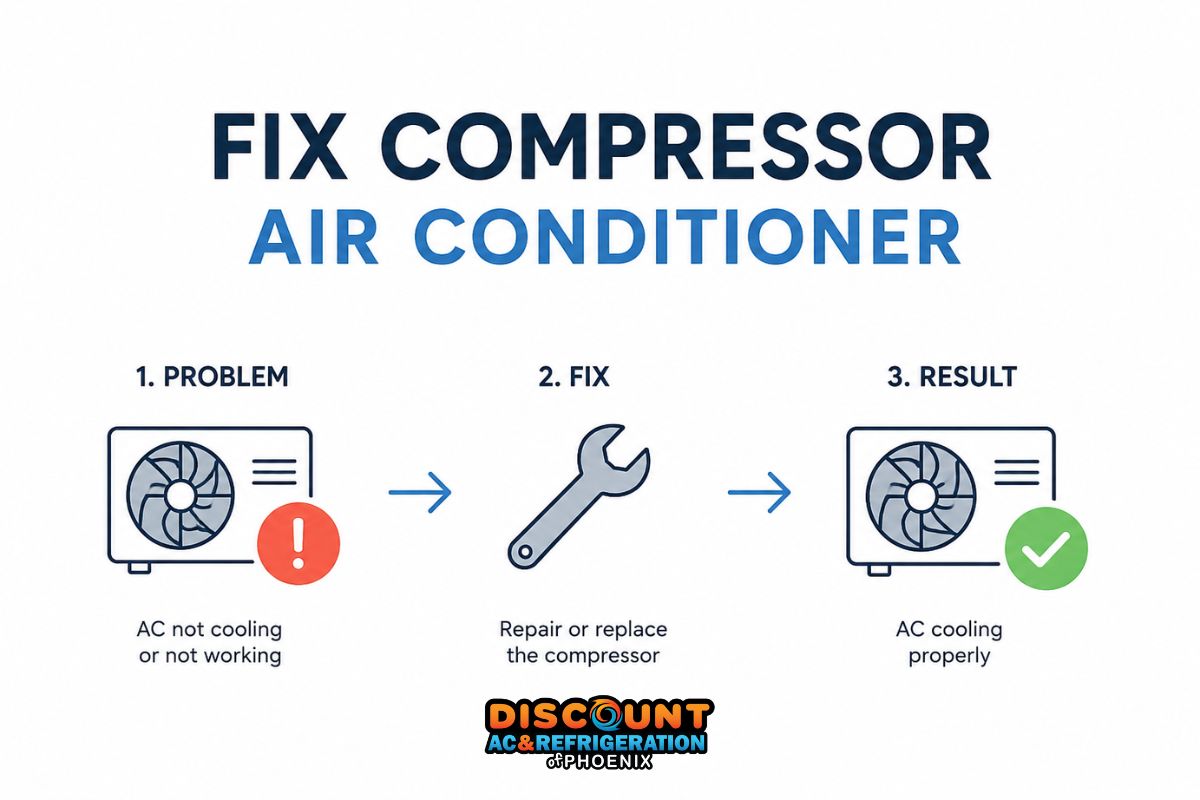
How to Fix an Air Conditioner Compressor: What Phoenix Homeowners Need to Know
When your air conditioner stops cooling on a 110-degree Phoenix afternoon, the compressor is often the first component your technician will inspect. The compressor circulates refrigerant through the system, and when it fails, the entire cooling process stops. Understanding what causes compressor problems, how they get diagnosed, and when a repair or replacement makes sense will help you make informed decisions and avoid unnecessary expenses.
What the Compressor Actually Does
The compressor sits in the outdoor unit of your air conditioner and pressurizes the refrigerant before it moves through the system. As the refrigerant travels between the indoor coil and the outdoor coil, it absorbs heat from inside your home and releases that heat outside. The compressor keeps that cycle moving continuously while your system runs.
In Phoenix, compressors work harder than in most other climates. Outdoor temperatures regularly exceed 110 degrees Fahrenheit from June through August, which forces the compressor to operate near its thermal limits for months at a time. That sustained workload accelerates wear and increases the likelihood of failure.
Common Signs of a Failing Compressor
Several symptoms point to a compressor problem. Recognizing them early can reduce repair costs and prevent additional damage to other components.
- Warm air from the vents: If the system runs but blows warm or room-temperature air, the compressor may have stopped pressurizing refrigerant.
- Hard starting or clicking sounds: A compressor that struggles to start will often produce a clicking or chattering noise before tripping the circuit breaker.
- Tripping breakers repeatedly: A failing compressor draws excess amperage, which overloads the circuit and causes repeated breaker trips.
- Vibration or rattling at startup: Loose internal components inside the compressor housing produce vibration during startup and shutdown.
- Reduced airflow combined with poor cooling: When the compressor underperforms, refrigerant pressure drops throughout the system, reducing overall cooling output.
Can a Compressor Be Repaired?
Some compressor problems involve external components rather than the compressor itself. A licensed HVAC technician will test these parts before concluding that the compressor requires replacement.
Capacitor Replacement
The start capacitor provides the electrical charge that gets the compressor motor running. When the capacitor fails, the compressor will not start, even though the motor itself remains functional. Capacitor replacement costs significantly less than compressor replacement and resolves the problem in most cases when the motor has not already overheated.
Contactor Repair
The contactor is an electrical switch that sends power to the compressor when the thermostat calls for cooling. A burned or pitted contactor interrupts power delivery. Replacing a faulty contactor restores normal operation when the compressor itself is still functional. Compressor Issue: Repair Type, Cost Range, and Outcome
| Problem | Repair Type | Typical Cost Range | Expected Outcome |
|---|---|---|---|
| Failed start capacitor | Capacitor replacement | $150 to $300 | Compressor starts normally if motor is undamaged |
| Burned or pitted contactor | Contactor replacement | $150 to $350 | Power delivery restored; compressor operates normally |
| Low refrigerant with leak | Leak repair and recharge | $300 to $800 | Pressure normalized; overheating and short-cycling stop |
| Seized or burned motor windings | Compressor replacement | $1,200 to $2,500 | Full cooling function restored on systems in good condition |
| Compressor failure on system 10+ years old | Full system replacement | $4,000 to $8,000 | New system with current efficiency ratings and full warranty |
Refrigerant Recharge
Low refrigerant levels cause the compressor to overheat and short-cycle, which mimics compressor failure. A technician will check refrigerant pressure with digital manifold gauges and inspect for leaks before adding refrigerant. Recharging without locating and sealing the leak will only delay the next failure.
Compressor Replacement
When the compressor motor has seized, burned windings are detected during electrical testing, or the scroll plates inside the compressor have failed mechanically, replacement becomes the appropriate course. A technician will measure resistance across the compressor terminals and check for voltage to ground before recommending replacement. In Phoenix, where systems run for nine or more months per year, a compressor on a system older than 10 to 12 years often warrants a conversation about full system replacement rather than compressor replacement alone, since other components carry similar hours of wear.
Preventing Compressor Problems Before They Start
Annual maintenance reduces the risk of compressor failure. A qualified technician will clean the condenser coils, verify refrigerant charge, test capacitor strength, inspect electrical connections, and confirm that airflow through the outdoor unit meets manufacturer specifications. Dirty condenser coils force the compressor to run hotter and longer, which shortens its service life. Scheduling maintenance in March or April, before peak cooling season begins in Phoenix, gives the system time to be serviced and corrected before it faces maximum load.
Keeping the area around your outdoor unit clear also matters. Shrubs, debris, and stored items within 18 to 24 inches of the unit restrict airflow across the condenser coils and raise operating temperatures.
When to Call a Professional
Compressor diagnosis and repair require EPA Section 608 certification to handle refrigerant legally, as well as specialized electrical testing equipment. A homeowner can check the circuit breaker, replace the air filter, and clear debris from around the outdoor unit, but the work beyond that point requires a licensed technician.
Attempting to add refrigerant or bypass electrical components without proper training carries risk of injury and can void your equipment warranty. A certified technician completes the full diagnostic process before recommending any repair, which protects both your safety and your investment.
Frequently Asked Questions
How long does a compressor replacement typically take in Phoenix?
Most compressor replacements take between 3 and 6 hours, depending on the unit’s location and the availability of the matching part. Phoenix HVAC suppliers generally stock common compressor models, so same-day or next-day service is often possible during peak summer months. Scheduling early in the morning helps avoid afternoon heat delays for the technician working on the outdoor unit.
How much does AC compressor replacement cost in Phoenix?
Compressor replacement in Phoenix typically runs between $1,200 and $2,800, depending on the unit’s tonnage, refrigerant type, and whether the compressor is still under manufacturer warranty. Labor costs tend to be higher in summer due to demand. If your system uses R-22 refrigerant, which is no longer manufactured, parts and refrigerant costs increase substantially and a full system replacement often makes more financial sense.
Does a compressor warranty cover labor costs?
Manufacturer warranties on compressors usually cover the part itself but exclude labor, refrigerant, and any other components replaced during the job. Some extended warranties or home warranty plans cover labor separately, so checking your policy before authorizing repairs can reduce out-of-pocket costs. A licensed HVAC contractor can help you file the parts warranty claim with the manufacturer.
Can extreme Phoenix heat damage a new compressor faster than normal?
A new compressor in Phoenix faces the same thermal stress as any other, so proper installation practices matter significantly. Technicians should verify correct refrigerant charge, adequate airflow around the outdoor unit, and proper electrical connections, since any of those factors can shorten compressor life even on a brand-new unit. Keeping the outdoor unit clear of debris and scheduling annual maintenance each spring extends compressor lifespan.
What maintenance steps help prevent compressor failure in Phoenix?
Replacing air filters every one to two months during peak cooling season reduces strain on the system by maintaining proper airflow. Annual tune-ups that include checking refrigerant pressure, cleaning condenser coils, and testing electrical components catch problems before they escalate into compressor damage. Installing a hard-start kit can also reduce the electrical stress the compressor motor experiences each time the system cycles on.
Talk to a Local Phoenix HVAC Technician Today
Discount AC & Refrigeration of Phoenix serves homeowners across the Phoenix metro area with licensed compressor diagnostics, repair, and replacement. If your system is blowing warm air, tripping breakers, or making unusual sounds at startup, call us at (602) 889-1367 or visit discount-acr-phoenix.com to schedule a service call. We will diagnose the problem accurately and give you a clear explanation of your repair options before any work begins.