
Med Spa HVAC Phoenix AZ: A Heat Pump Installation Case Study That Restored Comfort, Air Quality, and Profitability
A med spa lives and dies by its climate. When treatment rooms run too warm, clients sweat through facials and laser sessions become uncomfortable; when the air feels stale, the whole experience suffers. In this med spa HVAC Phoenix AZ case study, we walk you through a real heat pump installation our team completed, the problems we found, and how the right system protected both client comfort and the owner’s bottom line.
If you own or manage a med spa anywhere in the Valley, you already know the desert is unforgiving. Outdoor temperatures push past 110°F for weeks at a time, and a cooling system that merely “works” is rarely enough for a space full of sensitive equipment, product inventory, and clients lying still under bright lights. Over our years serving the Valley, we have learned that a med spa is one of the most demanding light-commercial environments a heat pump can face. This guide answers the question most owners ask us first: what does a proper med spa HVAC Phoenix AZ upgrade actually involve, and is it worth the investment? The short answer is yes, and the rest of this article shows you exactly why, drawing on a project we recently finished for a spa in the Scottsdale area.
We are Discount AC & Refrigeration of Phoenix, and our certified technicians handle residential comfort systems and demanding light-commercial spaces alike. You can read more about our background on our company story page, and you are always welcome to reach out to our team with questions about your own facility.
Why Med Spas in Phoenix Place Unusual Demands on HVAC Systems
A med spa is not a typical office, and it is not a typical retail space either. It blends clinical precision with hospitality comfort, and that combination creates cooling and air-quality challenges most standard systems were never sized to handle. When we evaluate a med spa HVAC Phoenix AZ project, we look at several factors at once rather than simply matching tonnage to square footage.
Tight Temperature and Humidity Tolerances
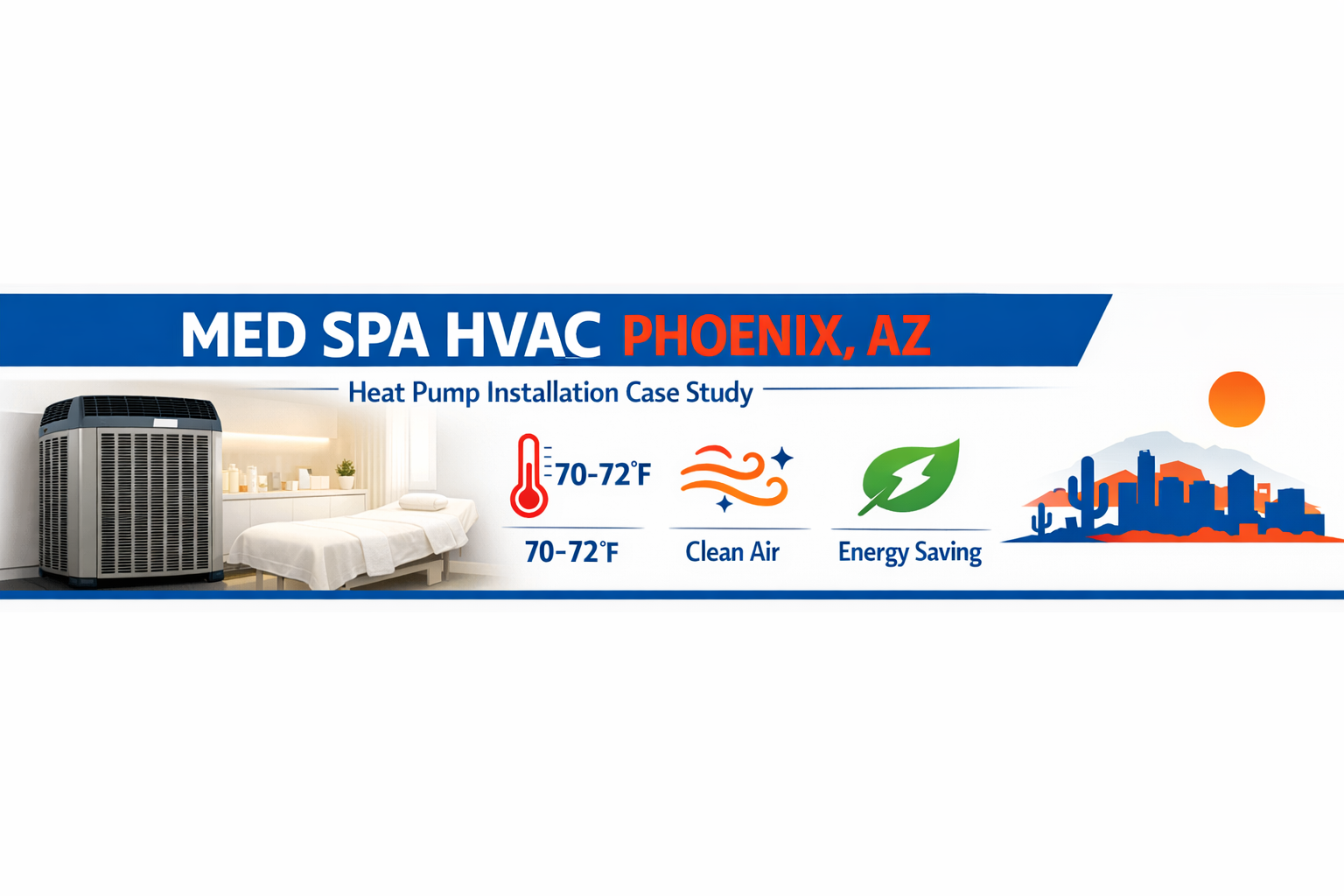
Many treatments require stable conditions. Injectables, certain skincare products, and laser equipment all perform best within narrow temperature bands, and clients expect to feel cool and relaxed within minutes of lying down. Drifting a few degrees may be invisible in a warehouse, but in a treatment room it is the difference between a five-star review and a refund request. We typically target a steady 70°F to 72°F with controlled humidity, which calls for a system that modulates rather than simply cycling hard on and off.
Heat-Generating Equipment in Small Rooms
Lasers, LED panels, sterilizers, and even the lighting in a treatment room all add heat load to a compact space. A room that looks small on a floor plan can carry the cooling demand of a much larger area once the equipment fires up. This is why a careful load calculation matters so much, and why we lean on the same precision we bring to every AC installation and replacement we perform.
Zoning Conflicts Between Areas
A waiting area full of people, a quiet treatment room with one client, and a back office with humming equipment all want different temperatures at the same time. A single-zone system forces a compromise that leaves someone uncomfortable. Heat pumps paired with smart zoning, or with ductless mini-split systems, let each space hold its own setpoint without fighting the others.
Before we lay out the project itself, the table below summarizes the comfort and air-quality targets we hold med spa systems to. We use this same checklist on every commercial HVAC visit so nothing slips through the cracks.
| Parameter | Med Spa Target | Why It Matters |
|---|---|---|
| Treatment room temperature | 70–72°F, steady | Keeps clients relaxed and protects sensitive products |
| Relative humidity | 40–50% | Prevents that stuffy feel and guards equipment |
| Temperature swing | ±1°F per zone | Variable-speed equipment holds it flat all day |
| Zoning | Waiting, treatment, office separated | Each area holds its own setpoint without conflict |
| Air filtration | MERV 11–13 media | Captures desert dust and product aerosols |
| Fresh-air ventilation | Verified intake, balanced | Clears CO₂ and odors without pulling in dust |
| Room pressure | Slightly positive in treatment rooms | Keeps corridor air and dust from drifting in |
| System type | Variable-speed heat pump | Efficient heating and cooling from one system |
| Sizing method | Manual J load calculation | Accounts for equipment heat, not just floor area |
| Maintenance cadence | Scheduled, season-based | Protects efficiency against relentless desert dust |
The Case Study: A Heat Pump Installation for a Scottsdale-Area Med Spa
A growing med spa near the Scottsdale border reached out to us at the start of last summer. They had expanded into a neighboring suite, added two laser rooms, and quickly discovered their aging packaged unit could not keep the new layout comfortable. Clients complained that the back treatment rooms felt stuffy by afternoon, and the front desk fielded daily comments about the warm waiting area. They needed a solution before peak season, and they needed it done without shutting the business down for a week.
The Problem We Diagnosed
Our first step was a full diagnostic visit rather than a quick quote. Using the same methodical approach we bring to AC repair and diagnostics, we measured airflow at every register, checked static pressure, and logged temperatures room by room over a full afternoon. Three issues stood out:
- The existing single-stage unit was undersized for the expanded footprint and the new equipment heat load, so it ran almost constantly yet never satisfied the back rooms.
- The original ductwork was leaky and poorly balanced, sending most of the conditioned air to the front of the suite while starving the new treatment rooms.
- There was no meaningful zoning, so the thermostat near the entrance dictated comfort for the entire space.
We always document findings with photos and readings before recommending anything. Transparency is central to how we work, and it gives owners the evidence they need to make a confident decision rather than taking our word on faith.
The Solution We Designed
Rather than simply swapping in a bigger version of the same equipment, we designed a layered solution. At the heart of it was a high-efficiency variable-speed heat pump, sized from a proper Manual J load calculation rather than a rule-of-thumb guess. A heat pump made sense here for several reasons that we explain in depth on our heat pump service page:
- Year-round versatility: Phoenix winters still bring chilly mornings, and a heat pump delivers efficient heating and cooling from a single system.
- Variable-speed comfort: The inverter-driven compressor modulates output, holding tight temperatures and pulling more humidity out of the air than an old single-stage unit ever could.
- Lower operating cost: Running at partial capacity most of the day uses far less energy than slamming on and off, which matters when a spa runs ten or more hours daily.
We paired the heat pump with redesigned, sealed ductwork and a multi-zone control system. The duct corrections alone made a dramatic difference; our ductwork services team resealed the trunk lines and rebalanced every branch so the laser rooms finally received their fair share of airflow. For the two new treatment rooms that sat farthest from the air handler, we added a complementary ductless head so each could hold its own setpoint independently.
The Installation, Done Around Their Schedule
Downtime is lost revenue for a med spa, so we staged the work to keep the business open. Our crew handled the heavy duct and equipment work before opening hours and on the spa’s lightest appointment day, then commissioned the system fully before the next busy morning. Because this was a light-commercial scope, we followed the same standards we apply to every commercial AC installation we complete, including a full startup checklist, refrigerant charge verification by weight, and airflow confirmation at every outlet.
The result spoke for itself. Within the first week, the back treatment rooms held a steady 71°F even during triple-digit afternoons, the waiting area stayed comfortable, and the owner reported a noticeable drop in the following month’s utility bill compared with the struggling old unit. That outcome is exactly what a well-executed med spa HVAC Phoenix AZ project should deliver.
Choosing the Right Heat Pump for a Med Spa
No two spas are identical, so the “best” system depends on your layout, equipment, and growth plans. Still, a few principles guide nearly every recommendation we make. If you are weighing your own upgrade, these are the questions worth asking before you sign anything.
Size for the Real Load, Not the Square Footage
An oversized system short-cycles, which leaves humidity behind and wears out components early. An undersized one never catches up on the hottest days. A measured load calculation that accounts for equipment heat, occupancy, glass, and insulation is the only reliable way to get this right, and it is a step we never skip.
Prioritize Variable-Speed and Modulation
For a space that demands stable comfort, a variable-speed heat pump is worth the premium. It runs longer at lower capacity, which keeps temperatures flat and steadily wrings moisture out of the air. That humidity control protects both client comfort and sensitive products. Owners exploring full-system upgrades can also review our broader residential services for similar variable-speed options used in high-end homes.
Plan for Zoning From the Start
Even if you only zone two or three areas at first, building the system with zoning in mind makes future expansion far simpler. We frequently combine a central heat pump with a few mini-split heads to cover rooms that need independent control without re-running an entire duct system.
Indoor Air Quality: The Overlooked Half of Med Spa Comfort
Temperature gets all the attention, but air quality is just as important in a med spa. Treatments can release product aerosols, and a room full of people generates carbon dioxide and odors that stale air traps. Clients notice fresh, clean air even when they cannot name what they are noticing. That is why we treat indoor air quality as a core part of every spa project rather than an afterthought.
For the Scottsdale spa, we added higher-grade media filtration and verified fresh-air intake so the space received proper ventilation without dumping in unfiltered desert dust. We also calibrated the system to maintain slightly positive pressure in the treatment rooms, which helps keep dust and corridor air from drifting in. These touches do not show up on a thermostat, but clients feel the difference, and so do the staff who spend all day in the building.
Below is a short walkthrough that shows the kind of work and attention to detail our team brings to projects like this one.
Maintenance That Protects a Med Spa Investment
Installing the right system is only half the story. A med spa runs its equipment hard, and desert dust is relentless, so a system left unattended will drift out of tune within a season. We enrolled the Scottsdale spa in a scheduled service plan, and we recommend the same for any owner who depends on stable comfort to protect revenue.
Our maintenance programs keep coils clean, filters fresh, refrigerant charge correct, and electrical connections tight, all of which preserve efficiency and head off surprise breakdowns. For larger facilities, the same logic applies through our commercial preventive maintenance visits. And because the desert does not wait for business hours, our 24/7 emergency AC repair line means a spa is never left sweating through a Saturday afternoon with a downed system.
Routine attention also lets us catch small problems early, whether that is a worn capacitor, a developing refrigerant leak, or a furnace component that needs service before winter. Owners who also rely on cold storage for products can lean on our commercial refrigeration expertise, and those with heating concerns can review our furnace service and repair options for the cooler months.
What Sets Our Team Apart
We have spent years installing and servicing systems across the Valley, and our technicians train continuously to stay current on the latest equipment and safety standards. That commitment shows in our ongoing training and in the consistent feedback we receive from the homeowners and businesses we serve. We believe in honest assessments, clear pricing, and workmanship that holds up over years rather than weeks. You can see the full range of what we offer across our service areas throughout metro Phoenix.
Frequently Asked Questions — Med Spa HVAC in Phoenix, AZ
Why is a heat pump a good choice for a med spa in Phoenix? +
A variable-speed heat pump cools efficiently through brutal Phoenix summers and still provides heating on chilly winter mornings, all from one system. Because it modulates output instead of cycling hard on and off, it holds tight temperatures and pulls more humidity from the air — exactly what treatment rooms and sensitive products need.
How long does a med spa HVAC installation take? +
Most light-commercial heat pump installations take one to three days depending on ductwork and zoning needs. We stage the heavy work around your appointment schedule — before opening hours or on your lightest day — so the spa keeps running while we complete the upgrade.
Do I need separate zones for each treatment room? +
Not always, but zoning is one of the biggest comfort upgrades for a med spa. Rooms with heat-generating lasers or LED panels often need independent control. We frequently pair a central heat pump with a few ductless mini-split heads so each demanding room holds its own setpoint without affecting the rest of the suite.
How does HVAC affect indoor air quality in a spa? +
Your HVAC system controls filtration, fresh-air ventilation, and humidity — the three things clients feel most. Proper MERV 11–13 filtration captures dust and product aerosols, balanced fresh-air intake clears odors and CO₂, and humidity control keeps the space from feeling stuffy. Together they create the clean, comfortable air clients associate with a quality spa.
How often should med spa HVAC equipment be serviced? +
Because a spa runs its equipment hard and desert dust is relentless, we recommend scheduled, season-based maintenance rather than a once-a-year check. Routine visits keep coils clean, filters fresh, refrigerant charge correct, and electrical connections tight, which preserves efficiency and prevents surprise breakdowns during peak season.
What size heat pump does my med spa need? +
It depends on far more than square footage. Lasers, sterilizers, lighting, occupancy, glass, and insulation all add to the real cooling load. We perform a Manual J load calculation so your system is sized for actual demand — never oversized to short-cycle or undersized to struggle on the hottest days.
Ready to Upgrade Your Med Spa’s Comfort? Let’s Talk
If your treatment rooms run warm, your air feels stale, or your energy bills climb every summer, the experience we shared here shows what a thoughtfully designed med spa HVAC Phoenix AZ solution can do. The Scottsdale project turned a daily source of client complaints into a quiet, comfortable, energy-conscious space, and we would welcome the chance to do the same for you. If you found this helpful, you may also enjoy browsing the rest of our HVAC blog for more real-world guidance on keeping desert spaces comfortable.
Every great project starts with an honest inspection. Our team will measure your real load, study your layout, and recommend only what your space actually needs, with no pressure and no inflated promises. Call us today at (602) 889-1367, request a visit through our contact page, and stop by our Google Maps listing to see why so many Valley businesses trust us. You can also get directions and read reviews on our local map listing before you visit. Whether you need a full heat pump installation or simply a second opinion, we are ready to help your med spa feel its best, all year long.