A reach in cooler freezing food can create waste, disrupt prep, and make staff question whether the cabinet is operating safely. The pattern matters. A few frozen containers near one vent point to a different operating context than products freezing throughout the entire cabinet. Before changing controls repeatedly, staff should document where the problem appears, when it begins, and what changed around the same time.
Start by Separating Localized Freezing From Cabinet-Wide Overcooling
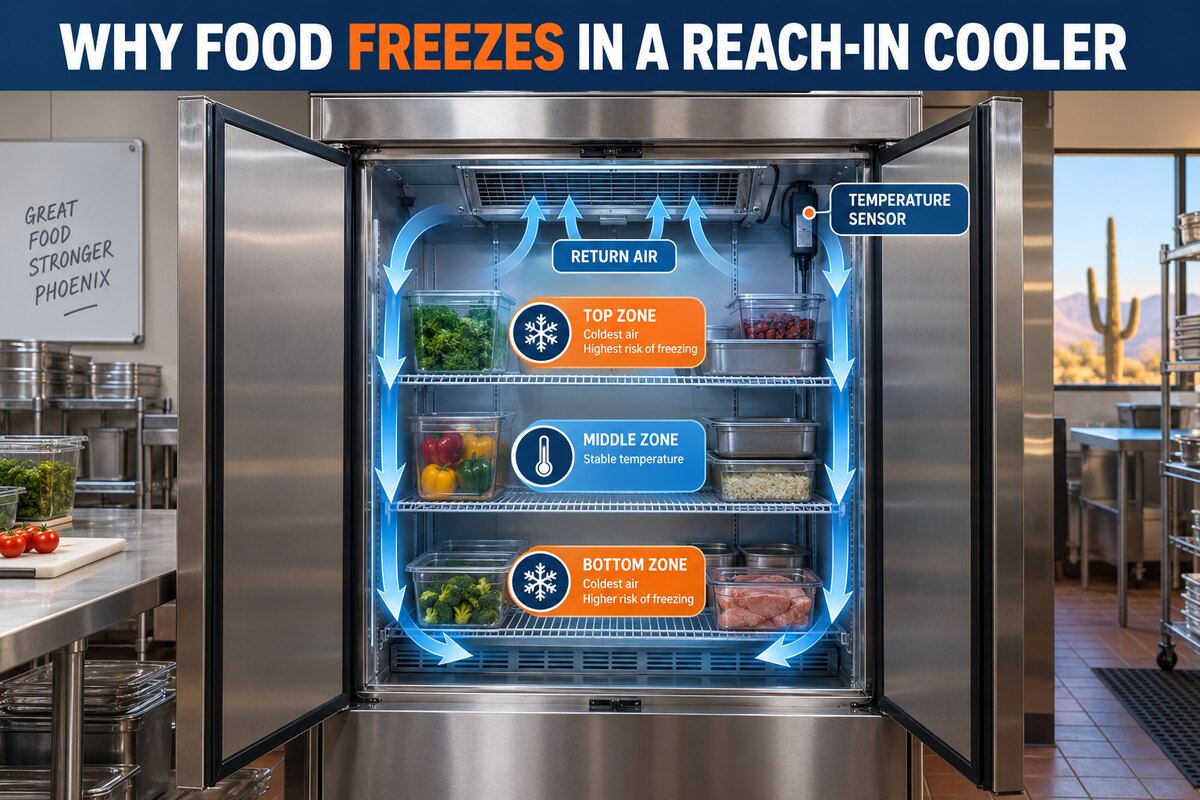
Localized freezing usually affects one shelf, one corner, or products closest to the discharge-air path. Cabinet-wide overcooling appears across several zones and may coincide with a display reading that remains lower than the normal operating pattern. Neither observation proves a failed component, but the distinction gives a refrigeration technician a clearer starting point.
Create a simple shelf map. Mark the top, middle, bottom, door side, and rear of the cabinet. Record which products freeze and whether the condition repeats after restocking, cleaning, a busy service period, or overnight operation.
How Air Moves Through a Reach-In Cooler
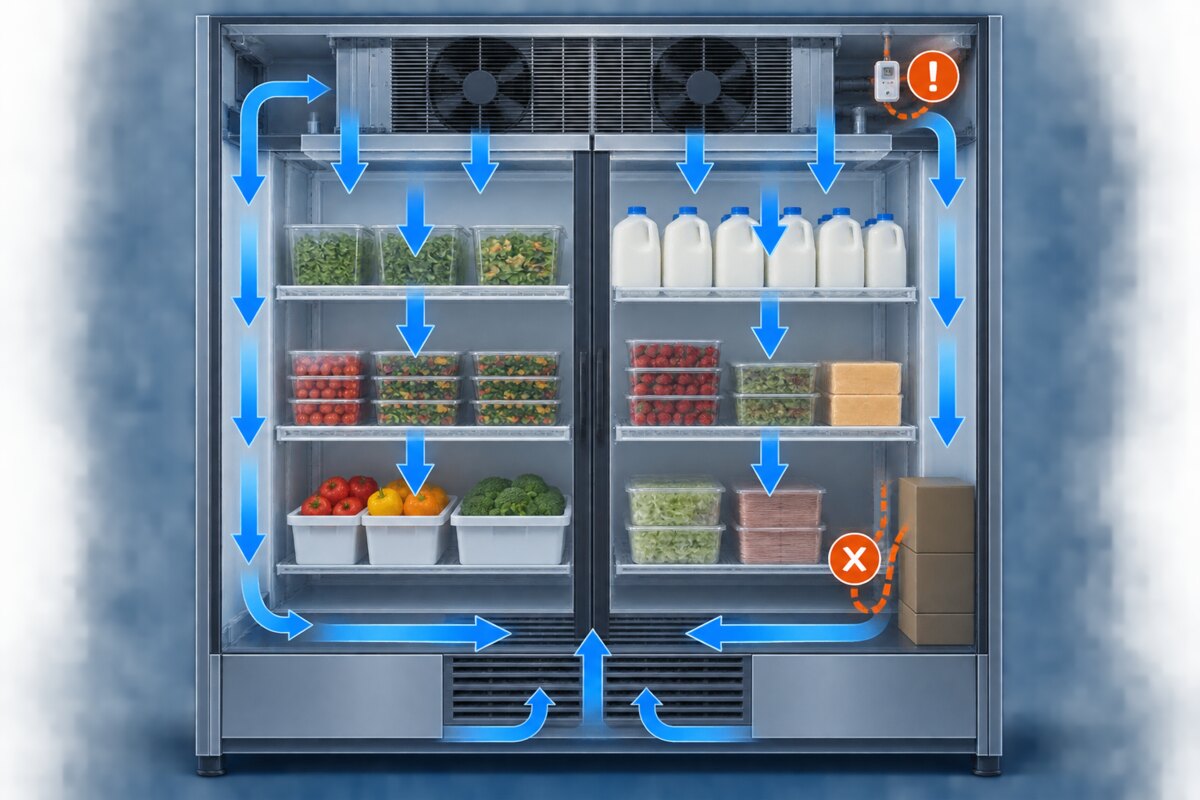
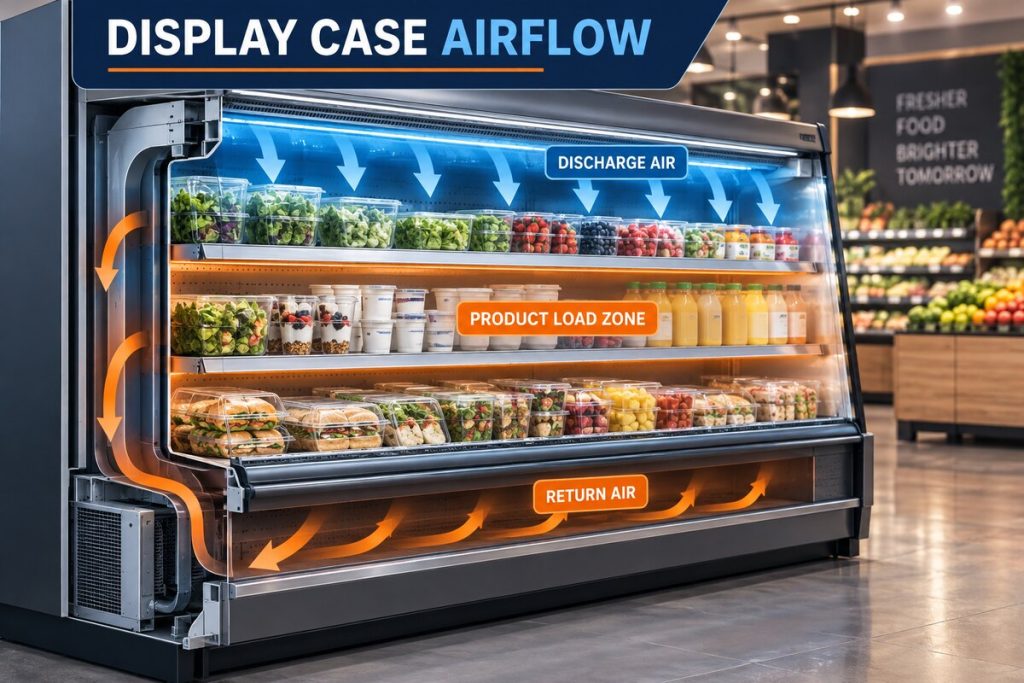
Cold air leaves the evaporator area, travels through the cabinet, passes around stored products, and returns through a designated air path. Containers pushed against discharge openings or return-air grilles can redirect that circulation. The result may be a cold pocket beside one product group and weak circulation elsewhere.
Keep manufacturer-defined clearances open. Do not use cardboard, foil, towels, or improvised barriers to redirect air. These materials can create new restrictions and hide the original pattern.
Product Placement and Loading Patterns
A reach-in performs differently when it is lightly loaded, densely packed, or restocked with warm product. Record whether frozen items sit directly beneath a discharge outlet, touch the rear wall, extend beyond shelf edges, or block the return path. Note container size and whether shelves were replaced with solid trays that change airflow.
- Leave the designed air path unobstructed.
- Keep products within the cabinet load limits.
- Avoid pressing flexible packaging against cold surfaces.
- Use consistent shelf locations when comparing readings.
Sensor Location and Control Context
The displayed temperature is one piece of information. The control sensor may measure air in a location that does not match the temperature at every product position. A displaced, coated, damaged, or poorly influenced sensor can contribute to unusual operation, but sensor testing and control calibration belong to qualified personnel.
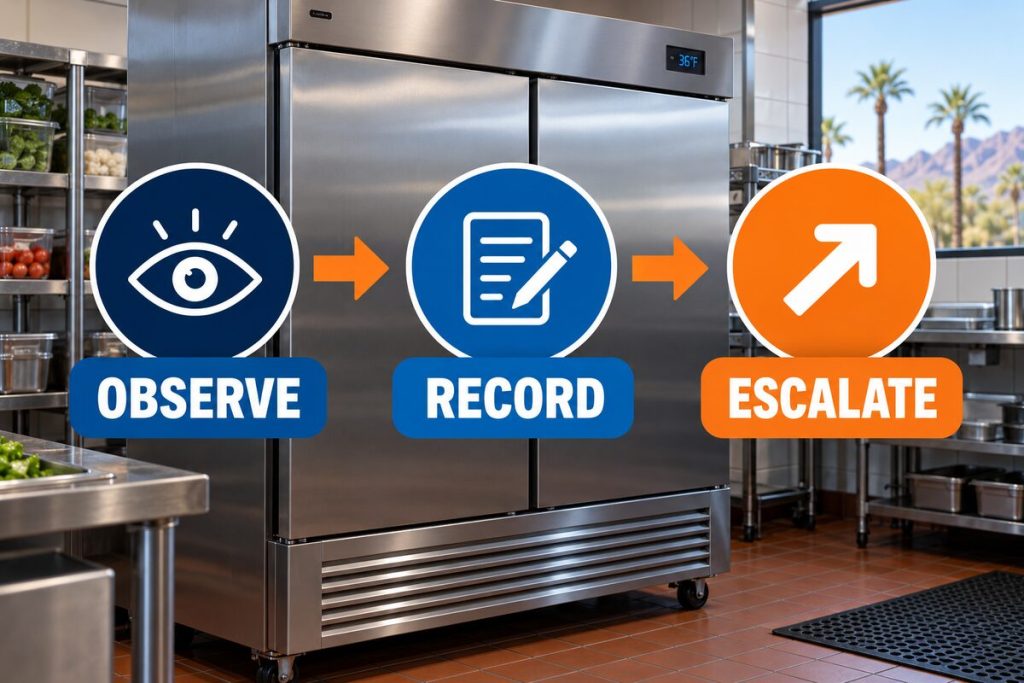
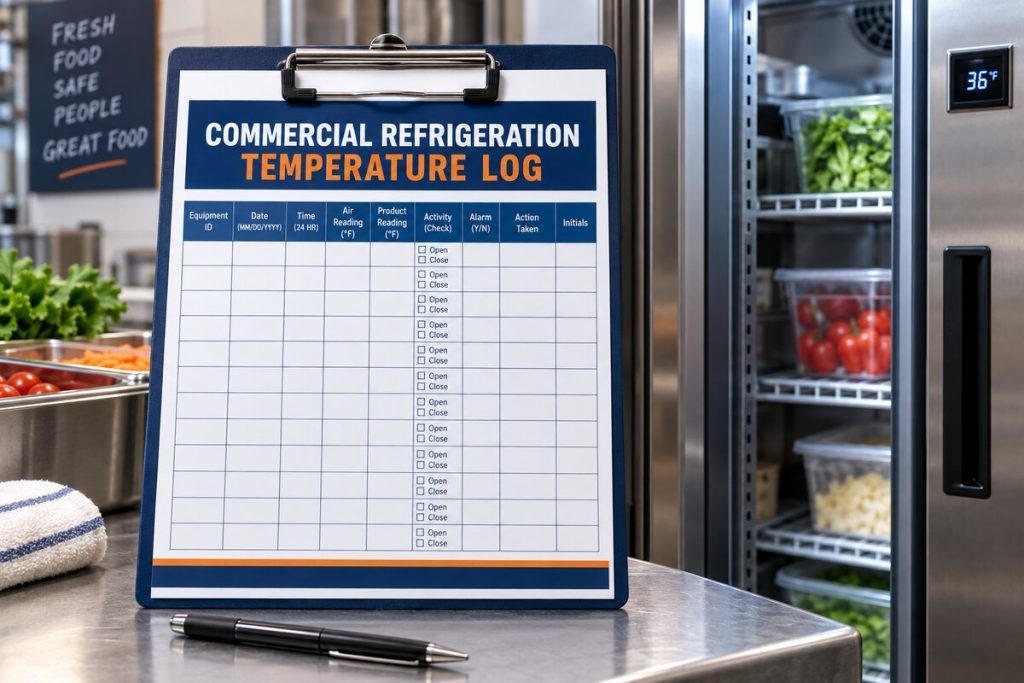
Staff can record the displayed value, an approved independent reading, cabinet activity, and the location of affected products. Avoid repeated setpoint changes because they can erase the original pattern and make diagnosis harder.
Fan and Defrost Patterns
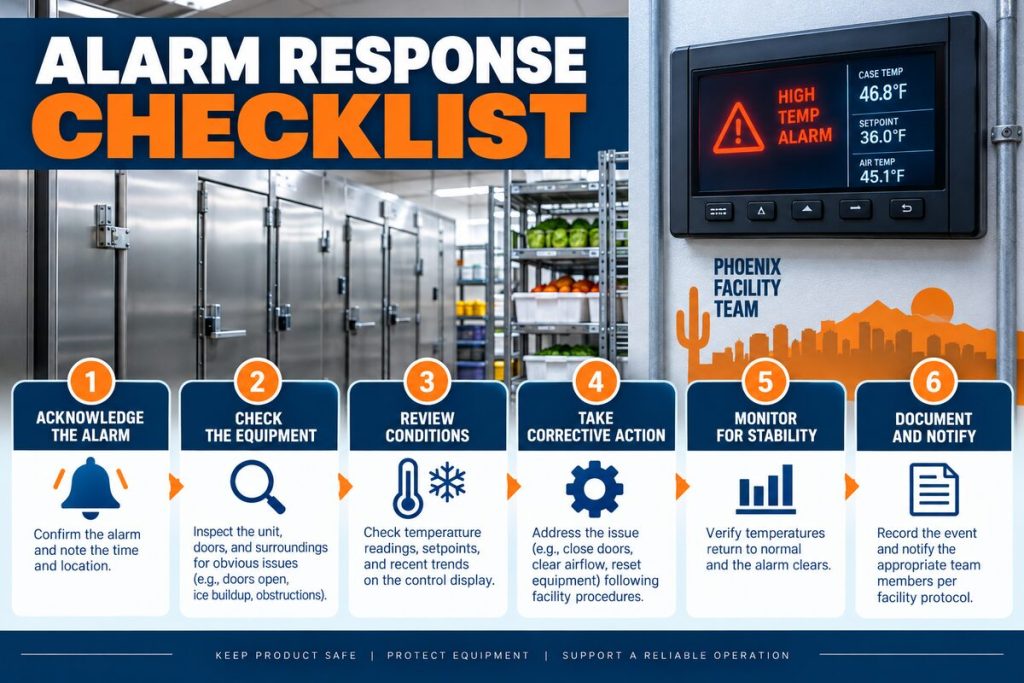
Fans distribute air, and defrost cycles manage frost on the evaporator. A change in sound, intermittent airflow, unusual frost, or a pattern that appears only after certain cycles deserves documentation. Do not remove guards, reach toward a moving fan, chip ice, or bypass door switches. Photograph visible frost from a safe position and note the time.
Door Use, Gaskets, and Operating Conditions
Frequent opening introduces warm, moist air. A door that does not close fully, damaged gasket, loaded shelf that interferes with the door, or nearby heat source can alter recovery. These conditions often cause warming or condensation, but they can also change how the control responds and where cold air concentrates. Record door traffic and recovery rather than assuming one cause.
Safe Checks Staff Can Perform
Staff can verify that vents are not blocked, confirm the door closes normally, compare product placement, record readings at consistent points, and review recent loading or cleaning activity. Follow the facility food-safety plan for product decisions. Do not open electrical panels, handle refrigerant, adjust hidden controls, or disassemble the evaporator section.
When to Request Professional Diagnostics
Schedule service when freezing repeats after obvious loading and airflow restrictions are corrected, when several cabinet zones are affected, or when the cooler shows alarms, heavy frost, fan changes, unusual cycling, or unstable recovery. Provide the equipment ID, photos, readings, product map, door activity, and recent maintenance history.
Observation Summary
| Observation | What staff should record | Why it helps |
|---|---|---|
| Frozen product location | Shelf, side, distance from vents | Separates local cold pockets from cabinet-wide patterns |
| Display and independent reading | Time, location, instrument used | Adds context without assuming the cause |
| Loading activity | Delivery time and product placement | Shows whether the pattern follows restocking |
| Airflow and sound | Visible obstruction or change from normal | Helps a technician prioritize inspection |
| Door activity | Traffic, closure, gasket observation | Documents infiltration and recovery context |
Account for Phoenix Operating Conditions
Phoenix commercial kitchens, markets, and food-service facilities operate through long periods of high outdoor temperature. Equipment location, condenser exposure, kitchen heat, delivery schedules, door traffic, and the condition of the surrounding mechanical area can all affect the refrigeration load. These conditions do not replace equipment testing, but they belong in the service history because a pattern that appears only during a particular shift, delivery window, or high-load period may be important.
Record nearby changes such as new shelving, blocked clearances, construction dust, altered store airflow, or a recently moved case. Keep approved access and ventilation areas clear. Cleaning condenser components, opening electrical sections, testing refrigerant circuits, or changing controls should follow the manufacturer requirements and be completed by qualified personnel.
What a Professional Evaluation May Include
A commercial refrigeration technician may compare the operating history with cabinet temperatures, sensor response, control calls, fan operation, defrost behavior, door condition, heat rejection, electrical performance, and sealed-system readings. The exact sequence depends on the equipment and the evidence available. A responsible diagnosis connects measured findings to the recommendation instead of replacing parts from one symptom.
Ask for a written explanation of the observed condition, the proposed scope, important exclusions, and how operation will be checked after approved work. Keep the final service report with the equipment log so future technicians and facility managers can see what changed, what was tested, and whether the same pattern returned.
Build a Clear Service Request
A concise request should identify the unit, location, earliest known change, affected product or zone, alarm history, readings, door or stocking context, and any action already taken under the facility procedure. Include photographs when they safely show the condition. Name the person who can provide access and authorize diagnostic work.
Avoid statements that assume the cause, such as “the compressor is bad” or “the unit only needs refrigerant,” unless a qualified technician has already documented that finding. Describe what staff actually observed. This keeps the service conversation focused and helps preserve a defensible maintenance record.
Related Commercial Refrigeration Resources
- Commercial refrigeration services
- Reach-in coolers and display cases
- Emergency refrigeration service
- Refrigerant leak detection
- Contact Discount AC & Refrigeration of Phoenix
Frequently Asked Questions
Why does food freeze only on the top shelf?
The top shelf may be closer to discharge air, but cabinet design and loading vary. Record the exact positions and request service if the pattern continues.
Should staff raise the thermostat setting?
Repeated changes can mask the original condition. Follow the approved operating procedure and document the existing setpoint before any authorized adjustment.
Can blocked airflow make some products freeze?
Yes, restrictions can redirect air and create localized cold zones while other areas receive less circulation.
Is a frozen product proof of a bad thermostat?
No. Placement, airflow, sensors, controls, fans, defrost, and other conditions can produce similar symptoms.
When is the problem urgent?
Escalate according to the food-safety plan when product condition is uncertain, temperatures are unstable, alarms repeat, or the cabinet cannot recover.
Request Commercial Refrigeration Service
Discount AC & Refrigeration of Phoenix can review the equipment history, operating pattern, and site conditions before recommending the appropriate diagnostic scope.