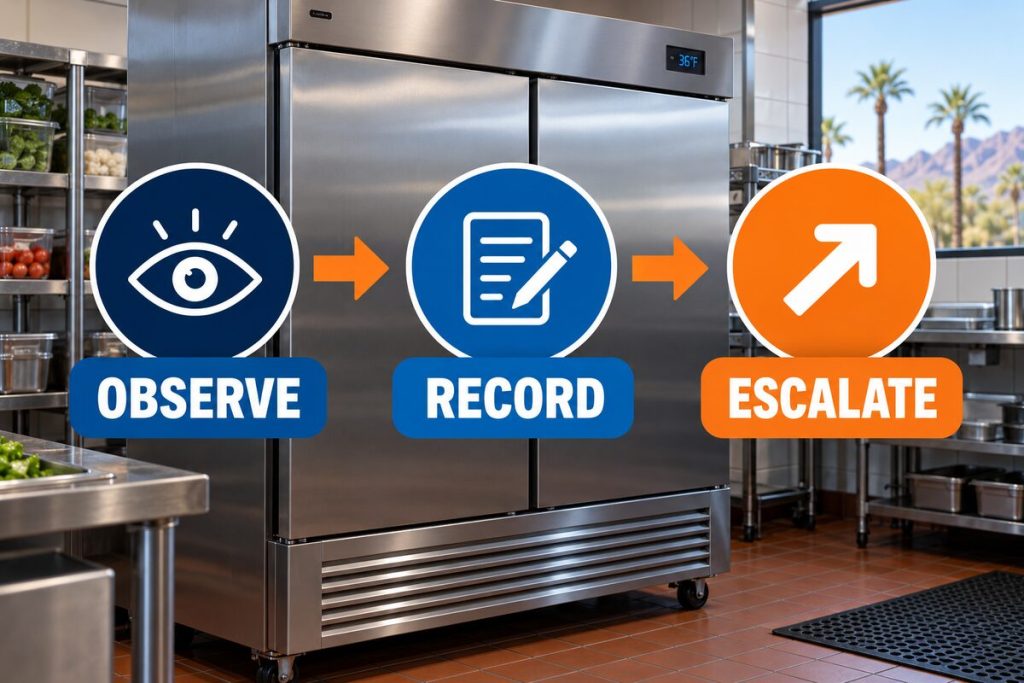
Recognizing reach in cooler repair signs early helps staff protect inventory, improve service notes, and avoid guessing at the cause. A single unusual reading may reflect door traffic or recent loading. A repeated pattern involving temperature recovery, alarms, frost, condensation, sound, cycling, or door condition deserves a structured review by a commercial refrigeration technician.
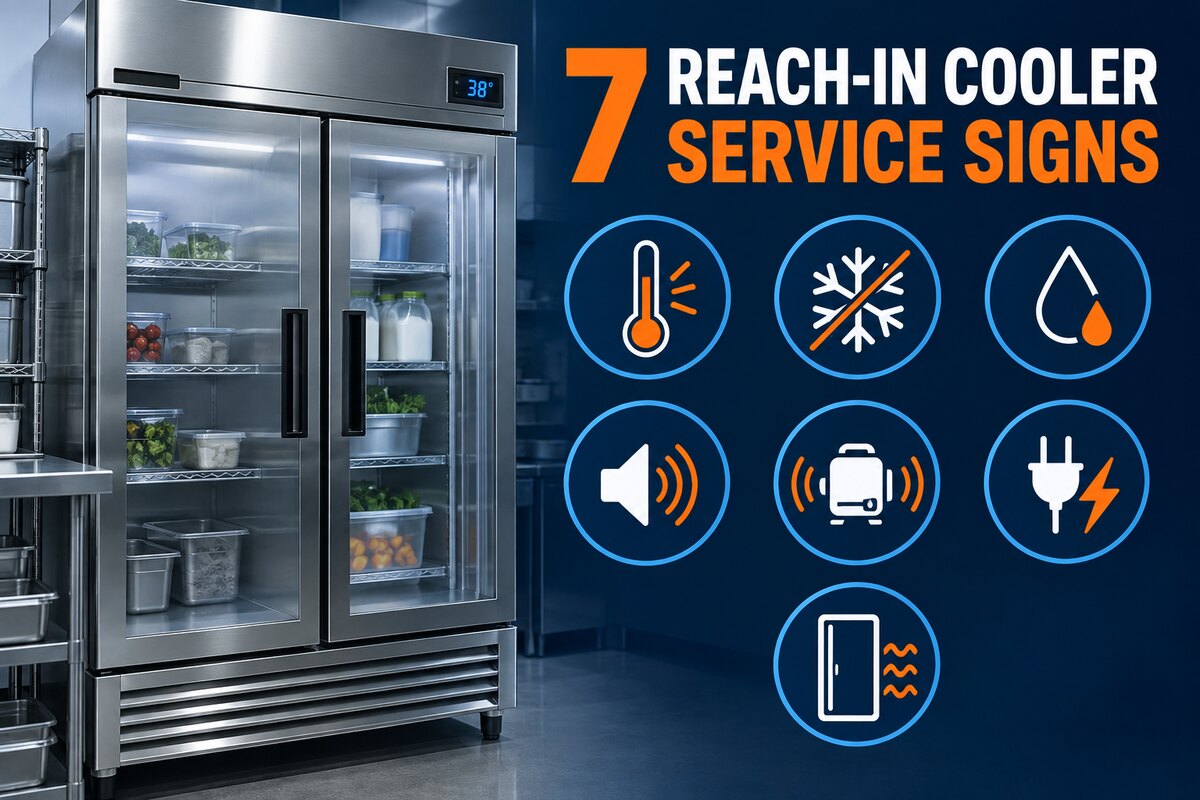
1. Temperature Recovery Keeps Taking Longer
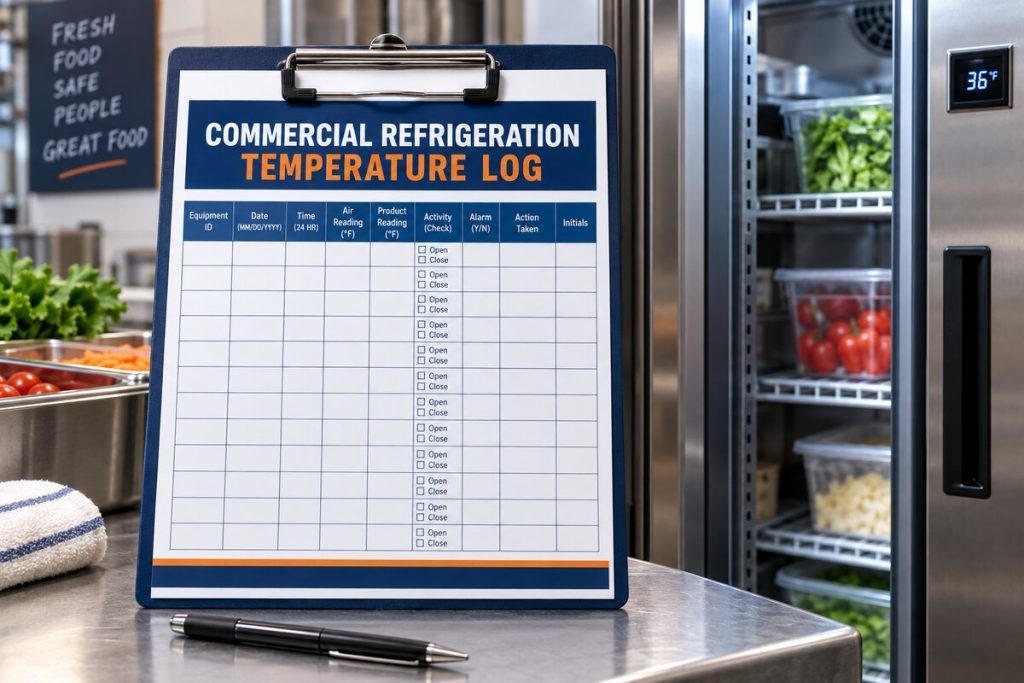
After normal door activity or restocking, the cabinet should return toward its established operating pattern. Record the displayed temperature, an approved independent reading, the time of loading, door activity, and how long the change lasts. A slow recovery can involve load, airflow, controls, heat rejection, or refrigeration performance; the log helps separate a one-time event from a recurring condition.
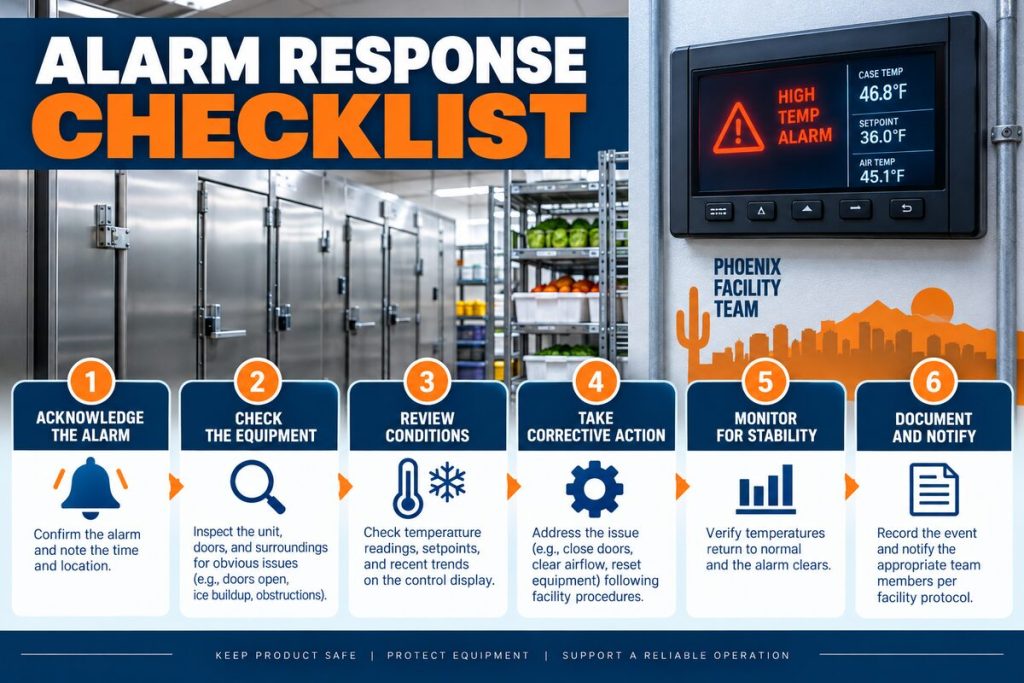
2. Alarms Repeat or Return After Reset
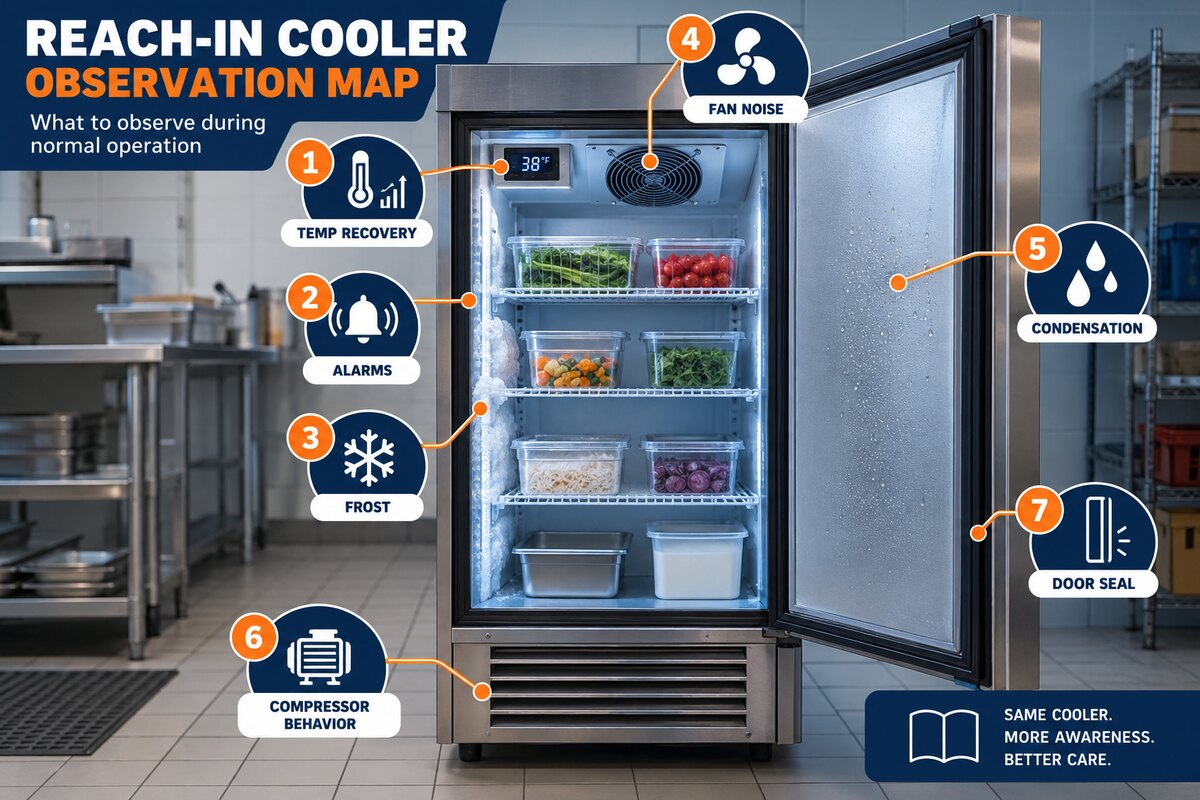
An alarm is evidence, not a diagnosis. Write down the exact code, date, time, cabinet condition, and what was happening operationally. Avoid repeated resets unless the manufacturer procedure and facility policy authorize them. Clearing an alarm without recording it can remove useful context and allow a protective condition to recur.
3. Frost Appears in a New or Uneven Pattern
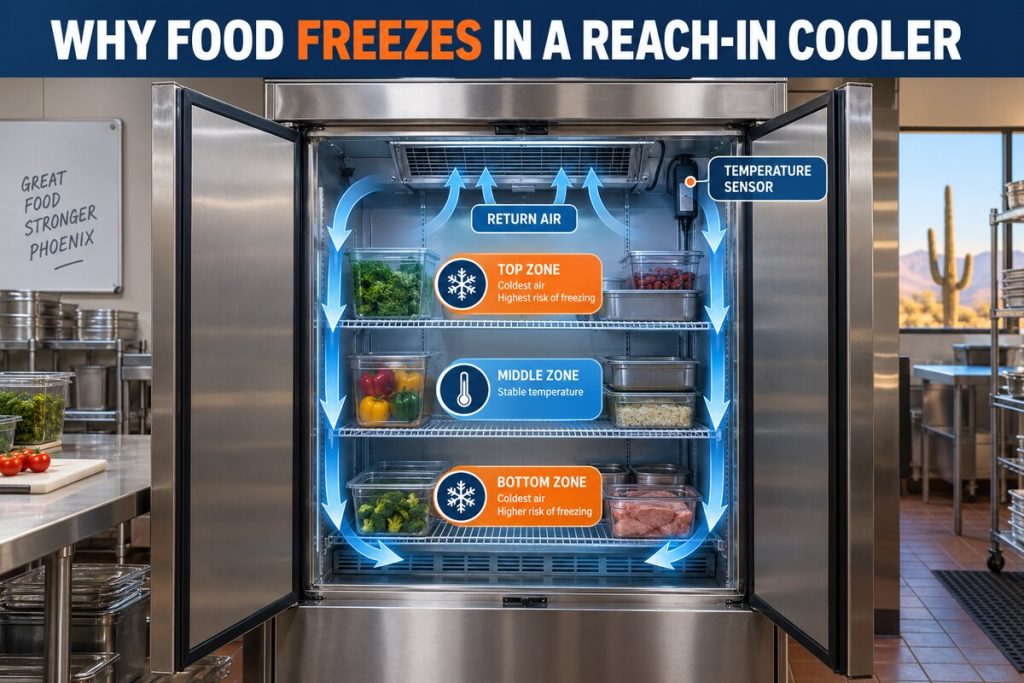
Visible frost around the evaporator area, on one section of tubing, or along product zones can reflect different operating conditions. Do not chip ice or use heat to remove it. Photograph the pattern from outside guarded areas, note whether airflow changed, and request service when frost returns or affects cabinet performance.
4. Condensation or Water Appears Where It Did Not Before
Moisture on doors, frames, floors, or interior surfaces can relate to door closure, gaskets, drainage, humidity, defrost, insulation, or cabinet operation. Record where the water begins and whether it follows cleaning, busy periods, or defrost. Keep walking areas safe and follow the site escalation procedure.
5. Fan Noise or Airflow Changes
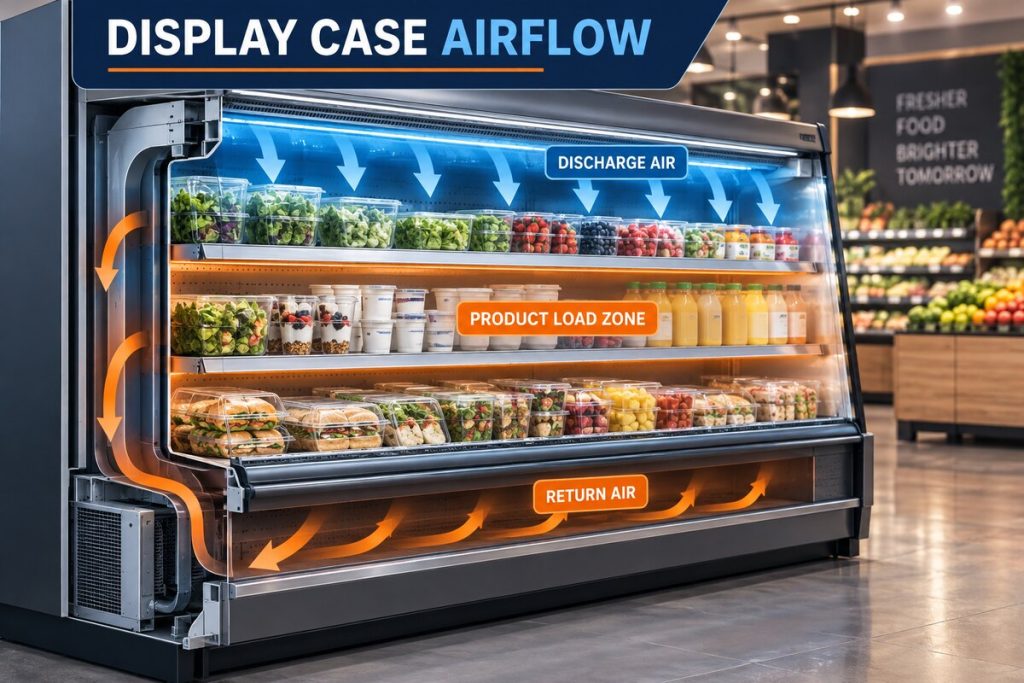
A new rattle, squeal, scraping sound, pulsing airflow, or quiet fan area deserves attention. Do not remove guards or reach into the fan section. Note whether the sound occurs continuously, during door opening, or at a repeating interval. Changes in sound often give the technician a useful timeline.
6. Compressor Operation Seems Different
Staff may notice unusually long operation, frequent starts and stops, or a cabinet that sounds different from its normal pattern. Do not touch hot surfaces or electrical components. Record run behavior, temperature trend, room conditions, and alarms. Only a technician should test electrical and sealed-system components.
7. The Door, Hinge, or Gasket No Longer Works Normally
A door that drifts open, requires force, shows visible gasket damage, or does not align can increase infiltration and change recovery. Remove product that interferes with closure and document the condition. Gasket, hinge, latch, heater, or cabinet-alignment work should match the equipment design.
Protect Inventory Before Troubleshooting Equipment
Follow the business food-safety plan and manager instructions. Move product only to approved equipment, label affected inventory as required, and preserve temperature records. Equipment service does not replace product-safety decisions made under the applicable procedure or authority.
What to Prepare Before Calling
Have the equipment ID, make and model, alarm codes, recent readings, affected products, photos, service history, and a reliable on-site contact ready. Explain access restrictions and the time pattern. Clear information helps define the diagnostic scope without promising a remote diagnosis.
Observation Summary
| Sign | Record first | Avoid |
|---|---|---|
| Slow recovery | Time, loading, door traffic, readings | Repeated setpoint changes |
| Alarm | Exact code and operating context | Clearing without documentation |
| Frost | Location, photo, recurrence | Chipping or heating ice |
| Water | Source area and timing | Opening panels |
| Noise | Type, interval, location | Reaching past guards |
Account for Phoenix Operating Conditions
Phoenix commercial kitchens, markets, and food-service facilities operate through long periods of high outdoor temperature. Equipment location, condenser exposure, kitchen heat, delivery schedules, door traffic, and the condition of the surrounding mechanical area can all affect the refrigeration load. These conditions do not replace equipment testing, but they belong in the service history because a pattern that appears only during a particular shift, delivery window, or high-load period may be important.
Record nearby changes such as new shelving, blocked clearances, construction dust, altered store airflow, or a recently moved case. Keep approved access and ventilation areas clear. Cleaning condenser components, opening electrical sections, testing refrigerant circuits, or changing controls should follow the manufacturer requirements and be completed by qualified personnel.
What a Professional Evaluation May Include
A commercial refrigeration technician may compare the operating history with cabinet temperatures, sensor response, control calls, fan operation, defrost behavior, door condition, heat rejection, electrical performance, and sealed-system readings. The exact sequence depends on the equipment and the evidence available. A responsible diagnosis connects measured findings to the recommendation instead of replacing parts from one symptom.
Ask for a written explanation of the observed condition, the proposed scope, important exclusions, and how operation will be checked after approved work. Keep the final service report with the equipment log so future technicians and facility managers can see what changed, what was tested, and whether the same pattern returned.
Build a Clear Service Request
A concise request should identify the unit, location, earliest known change, affected product or zone, alarm history, readings, door or stocking context, and any action already taken under the facility procedure. Include photographs when they safely show the condition. Name the person who can provide access and authorize diagnostic work.
Avoid statements that assume the cause, such as “the compressor is bad” or “the unit only needs refrigerant,” unless a qualified technician has already documented that finding. Describe what staff actually observed. This keeps the service conversation focused and helps preserve a defensible maintenance record.
Related Commercial Refrigeration Resources
- Commercial refrigeration services
- Reach-in coolers and display cases
- Emergency refrigeration service
- Refrigerant leak detection
- Contact Discount AC & Refrigeration of Phoenix
Frequently Asked Questions
Does one warm reading mean the cooler needs repair?
Not necessarily. Compare the reading with loading, door activity, product location, and the established pattern.
Can staff reset a recurring alarm?
Follow the manufacturer procedure and facility policy. Record the alarm before any authorized reset.
What information helps the technician most?
Equipment ID, exact readings, times, alarm codes, photos, operational context, and recent maintenance history.
Should staff remove frost from the evaporator?
No. Do not chip ice, apply heat, or remove guards. Document the visible pattern and request professional evaluation.
When should a manager request urgent service?
Escalate when the cabinet cannot maintain the approved operating pattern, alarms repeat, water creates a hazard, electrical odor appears, or inventory protection is at risk.
Request Commercial Refrigeration Service
Discount AC & Refrigeration of Phoenix can review the equipment history, operating pattern, and site conditions before recommending the appropriate diagnostic scope.