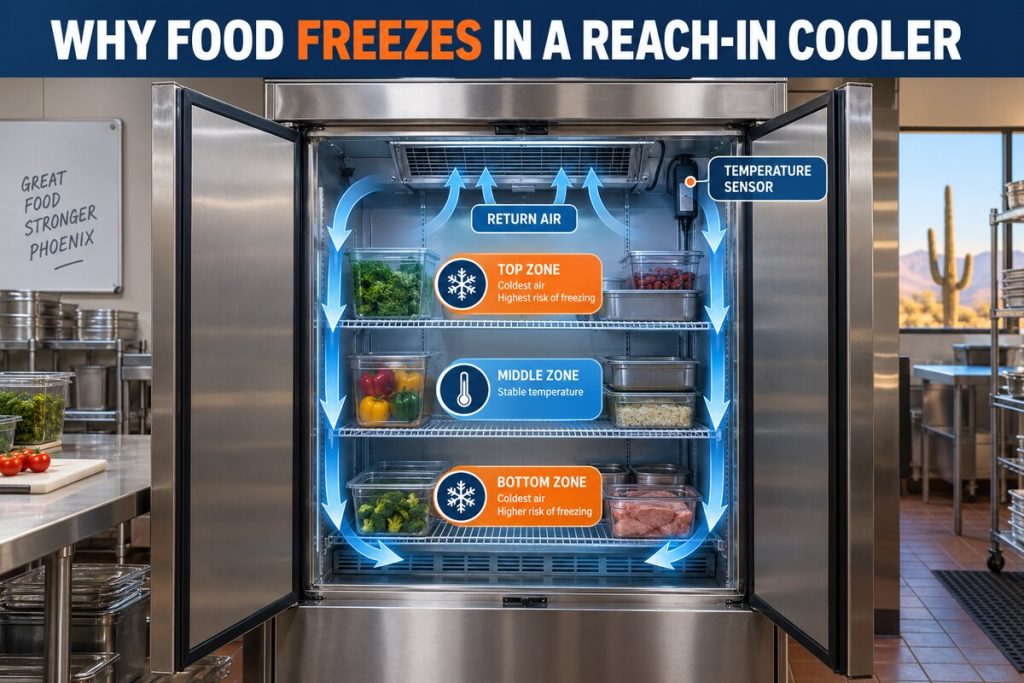
Refrigerated display case airflow is part of the equipment’s temperature-control strategy. Cold discharge air must travel through the designed path, move around merchandise, and return without being blocked. When products extend beyond load limits, cover grilles, or disrupt an open-case air curtain, cabinet performance can change even when the refrigeration system is operating.
The Basic Airflow Path
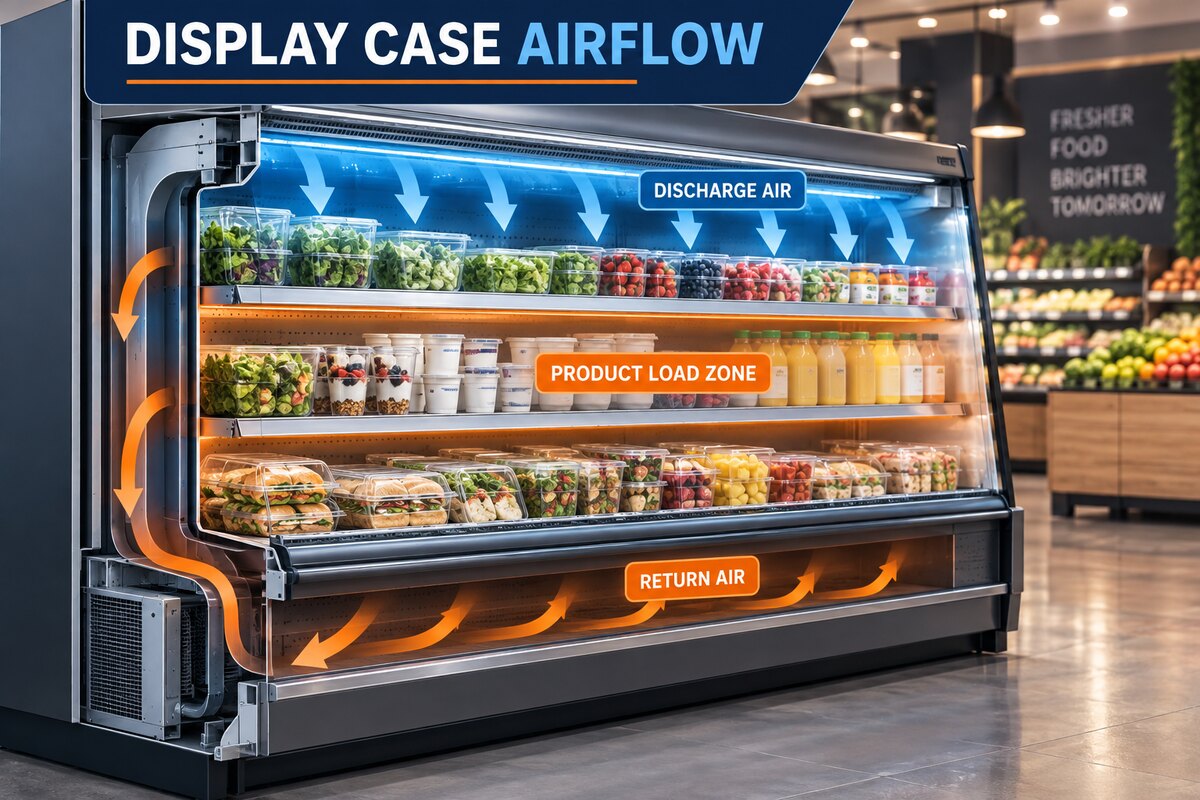
Most cases deliver conditioned air from a discharge area and collect it through a return-air opening. Shelves, baffles, grilles, and product limits help preserve that circuit. Exact designs vary, so store teams should follow the manufacturer layout and merchandising instructions rather than assuming every display case loads the same way.
Discharge Air Versus Return Air
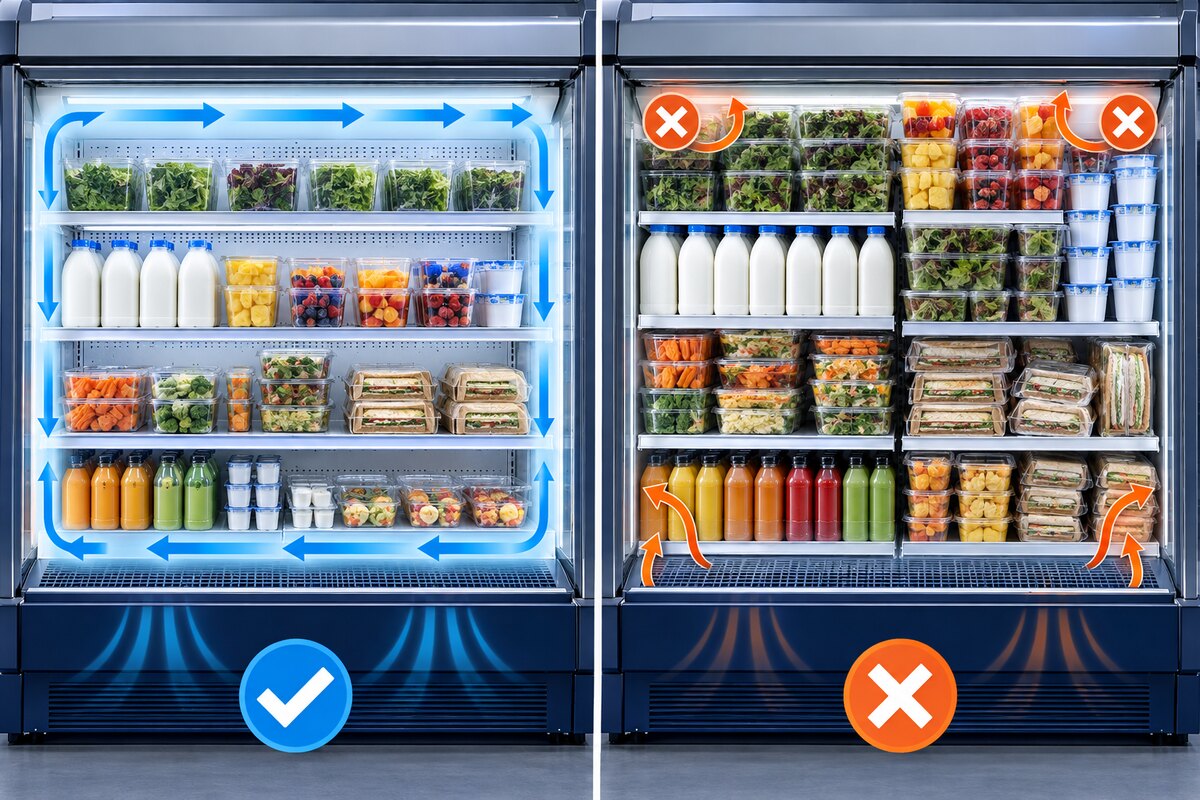
Discharge air leaves the conditioned section and moves across or through the merchandise zone. Return air carries heat back toward the evaporator path. Blocking either side changes circulation. A covered return grille can reduce the amount of air that completes the circuit, while product placed directly in discharge air may experience a localized cold pattern.
Why Load Lines Matter
A load line marks the maximum product boundary intended to preserve airflow. It is not simply an inventory suggestion. Packages stacked above or in front of that limit may enter the air curtain, obstruct discharge, or prevent return. Use shelf labels, stocking diagrams, and staff training to make the boundary obvious.
Open Cases and the Air Curtain
An open display case uses a moving curtain of air to separate the refrigerated zone from the store environment. Products protruding into that curtain, signs hanging across it, nearby fans, supply diffusers, doors, or cross-traffic can disrupt the path. Do not add temporary covers or redirect building air without approval.
Doors Change the Pattern, Not the Need for Airflow
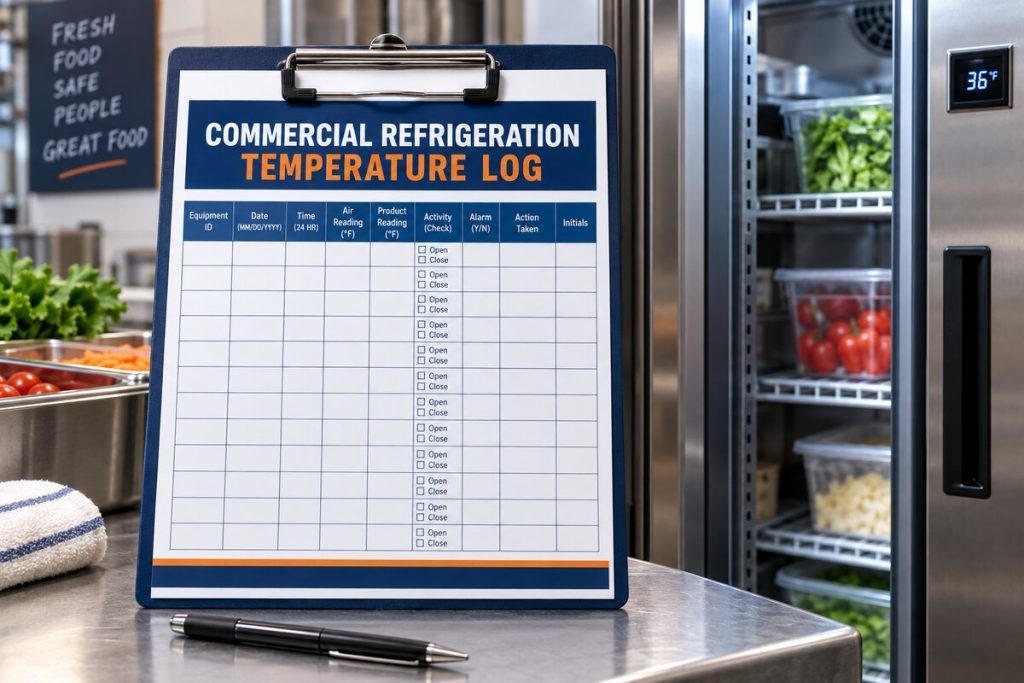
Glass-door cases reduce direct exposure to the aisle but still depend on internal discharge and return paths. Door openings introduce heat and moisture, and products can still block internal grilles. Record door traffic, closure, gasket condition, stocking level, and recovery time when a problem appears.
Common Stocking Mistakes
Frequent issues include overfilling shelves, pressing flexible packaging against rear panels, covering lower return grilles, replacing wire shelves with solid materials, installing tags in the air path, and ignoring manufacturer shelf positions. Correct obvious placement problems without disassembling the case, then document whether the pattern improves.
Store Conditions Affect the Case
Ambient temperature, humidity, sunlight, nearby cooking equipment, building-air diffusers, entry doors, and customer traffic all influence load. A case near an exterior entrance may behave differently during a busy period. Record these conditions so a technician can evaluate the equipment in context.
What Staff Can Observe Safely
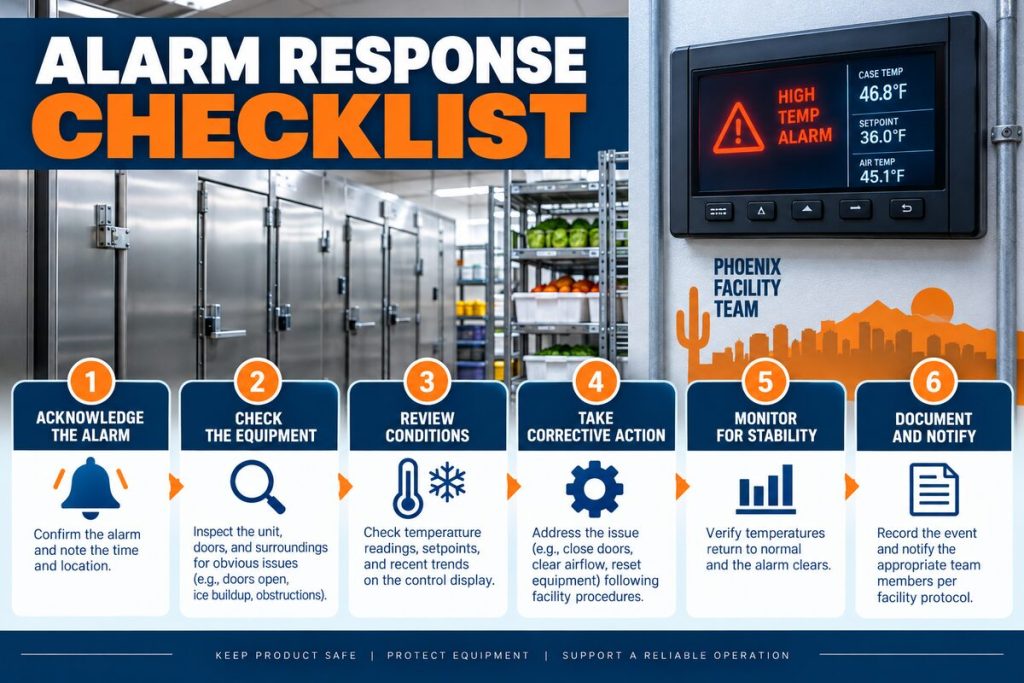
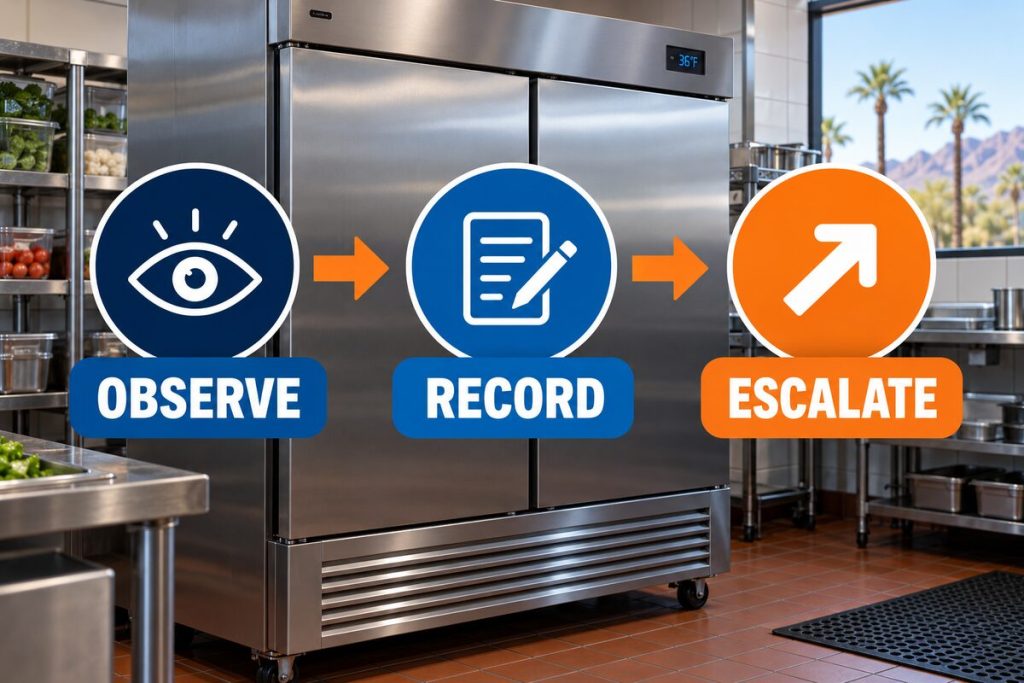
Check that products remain within approved limits, visible grilles are clear, doors close, and no unauthorized signs or liners obstruct airflow. Record displayed readings, approved independent readings, product placement, condensation, frost, noise, alarms, and recovery. Do not remove panels, adjust refrigerant controls, or reach past guards.
When Professional Evaluation Is Needed
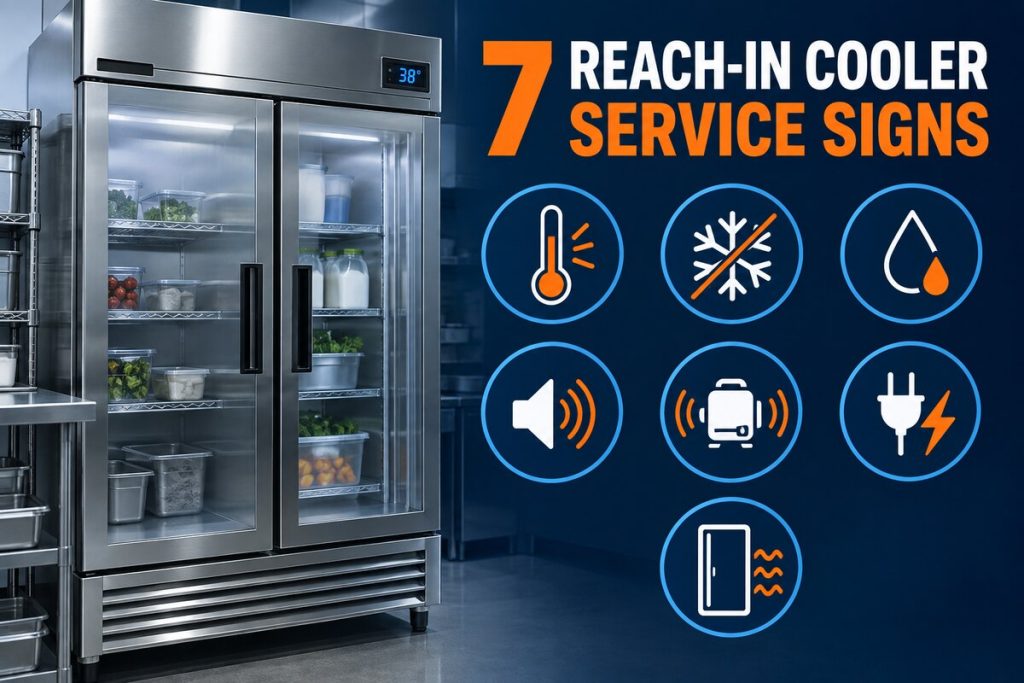
Request service when temperature patterns remain unstable after safe stocking corrections, when condensation or frost returns, when fans sound different, when alarms repeat, or when the case cannot recover under normal operation. Provide photos of the load pattern, equipment ID, readings, store conditions, and recent maintenance.
Observation Summary
| Airflow area | Typical obstruction | Staff documentation |
|---|---|---|
| Discharge path | Products or signage near outlets | Photo and shelf position |
| Product zone | Stock beyond load line | Items and time stocked |
| Return-air grille | Packages, liners, debris | Location and condition |
| Air curtain | Overhanging products or nearby air movement | Aisle and store context |
| Door area | Frequent opening or poor closure | Traffic and recovery time |
Account for Phoenix Operating Conditions
Phoenix commercial kitchens, markets, and food-service facilities operate through long periods of high outdoor temperature. Equipment location, condenser exposure, kitchen heat, delivery schedules, door traffic, and the condition of the surrounding mechanical area can all affect the refrigeration load. These conditions do not replace equipment testing, but they belong in the service history because a pattern that appears only during a particular shift, delivery window, or high-load period may be important.
Record nearby changes such as new shelving, blocked clearances, construction dust, altered store airflow, or a recently moved case. Keep approved access and ventilation areas clear. Cleaning condenser components, opening electrical sections, testing refrigerant circuits, or changing controls should follow the manufacturer requirements and be completed by qualified personnel.
What a Professional Evaluation May Include
A commercial refrigeration technician may compare the operating history with cabinet temperatures, sensor response, control calls, fan operation, defrost behavior, door condition, heat rejection, electrical performance, and sealed-system readings. The exact sequence depends on the equipment and the evidence available. A responsible diagnosis connects measured findings to the recommendation instead of replacing parts from one symptom.
Ask for a written explanation of the observed condition, the proposed scope, important exclusions, and how operation will be checked after approved work. Keep the final service report with the equipment log so future technicians and facility managers can see what changed, what was tested, and whether the same pattern returned.
Build a Clear Service Request
A concise request should identify the unit, location, earliest known change, affected product or zone, alarm history, readings, door or stocking context, and any action already taken under the facility procedure. Include photographs when they safely show the condition. Name the person who can provide access and authorize diagnostic work.
Avoid statements that assume the cause, such as “the compressor is bad” or “the unit only needs refrigerant,” unless a qualified technician has already documented that finding. Describe what staff actually observed. This keeps the service conversation focused and helps preserve a defensible maintenance record.
Related Commercial Refrigeration Resources
- Commercial refrigeration services
- Reach-in coolers and display cases
- Emergency refrigeration service
- Refrigerant leak detection
- Contact Discount AC & Refrigeration of Phoenix
Frequently Asked Questions
Can overstocking make a display case run warm?
Yes. Product beyond load limits can obstruct discharge or return airflow and disrupt an open-case air curtain.
Why are products near a vent colder than others?
They may be exposed to concentrated discharge air, but the case design and loading pattern must be evaluated before drawing a conclusion.
Can staff cover a vent to stop products from freezing?
No. An improvised cover may disrupt the designed circuit and create new problems. Correct placement and request service if the pattern continues.
Do glass-door display cases still need clear return air?
Yes. Doors reduce aisle exposure, but the internal airflow path must remain open.
When should a display case be serviced?
Request evaluation for repeated temperature instability, alarms, unusual frost or condensation, fan changes, poor recovery, or performance that does not improve after safe stocking corrections.
Request Commercial Refrigeration Service
Discount AC & Refrigeration of Phoenix can review the equipment history, operating pattern, and site conditions before recommending the appropriate diagnostic scope.