
Spa Repair in Phoenix: Common HVAC Issues and When to Call a Pro
When your spa’s climate control system starts failing in a Phoenix summer, every uncomfortable treatment room translates directly into frustrated clients and lost revenue. Spa repair in Phoenix isn’t a standard HVAC service call — these systems operate under a combination of extreme outdoor heat and heavy indoor humidity that most commercial equipment never faces anywhere else in the country. At Discount AC & Refrigeration of Phoenix, we’ve provided HVAC repair services to spa and wellness businesses throughout the Valley for years, and we know exactly where these systems fail first, what early warning signs look like, and how to get a down system running again fast. This guide covers the most common problems, what you can safely check yourself, and the situations that require a licensed technician on-site immediately.
Why Phoenix’s Climate Hits Spa HVAC Systems Harder Than Anywhere Else
Spas face a dual-load problem that standard commercial spaces simply don’t encounter. On the outdoor side, your condensing units operate against ambient temperatures that can exceed 115°F for weeks at a time — conditions that push most commercial equipment toward the upper boundary of its rated operating range. On the indoor side, treatment rooms, steam showers, wet lounges, and hydrotherapy areas generate latent heat loads (moisture in the air) at levels that a conventional split system isn’t engineered to manage. That combination compresses service life across every major component: compressors, capacitors, coil fins, drain pans, and blower bearings all wear faster in spa applications than in standard commercial environments.
Our commercial HVAC team works in spa environments throughout the Phoenix metro regularly, and the failure patterns we encounter in Valley spas are consistent: high-ambient stress on the refrigerant circuit, accelerated moisture damage to electrical components, and drain system failures triggered by the desert’s dust-then-monsoon seasonal cycle. Understanding these patterns is what allows us to deliver targeted HVAC repair rather than generic service calls that miss the underlying cause.
If your spa has been experiencing inconsistent temperatures across zones, a system that runs constantly without reaching setpoint, or rooms that feel “clammy” even when the thermostat reads correctly, your HVAC system is likely struggling with exactly the conditions described above. The sections below explain the most common specific failure modes — and what to do about each one.
| Problem | Symptoms | Likely Cause | Safe DIY Check | Professional Action Needed |
|---|---|---|---|---|
| No Cooling | Warm air from vents, unit runs nonstop | Refrigerant loss, compressor failure, tripped breaker | Check circuit breakers and thermostat settings | Refrigerant leak check, compressor diagnosis |
| Weak Cooling | Spaces 5–10°F above setpoint, long run times | Low refrigerant charge, dirty coil, restricted airflow | Replace or check air filter condition | Refrigerant charge verification, coil cleaning |
| System Shutdown | Unit shuts off unexpectedly, won’t restart | Clogged drain float switch, high-pressure lockout, electrical fault | Check condensate pan for standing water | Drain clearing, pressure diagnostic, controls check |
| Water Leaks | Water around air handler, wet ceiling tiles | Clogged primary drain line, cracked drain pan | Inspect accessible drain line for debris | Drain flush, pan inspection, float switch test |
| High Humidity | Clammy rooms, condensation on surfaces, musty odor | Undersized system, coil icing, humidistat failure | Check if system is actually running in cooling mode | Load calculation review, dehumidification assessment |
| Noisy Operation | Grinding, squealing, or banging at startup or during operation | Worn blower bearings, failed fan motor, loose component | Note when and where noise occurs; do not operate further | Motor inspection, bearing replacement, mechanical diagnosis |
| Uneven Temperatures | One or more zones too warm while others are correct | Zone damper failure, blocked register, thermostat fault | Confirm registers are open in problem zones | Zone control diagnostic, damper inspection, balancing |
| Electrical Smell / Burning | Burning or electrical odor from vents or unit | Overheating motor, electrical fault, failing contactor | Shut system down at disconnect immediately | Emergency electrical diagnostic — do not restart until inspected |
The Most Common Spa HVAC Repair Calls We Handle in Phoenix
Refrigerant Loss and Weak Cooling
Refrigerant leaks are one of the most frequent causes of poor performance in spa HVAC systems. When the refrigerant charge drops below design specifications, the evaporator coil runs colder than intended — eventually cold enough to form ice, which blocks airflow and puts the compressor under severe stress. In a spa, refrigerant loss typically presents as rooms that cool intermittently, a thin layer of frost visible on accessible refrigerant lines, or a unit that runs continuously without reaching setpoint even during moderate outdoor temperatures.
Our EPA Section 608-certified technicians use electronic leak detection equipment to locate leaks precisely, recover remaining refrigerant in accordance with EPA regulations, repair the source of the leak, and recharge the system to manufacturer specifications. Simply topping off a leaking system without repairing the source accelerates compressor damage and wastes refrigerant — it’s not a solution we offer or recommend. If you’re seeing signs of low charge, reach out to our commercial HVAC service team before the situation compounds into a compressor replacement.
Compressor Failures in High-Ambient Conditions
The compressor is the most expensive single component in your spa’s cooling system, and Phoenix’s summer heat subjects it to sustained stress that compresses service life compared to cooler climates. We see compressor failures in spa applications that result from three primary mechanisms: electrical failure at the start capacitor or contactor, which prevents the compressor from starting properly; liquid refrigerant slugging from refrigerant migration during off cycles; and physical breakdown from extended operation at high compression ratios in high-ambient conditions.
Early signs of a failing compressor include a clicking noise on startup that stops after a few seconds (indicating a hard-start condition), warm air at registers despite long run times, or circuit breakers tripping repeatedly under normal operation. Early intervention through capacitor replacement or hard-start kit installation can sometimes extend compressor life significantly. If you’re hearing these symptoms, contact Discount AC & Refrigeration of Phoenix for a diagnostic before the compressor fails completely — compressor replacement in a commercial spa application is substantially more expensive than early-stage intervention.
Clogged Drain Lines and Condensate Overflow
Spa air handlers produce significant condensate during normal operation — water removed from the air as part of the cooling process. In Phoenix, drain lines accumulate debris in a pattern specific to the desert climate: fine dust clogs lines during the dry season, then monsoon humidity creates ideal conditions for algae growth that compounds the restriction. When the primary drain line blocks, the condensate pan fills and triggers the float safety switch, shutting the system down — usually at the worst possible moment.
If your system shuts off without obvious cause and you notice standing water in the drain pan or wet ceiling tiles below the air handler, a clogged primary drain is the most likely explanation. Our team includes drain line clearing in all preventive maintenance service visits, and we recommend quarterly intervals for spa applications in Phoenix specifically because of this seasonal accumulation pattern. A drain clearing is a minor, low-cost repair when caught early — a water-damaged ceiling or mold remediation project is not.
Blower Motor and Outdoor Fan Failures
Blower motors — the motors that circulate conditioned air through your ductwork — experience accelerated bearing wear in spa applications because they run at near-continuous duty cycles. The early warning is a squealing or grinding noise from the air handler cabinet during operation. Left unaddressed, a failing blower motor eventually seizes and produces no airflow at all, at which point the evaporator coil ices over and the system shuts down.
Outdoor condenser fan motors fail from a different combination of stressors: UV exposure, weather cycling, and the thermal load of running in direct Phoenix summer sun. When an outdoor fan motor fails, the condensing unit can’t reject heat, head pressure climbs, and the system trips on its high-pressure safety cutout — often within minutes on a 110°F afternoon. Our commercial repair team carries common motor sizes in-truck for most spa HVAC applications, allowing same-visit resolution in the majority of cases.
Thermostat and Zone Control Malfunctions
Modern spa HVAC systems frequently use multi-zone controls with programmable thermostats, digital humidity sensors, and — in larger facilities — building automation integration. Control failures in these systems can range from a simple dead thermostat battery to a failed zone board or communication fault that causes zones to run independently of programmed schedules. In spa environments with dedicated humidity control, a sensor failure can allow moisture to climb unchecked for hours before anyone notices — creating the conditions for mold growth and moisture damage to finished surfaces.
Before calling for HVAC repair service, your maintenance staff should verify battery condition, confirm the thermostat is in the correct operating mode, and check that zone damper breakers haven’t tripped. If those checks don’t resolve the issue, a complete controls diagnostic by one of our technicians will identify whether the failure is at the thermostat, the zone board, or the equipment’s own control board.
What You Can Check Before Calling for Spa Repair
Our service team always recommends a quick check of these items before dispatching a technician — resolving obvious causes saves you a service call fee and gets your system back faster:
- Circuit breakers at the main panel and at each unit’s outdoor disconnect. A tripped breaker is one of the most common and most easily corrected causes of system shutdown. Reset once — if it trips again immediately, do not reset a second time and call for service.
- Air filter condition. A completely clogged filter restricts airflow enough to cause coil ice-up, drain overflow, and system shutdown. Filters in spa environments should be inspected monthly and replaced at minimum every 60 days.
- Thermostat settings and batteries. Confirm the system is set to Cool mode with a setpoint below current room temperature. Dead thermostat batteries are more common than they should be.
- Condensate drain pan. If there’s standing water in it, you have a clogged primary drain — contact our service team for a drain clearing visit.
- Register and return grille obstructions. Furniture, equipment, or seasonal decorations blocking supply registers or return grilles can cause zone-specific temperature failures that look like system problems.
Do not attempt refrigerant handling of any kind, any work inside the air handler or condenser electrical cabinet, compressor diagnostics, or refrigerant pressure measurement without EPA 608 certification and proper recovery equipment. These tasks require professional training, and incorrect intervention can cause expensive damage or create safety hazards on the electrical side.
Emergency Warning Signs — When Spa Repair Can’t Wait
Certain conditions require an immediate service call rather than a scheduled appointment. Contact Discount AC & Refrigeration of Phoenix right away if your spa is experiencing any of the following:
- A burning or electrical smell from any air handler, duct register, or outdoor unit. Shut the system down at the disconnect immediately. Do not restart until inspected — this indicates an electrical fault that presents a fire hazard.
- Oily or wet residue around refrigerant fittings, valves, or line set connections. This is refrigerant oil, indicating an active refrigerant leak. Continuing to operate accelerates compressor damage and creates an EPA compliance issue.
- Condensate pan overflowing with standing water you cannot immediately drain. Water accumulation creates ceiling damage, drywall mold, and electrical hazard risks in adjacent junction boxes.
- Repeated circuit breaker trips on the same HVAC circuit. One reset is appropriate; a second trip means there’s an active electrical fault that requires professional diagnosis.
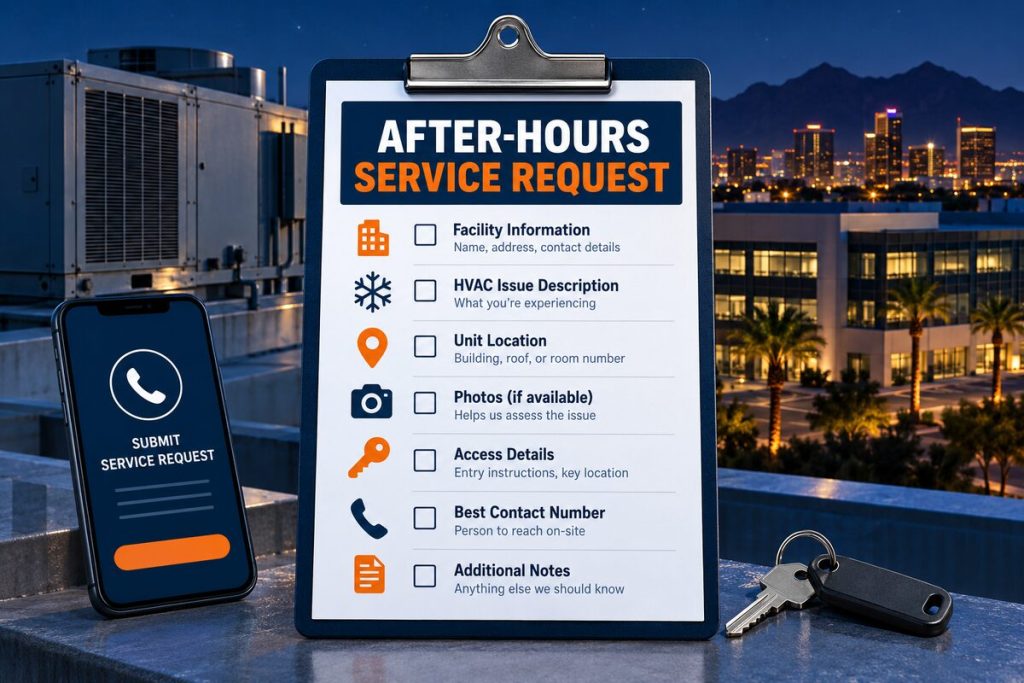
- Complete loss of cooling during Phoenix summer hours with a full booking schedule. Our team prioritizes emergency spa repair calls — reach us at (602) 889-1367 or find us on Google Maps to get service dispatched quickly.
Our Spa HVAC Repair Diagnostic Process
When our technicians arrive at your spa for a repair call, we follow a systematic process designed to identify root causes rather than just visible symptoms. We begin with a full operational measurement pass — recording suction and discharge pressures, superheat and subcooling, voltage readings, and amperage draws across both the refrigerant circuit and all electrical components. This data establishes a baseline that tells us immediately whether the issue is in the refrigerant circuit, the airside, the electrical system, or the controls.
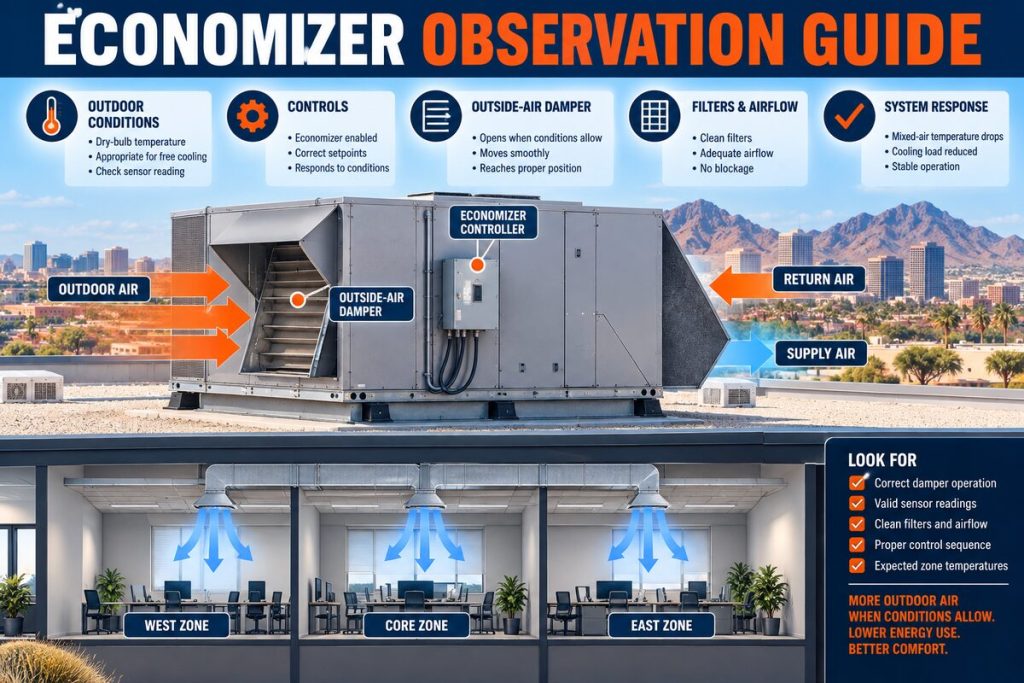
From there, we move through a structured inspection: refrigerant circuit leak check using electronic detection calibrated to current EPA standards, airside inspection covering filter condition, coil cleanliness, blower wheel condition, and duct static pressure, and a full controls verification that cycles every stage of the system — cooling, fan, economizer, and humidistat where present — to confirm correct sequencing.
Every repair recommendation comes with a written scope of work and pricing before any work begins. Our technicians hold NATE certifications and EPA Section 608 certification across the team — when you call Discount AC & Refrigeration of Phoenix for spa repair, you’re getting trained commercial HVAC professionals, not general maintenance staff. For context on what a system replacement might look like if repair isn’t the right answer, our Spa HVAC Installation Phoenix guide covers system types, sizing, and cost factors in detail.
Preventive Maintenance That Reduces Spa Repair Frequency
The most effective way to manage spa HVAC repair costs is to reduce the frequency of repairs through structured preventive maintenance. Our maintenance agreements for Phoenix spa operators are built around the intervals that match the Valley’s seasonal demands:
Quarterly visits cover filter replacement, condensate drain clearing, basic coil inspection, and operational check of all controls and safety switches. These visits catch the drain clogs, filter failures, and early electrical issues that cause the majority of unexpected shutdowns in spa environments.
Bi-annual visits — scheduled before summer and before monsoon — add refrigerant charge verification, capacitor testing, contactor inspection, blower and fan motor amperage checks, and a full controls sequence verification. Capacitors typically cost a fraction of what a compressor costs, and catching a weak capacitor before it fails is one of the highest-value interventions in commercial preventive maintenance.
Annual visits include comprehensive system documentation, deep coil cleaning, full refrigerant circuit leak check, belt and bearing inspection, and a written service summary you can use for equipment records. Our service coordinators can schedule all visits around your business hours to minimize disruption to your operations. Spas operating under a maintenance agreement with our team consistently avoid the emergency repair calls that owners who defer maintenance eventually face — the math on preventive maintenance pays off clearly in our clients’ service histories.
Frequently Asked Questions — Spa HVAC Repair in Phoenix
How much does spa HVAC repair cost in Phoenix? +
Spa HVAC repair costs in Phoenix vary widely depending on what’s failed. A drain line clearing or capacitor replacement typically runs $150–$350 including labor. Refrigerant leak repair — which includes leak detection, repair, and recharge — generally ranges from $400 to $900 depending on access difficulty and refrigerant quantity. Blower or fan motor replacements run $350–$700 in most spa air handler configurations. Compressor replacement is the most significant repair, typically $1,500–$3,500 depending on unit tonnage and compressor type. We provide written quotes before starting any work, so you know the cost before you approve it. Contact Discount AC & Refrigeration of Phoenix at (602) 889-1367 for a diagnostic visit.
How do I know if my spa’s HVAC system is low on refrigerant? +
The most common signs of low refrigerant in a spa HVAC system are: rooms that are 5–10°F above setpoint even after extended run times; frost or ice visible on the refrigerant lines near the air handler; the outdoor unit running continuously without cycling off; and in later stages, a complete loss of cooling as the evaporator coil ices over and blocks all airflow. You may also notice the system reaching cooling for part of the day and then losing capacity as outdoor temperatures peak. Refrigerant charge can only be verified with gauges by an EPA 608-certified technician — if you’re seeing these symptoms, call our HVAC service team rather than continuing to operate a system that may be causing compressor damage.
Can I keep my spa open if the HVAC is partially working? +
It depends on what “partially working” means. If one zone is underperforming but the rest of the facility is within a comfortable range, partial operations may be feasible while you schedule a repair visit. However, if the system is showing electrical faults, burning smells, or active water leaks, we recommend shutting it down and not operating the affected areas until a technician has cleared the system. Running a compressor that’s showing electrical fault symptoms can cause a complete compressor failure — turning a $300 repair into a $2,500+ replacement. Running a system with a known refrigerant leak is both an EPA violation and an accelerating equipment damage situation. When in doubt, call our team at (602) 889-1367 for a same-day assessment before making the call on continuing operations.
How often should spa HVAC systems be serviced in Phoenix? +
We recommend quarterly preventive maintenance visits for spa HVAC systems in Phoenix — more frequently than the twice-yearly standard for typical commercial HVAC. The reasons are specific to spa environments: drain lines accumulate debris and algae faster because of the desert’s dust-then-monsoon cycle; filters in high-humidity zones load up faster; and the sustained high-ambient operation during Phoenix summers accelerates capacitor and bearing wear in ways that benefit from more frequent inspection. At a minimum, schedule service before summer (April) and before monsoon season (June) as your two most critical visits. Our maintenance agreements are built around this schedule and include priority dispatch for any service calls that arise between planned visits.
When does spa HVAC repair make more sense than full replacement? +
Repair is typically the right answer when the system is under 10 years old, the failure involves a single component (capacitor, motor, drain system, refrigerant leak), and the repair cost is under 30–40% of replacement cost. Replacement makes more sense when the system is over 12–15 years old, when multiple major components are failing simultaneously, when the system was never properly sized for spa use (causing chronic performance problems that repair won’t solve), or when you’re on a refrigerant type that’s being phased out, making future service increasingly expensive. Our technicians will give you an honest assessment of both options — we’re not going to recommend replacement when repair is the appropriate solution. Our Spa HVAC Installation Phoenix guide covers system replacement options in detail if that conversation is on the horizon.
Does Discount ACR handle emergency spa repair calls in Phoenix? +
Yes — we prioritize emergency service calls for commercial clients, including spas and wellness businesses throughout the Phoenix metro. If your spa is down during operating hours, call us directly at (602) 889-1367 and let our dispatch team know it’s an active business impact situation. We serve Phoenix, Scottsdale, Mesa, Chandler, Gilbert, Tempe, and surrounding Valley communities. You can also find our location and read client reviews on our Google Maps listing — we’re the local team spa operators in the Valley call when the problem can’t wait.
Get Your Phoenix Spa’s HVAC Running Right — Contact Discount ACR Today
Spa repair in Phoenix requires technicians who understand the specific demands of wellness environments — high latent loads, continuous duty cycles, and the kind of client-facing comfort standards that make every hour of downtime matter. Our team at Discount AC & Refrigeration of Phoenix brings NATE-certified expertise and years of hands-on experience with commercial spa HVAC systems across the Valley to every service call we take.
Whether you’re dealing with a system that stopped cooling overnight, a drain situation that’s threatening your ceilings, or simply a spa that’s never quite reached the comfort level your clients expect, we’re ready to diagnose and resolve the problem. Reach us at (602) 889-1367 for same-day or next-day service appointments. You can verify our location, service area, and client reviews on our Google Maps listing — we serve the full Phoenix metro, including Scottsdale, Mesa, Chandler, Gilbert, Tempe, and the East Valley.
For the full picture on your system’s long-term options, visit our commercial HVAC services page or browse our complete service offerings. If the repair conversation is heading toward replacement, our Spa HVAC Installation Phoenix guide is a useful next read — and our team is here to walk you through the decision honestly, whichever direction makes more sense for your facility. Find us on Google Maps or call (602) 889-1367 — we’re the local team Phoenix spas trust for reliable, professional HVAC service.