

AC Not Cooling the House? Why It Happens Even When the Unit Keeps Running
If your AC is not cooling the house even though the unit is clearly running, you are not alone — it is one of the most common calls we get during a Phoenix summer. In most cases the system is working, but something is quietly limiting how much cold air actually reaches your rooms. As a local HVAC team with years of hands-on experience across the Valley, we see the same handful of causes over and over. Below, we walk you through why it happens, what you can safely check yourself, and when it makes sense to call a certified technician. Our goal is simple: help you get comfortable again, fast.
We built this guide from thousands of real service visits handled by our AC repair and diagnostics team. Whether you own a single-story home in Ahwatukee or a two-story house in North Phoenix, the physics of cooling are the same — and so are the fixes.
The House Won’t Cool Down: Possible Causes
When an air conditioner runs non-stop but the house won’t cool down, the problem almost always falls into one of three buckets: the system cannot move enough cold air, it is losing cold air before it reaches you, or it simply is not sized correctly for the space. In our day-to-day residential HVAC service, we start every diagnosis by measuring the temperature split between the supply and return vents — a healthy split is usually around 16–22°F. If your split is low, the table below is a fast way to narrow down what is going on before we ever open a panel.
| What You Notice | Likely Cause | What Our Techs Check |
|---|---|---|
| Air from the vents feels warm | Low refrigerant or a frozen coil | Refrigerant charge, coil temperature, airflow |
| Some rooms cool, others stay hot | Leaky or unbalanced ductwork | Duct pressure, register airflow, sealing |
| Unit runs 24/7 but never hits the setpoint | Undersized system or heavy heat gain | Load calc, insulation, tonnage |
| Weak airflow from the registers | Clogged filter or a dirty blower | Filter, blower wheel, static pressure |
| Outdoor unit runs, indoor unit won’t blow | Capacitor, blower motor, or control fault | Capacitor, motor, thermostat wiring |
Equipment Size vs. Square Footage
One of the most overlooked reasons an AC is not cooling the house is that the equipment was never matched to the home in the first place. An undersized system simply cannot keep up when outdoor temperatures climb past 110°F — it runs continuously and still loses ground in the afternoon. An oversized system has the opposite problem: it cools too quickly, shuts off before it removes humidity, and leaves the house feeling clammy and uneven.
We size every system using a Manual J load calculation that accounts for square footage, ceiling height, window orientation, and insulation. A rough rule of thumb is roughly one ton of cooling per 400–600 square feet in our climate, but the only reliable number comes from a real calculation. If your home was added onto, or you converted a garage or patio into living space, your existing tonnage may no longer be enough. When that is the case, our AC installation and replacement team can right-size a new system so it actually keeps up on the hottest days.
Homes with tricky layouts or rooms that never cool sometimes benefit from a zoned approach or a ductless mini-split system for that one stubborn addition, rather than oversizing the whole central unit.
Leaky Ductwork
Even a perfectly sized, brand-new system will struggle if the air never makes it to your rooms. In a typical Phoenix home, the ducts run through a blazing-hot attic, and industry studies show leaky ductwork can waste 20–30% of the air your system produces. That cold air escapes into the attic while hot attic air gets pulled back into the return — a double hit to comfort.
Signs of duct trouble include rooms that never cool evenly, a spike in your electric bill, and excess dust. Our technicians pressure-test the duct system, seal connections, and repair crushed or disconnected runs through our ductwork services. In many homes, sealing the ducts does more for comfort than any other single fix — and it lightens the load on the compressor at the same time.
Insulation
Your air conditioner and your insulation work as a team. If the attic is under-insulated, radiant heat pours into the ceilings all afternoon, and the AC ends up fighting a losing battle no matter how well it runs. Most Phoenix attics perform best around R-38 to R-49, yet we regularly find homes sitting well below that.
Sealing attic bypasses, adding insulation, and weatherstripping doors and windows all reduce the heat load so the system can finally catch up. Better insulation also improves indoor air quality by cutting down on the dusty, unfiltered attic air that sneaks into the living space. If you have already ruled out a mechanical problem, insulation is usually the next place we look.
Quick Checks Before You Call Us
Before you schedule a visit, a few simple checks solve a surprising number of “my AC won’t cool” calls. None of these require tools or opening the sealed refrigerant system, so they are safe to try yourself.
- Replace the air filter. A clogged filter chokes airflow and is the number-one DIY fix. Swap it and see if airflow improves within an hour.
- Confirm the thermostat is on “cool” and set below room temperature. A dead thermostat battery or a bumped setting fools a lot of homeowners.
- Check for ice on the copper lines or indoor coil. If you see frost, turn the system to “fan only” for a few hours to let it thaw, then call us — a frozen coil points to airflow or refrigerant issues.
- Rinse the outdoor condenser. Gently spray off dust, cottonwood, and grass clippings with a garden hose so the unit can release heat.
- Make sure every supply vent is open and unblocked by furniture, rugs, or boxes.
If none of that restores cold air, the issue is likely inside the sealed system or the electrical components — and that is where our licensed technicians take over. When the heat is dangerous and you cannot wait, our 24/7 emergency AC repair line is available around the clock across the Valley.
How to Improve Cooling
Once we know why the AC is not cooling the house, the fix is usually a combination of small, high-impact steps rather than one dramatic change. Here is how we typically help homeowners get comfortable again — starting with the least expensive options.
Restore proper airflow first. Clean filters, a clean blower wheel, and clear returns let the system breathe. We measure static pressure to make sure air is moving the way the manufacturer intended. Pairing this with a seasonal tune-up through our maintenance programs keeps performance from sliding again next summer.
Seal and balance the ducts. After airflow, sealing leaks and adjusting dampers evens out those hot back bedrooms. Many customers are shocked at how much difference balanced ductwork makes in a two-story home.
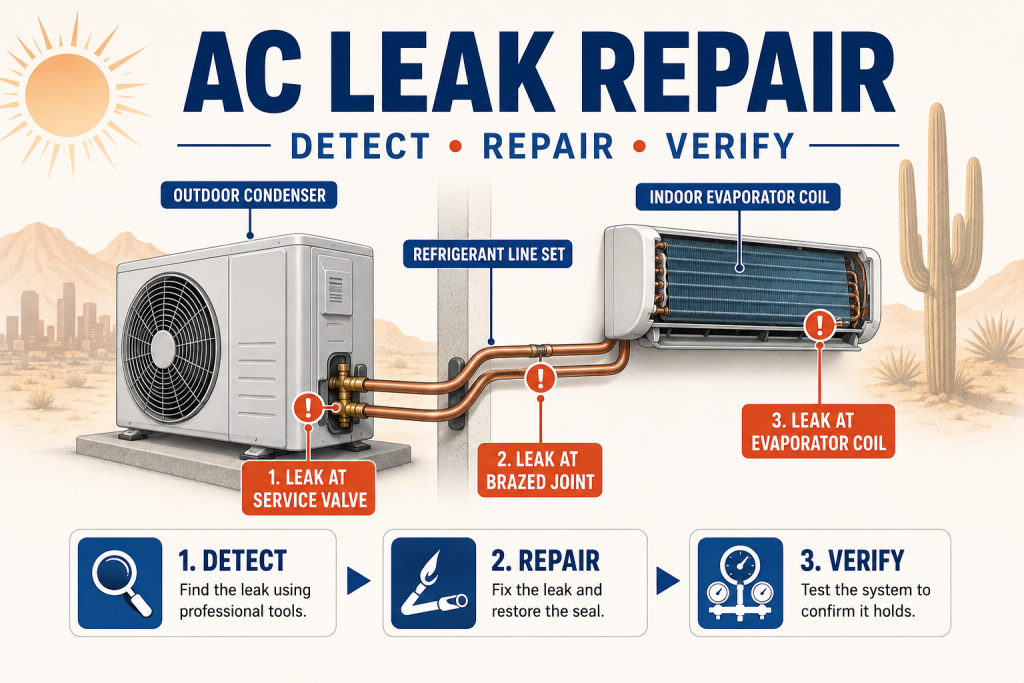
Verify the refrigerant charge. A system that is even slightly low on refrigerant loses a lot of capacity. Our EPA-certified techs check the charge, look for leaks, and correct it — never just “top it off” and walk away. Chasing and repairing the leak is part of honest, transparent service.
Reduce the heat load. Adding attic insulation, installing sun-blocking shades, sealing gaps, and even upgrading to a smart thermostat all lighten the demand on the system. If your equipment is aging, a modern high-efficiency unit from our installation team can hold your setpoint using far less energy.
For homes that rely on a heat pump for both heating and cooling, our heat pump service team can restore full cooling capacity, while gas-furnace homes are covered by our furnace service and repair crew for the winter side of the system.
When to Replace the Equipment
Repairs make sense right up until they don’t. We are not fans of pushing replacements — a lot of “dead” units just need a capacitor or a coil cleaning. That said, there are clear signs it is time to stop repairing and start planning a new system.
- Age. Most AC systems last 12–15 years in our harsh desert climate. Past that, efficiency drops and parts get harder to find.
- R-22 refrigerant. Older systems that use phased-out R-22 are expensive to recharge, and a major leak often makes replacement the smarter investment.
- Repeat breakdowns. If you are calling for service every summer, those bills add up fast compared with a reliable new unit.
- Rising energy bills. A modern high-SEER2 system can cut cooling costs meaningfully while actually keeping the house cool.
- The 50% rule. When a single repair costs more than half the price of a new system, replacement is usually the better long-term value.
When replacement is the right call, we walk you through the options in plain language — no pressure and no scare tactics. You can learn more about our background and certifications on our about us page, and see why ongoing technician training is a core part of how we work. We install right-sized, properly commissioned systems so the new equipment performs the way it should from day one.
We proudly serve homeowners throughout the metro, including Phoenix, Scottsdale, Tempe, Mesa, Chandler, and Gilbert. You can view the full list on our service areas page.
Frequently Asked Questions — AC Not Cooling the House
Why is my AC running but not cooling the house? +
The unit is powered on, but something is limiting cooling — most often a dirty filter, low refrigerant, a frozen coil, leaky ducts, or a system that is undersized for extreme Phoenix heat. Start with the filter and thermostat, then have a technician check the refrigerant charge and airflow if warm air continues.
Can a dirty air filter really stop my AC from cooling? +
Yes. A clogged filter starves the system of airflow, which reduces cooling and can freeze the indoor coil. It is the single most common issue we solve on the phone. Replace the filter, run the fan to thaw any ice, and airflow usually improves within an hour.
How long should my AC take to cool the house in Phoenix? +
A healthy system should lower the indoor temperature by about 1°F every 15–30 minutes, and it should maintain your setpoint once it catches up. During a 115°F afternoon, expect it to run long stretches — that is normal. If it never reaches the setpoint at all, it is time for a diagnostic.
Is it normal for my AC to run all day during a Phoenix summer? +
Long run times on extreme days are normal and even efficient. The concern is when the system runs constantly and still cannot hold the temperature. That points to sizing, insulation, duct leaks, or a refrigerant problem, all of which we can pinpoint with a load check and airflow test.
Should I repair or replace an AC that can’t keep up? +
If the unit is under about 12 years old and the repair is minor, repair is usually the better value. If it is older, uses R-22 refrigerant, or a single repair costs more than half the price of a new system, replacement typically pays off through lower energy bills and reliable comfort. We give you an honest breakdown either way.
Get Real Relief From a Team You Can Trust
A house that won’t cool down in July is more than an annoyance — in Phoenix, it is a safety issue. The good news is that an AC not cooling the house is almost always fixable once you know the cause, and you rarely have to face the hottest afternoons alone. From a quick filter swap to a full right-sized replacement, there is a clear path back to a comfortable home. If you want a deeper look at keeping your system healthy year-round, our guide on seasonal HVAC maintenance walks through the tune-ups that prevent most mid-summer breakdowns in the first place.
When you are ready for a straight answer, our EPA-certified technicians are a phone call away. We show up on time, explain what we find, and quote the work before we start — the kind of transparent service that has earned us strong reviews from neighbors across the Valley. Call Discount AC & Refrigeration of Phoenix at (602) 889-1367, or reach us through our contact page to book a diagnostic today.
Prefer to see us on the map before you call? Visit our Google Business listing to read real customer reviews, get directions, and confirm we serve your neighborhood. You can also explore more homeowner tips on our blog or browse everything we offer on the Discount ACR homepage. Don’t sweat through another Phoenix afternoon — find us on Google Maps and let our team get your home cool again.