
When you need AC repair in Phoenix, the most important clues are often changes in cooling, airflow, sound, odor, moisture, cycling, or energy use. A single symptom rarely identifies the failed part, but it can show when the system needs professional testing.
Phoenix equipment works through extended heat, dust, and heavy seasonal demand. At Discount AC & Refrigeration of Phoenix, we evaluate the complete operating picture before recommending work. The signs below help homeowners and property managers respond safely without opening electrical panels or attempting refrigerant repairs.
Common AC Warning Signs in Phoenix
| Observed sign | Possible system areas | Recommended response |
|---|---|---|
| Warm or room-temperature air | Thermostat, airflow, electrical components, outdoor unit, or refrigerant circuit | Confirm the thermostat setting and request diagnosis if cooling does not return. |
| Weak airflow | Filter, blower, indoor coil, ducts, dampers, or registers | Check accessible filters and vents; schedule service when airflow remains low. |
| Short cycling | Controls, airflow, equipment sizing, electrical faults, or abnormal operating pressures | Avoid repeated setting changes and document the cycle pattern. |
| Water or ice | Drainage, coil temperature, airflow, insulation, or refrigerant-side conditions | Turn cooling off when ice is present or water approaches electrical parts. |
| New noises or odors | Motors, bearings, panels, electrical components, debris, or microbial sources | Stop operation for burning odors, smoke, or severe mechanical noise. |

Warm Air From the Supply Vents
Warm air is one of the clearest reasons to request professional HVAC service, but it does not identify the cause by itself. A thermostat issue, outdoor-unit fault, restricted airflow, electrical failure, or abnormal refrigerant condition can all reduce cooling.
Note whether the outdoor unit is operating, whether airflow feels normal, and whether every zone is affected. Do not remove equipment panels. A technician can compare the cooling call with actual component operation and temperature performance.
Airflow Is Weaker Than Normal
Low airflow may begin with a loaded filter or blocked return, but it can also involve the blower, indoor coil, duct leakage, dampers, or a failing motor. Rooms farthest from the air handler may reveal the problem first, especially when ducts cross hot attic spaces.
Persistent distribution problems deserve more than a filter change. Commercial properties should include rooftop unit service when packaged equipment or zone controls are involved.
The System Starts and Stops Repeatedly
Short cycling increases wear and may prevent proper humidity and temperature control. Thermostat placement, electrical controls, airflow restrictions, coil conditions, system sizing, and operating pressures can all affect cycle length.
Record how long the system runs and whether the thermostat reaches its setpoint. Repeatedly lowering the temperature setting does not correct the underlying fault and can make the operating pattern harder to interpret.
Ice Appears on the Coil or Refrigerant Line
Ice can form when the evaporator becomes too cold because of restricted airflow, abnormal refrigerant conditions, blower problems, controls, or other faults. Ice is not proof that the system simply needs more refrigerant.
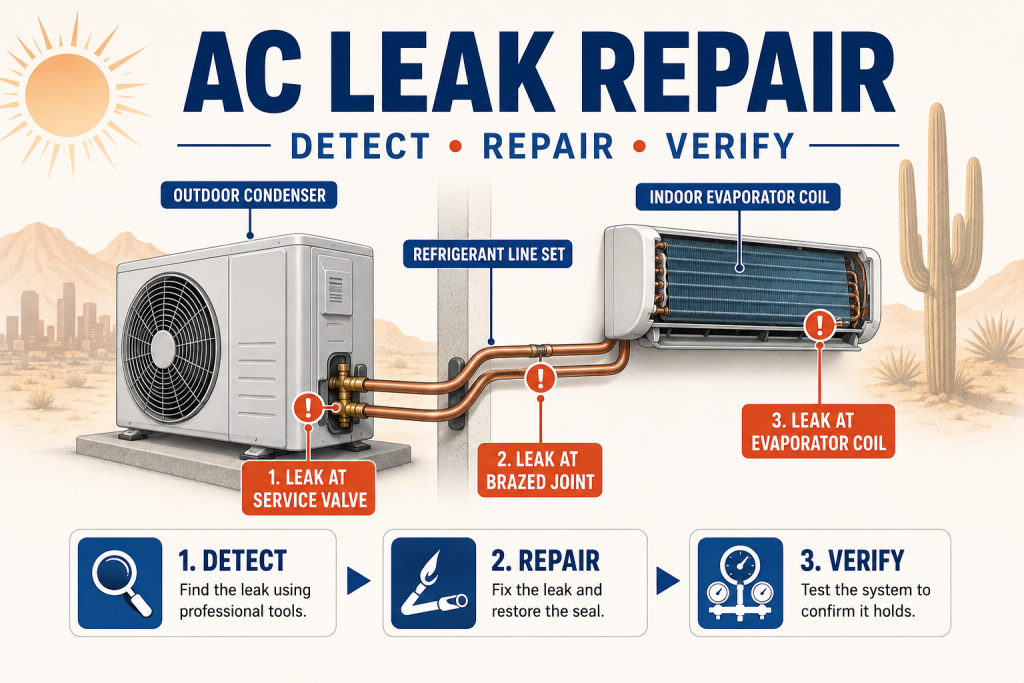
Turn off cooling and allow the equipment to thaw naturally. Never chip ice with a tool. Review our explanation of AC leak repair to understand why proper leak detection and diagnosis matter.
The Outdoor Unit Hums, Clicks, or Struggles to Start
Electrical components help motors and compressors start and remain operating. Humming, repeated clicking, delayed starts, or a silent outdoor fan may involve capacitors, contactors, motors, wiring, voltage, controls, or the compressor itself.
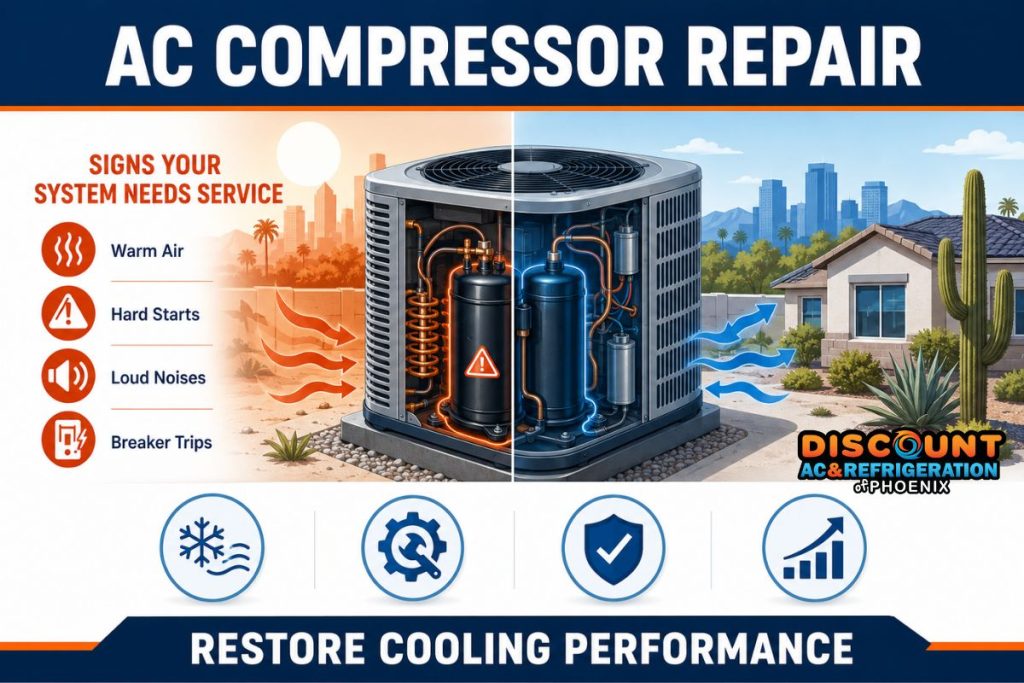
Because these components carry hazardous voltage, testing belongs to a trained technician. Read more about AC compressor repair and why compressor-like symptoms should be verified before replacement.
Water Appears Around Indoor Equipment
Condensate should drain away during normal cooling. Water near the air handler can result from a restricted drain, damaged pan, frozen coil thawing, insulation problems, pump failure, or an installation issue.
Shut the system off if water is approaching electrical components, ceilings, or finished surfaces. Professional inspection should address both the source and any operating condition that caused excess condensation or freezing.
Cooling Is Uneven Across the Property
One warm room may point to airflow distribution rather than a failed condensing unit. Duct leakage, crushed flex duct, closed dampers, blocked returns, solar exposure, insulation, or zone-control faults can create uneven results.
For businesses, changes in occupancy, ventilation, kitchen loads, and operating schedules should also be considered. Our commercial services address equipment and building-use factors together.
Energy Use Rises Without a Clear Reason
Higher energy use can reflect hotter weather or longer operating hours, but a sudden unexplained change may accompany dirty coils, airflow restrictions, failing motors, control errors, duct losses, or declining system capacity.
A maintenance visit can establish equipment condition before the next failure. Explore preventive HVAC maintenance for scheduled inspection of commercial equipment.
Repair or Replacement: What Should Be Evaluated?
A repair restores a failed function; replacement changes the equipment and may address age, efficiency, capacity, refrigerant availability, or repeated failures. The decision should include condition, repair history, comfort, duct performance, and ownership plans.
If a commercial system is being evaluated for replacement, compare the full scope of commercial AC installation, including load needs, controls, airflow, electrical requirements, access, commissioning, and future maintenance.
Commercial Cooling and Refrigeration Can Affect Each Other
Restaurants, markets, and food-service facilities often operate comfort cooling, ventilation, exhaust, and refrigeration in the same building. Excess indoor heat can increase refrigeration load, while ventilation problems may affect comfort complaints.
A provider experienced in commercial refrigeration and restaurant kitchen hood systems can evaluate the correct system instead of assuming every temperature complaint begins with the AC.
Frequently Asked Questions
What is the most common sign that AC repair is needed?
Loss of cooling is common, but weak airflow, short cycling, new noises, odors, water, or ice may also justify professional evaluation.
Why is my AC running but not cooling?
The cause may involve thermostat operation, airflow, electrical components, the outdoor unit, coils, or the refrigerant circuit. Testing is needed to separate these possibilities.
Should I turn off my AC if it has ice?
Yes. Turn off cooling and let the ice thaw naturally. Do not chip it away. Service is needed to determine why the coil temperature became abnormal.
Can a dirty filter cause AC problems?
A loaded filter can restrict airflow, reduce performance, and contribute to freezing. If replacing an accessible filter does not restore normal operation, request service.
Why does my AC keep turning on and off?
Short cycling can involve controls, airflow, sizing, electrical faults, or operating pressures. Record the cycle pattern and avoid repeated thermostat adjustments.
Is a loud AC compressor always failing?
No. Electrical parts, fan motors, panels, debris, and refrigerant conditions can create similar sounds. Diagnosis should identify the source before a major repair is approved.
When is water around the AC an emergency?
Turn the equipment off when water is near electrical components, leaking through a ceiling, or causing property damage. The drain and operating cause should be inspected.
Do Phoenix air conditioners need post-monsoon service?
Dust, windblown debris, and heavy summer operation can affect filters, coils, electrical components, and drainage. An inspection can identify conditions needing attention.
Respond Early to AC Warning Signs
Professional AC repair in Phoenix begins by matching symptoms with measured system conditions. Early diagnosis can prevent a minor airflow, drainage, control, or electrical issue from becoming a larger interruption.
Request AC Repair in Phoenix
Contact Discount AC & Refrigeration of Phoenix for professional cooling-system diagnosis across the Phoenix metro and Queen Creek.
Learn more about our company or review additional guidance in our Phoenix HVAC and refrigeration blog.