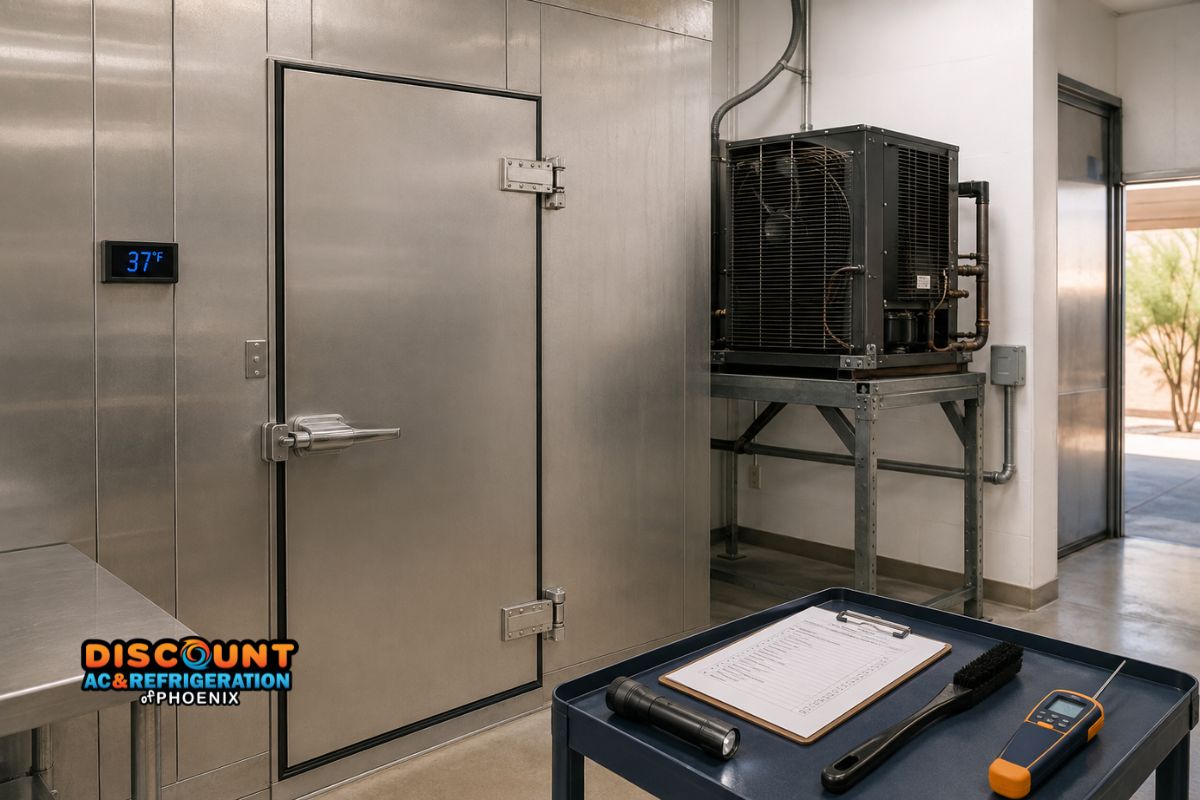
Walk-in cooler maintenance in Phoenix requires more than an occasional coil cleaning. Commercial refrigeration equipment must operate through extreme outdoor temperatures, airborne dust, heavy door traffic, and long daily operating hours. A practical maintenance plan should therefore combine simple staff inspections with scheduled professional service.
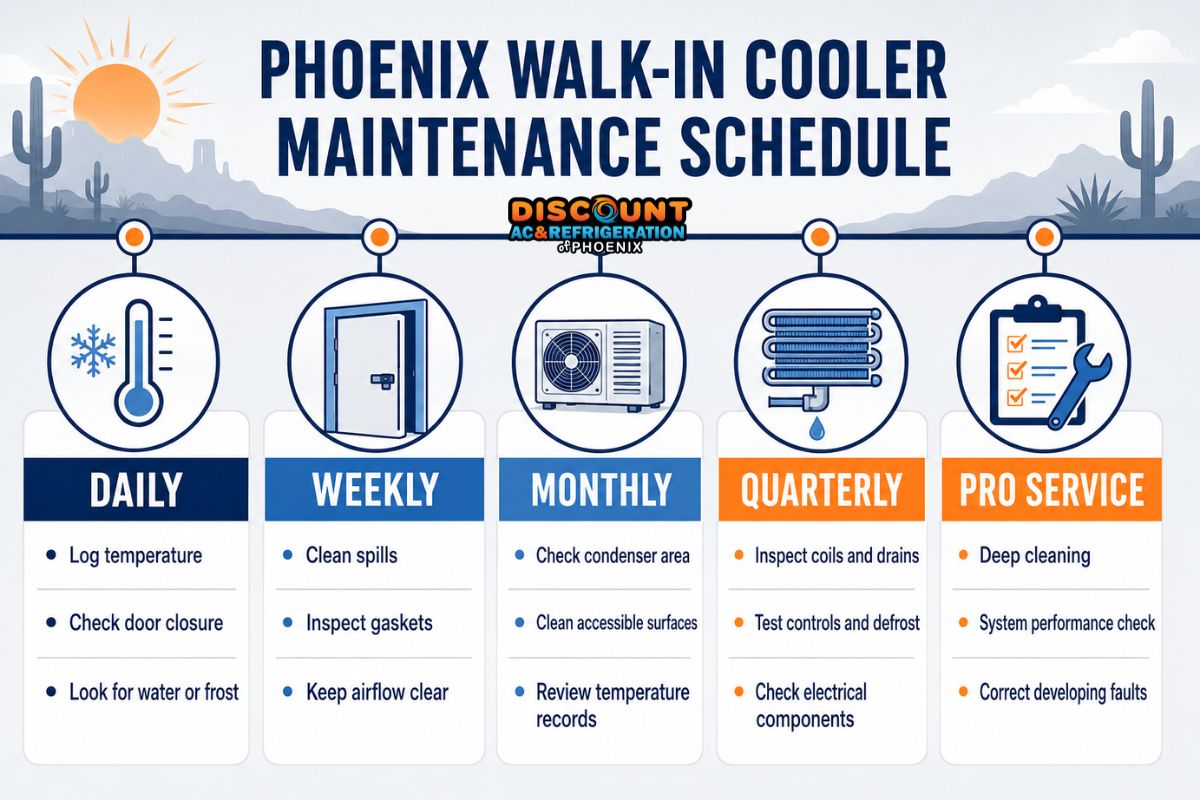
For most Phoenix restaurants, grocery stores, commercial kitchens, and food-service facilities, the best approach is to divide responsibilities into daily, weekly, monthly, quarterly, and technician-only tasks. This schedule helps identify airflow restrictions, damaged door seals, drainage problems, abnormal frost, and declining cooling performance before they become larger refrigeration failures.
Walk-In Cooler Maintenance Schedule for Phoenix Businesses
This schedule is a starting point. Equipment condition, kitchen activity, condenser location, product load, manufacturer instructions, and previous service history can justify more frequent inspections. Businesses can coordinate these tasks through a professional preventive maintenance program.
Why Phoenix Conditions Change the Maintenance Plan
A walk-in cooler transfers heat from the refrigerated space to the area surrounding its condensing unit. During a Phoenix summer, a rooftop or poorly ventilated outdoor condenser may be exposed to much higher ambient temperatures than the refrigerated box. Dust can also accumulate on coil surfaces and restrict heat rejection.
When airflow through the condenser becomes restricted, the refrigeration system may operate under greater stress. That does not automatically mean the compressor has failed, but it does mean the equipment needs inspection before developing symptoms are ignored. The company’s commercial refrigeration service covers the components that support reliable cooling in these conditions.
Phoenix businesses should pay particular attention to:
- Dust, grease, cottonwood debris, and packaging material near condenser coils.
- High outdoor temperatures surrounding rooftop or exterior equipment.
- Door traffic during deliveries, meal preparation, and restocking.
- Damaged gaskets that allow warm air to enter the cooler.
- Boxes or products blocking evaporator airflow.
- Condensate drains affected by buildup or poor drainage.
- Temperature changes that become more noticeable during afternoon heat.
Important: Staff maintenance should be limited to safe observation, recordkeeping, cleaning approved accessible surfaces, and keeping airflow areas clear. Electrical panels, refrigerant circuits, fan assemblies, controls, and pressurized components should be handled by a qualified commercial refrigeration technician.
Daily Walk-In Cooler Maintenance Tasks
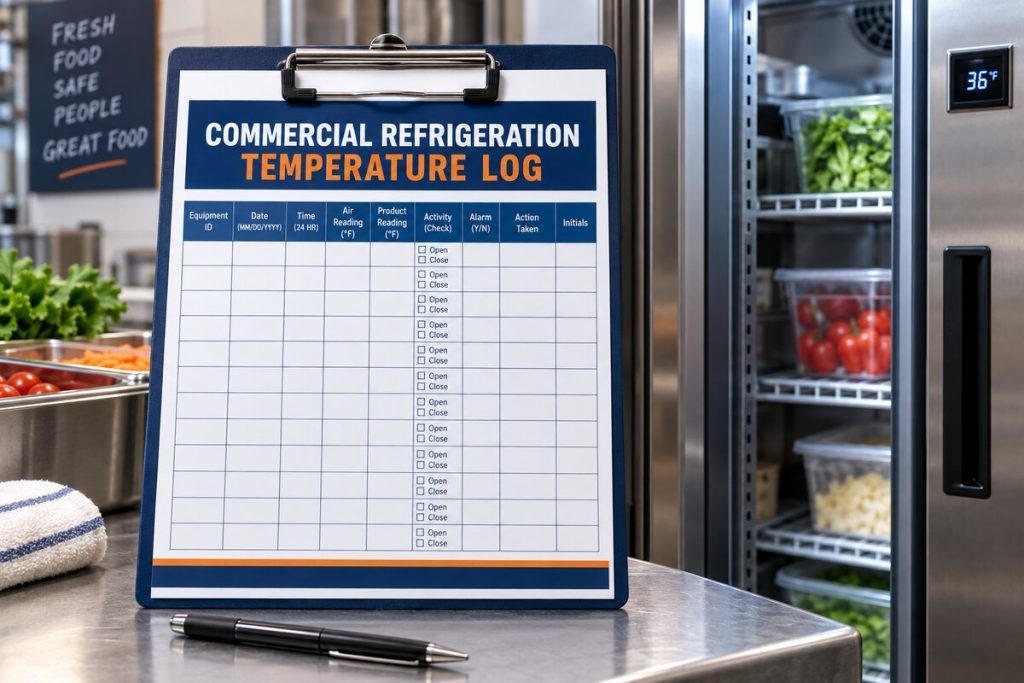
Record the operating temperature
Assign an employee to record the displayed temperature at consistent times each day. A log makes it easier to distinguish a one-time change caused by a delivery from a recurring pattern that may require walk-in cooler service.
Do not rely on a single reading without context. Record the time, displayed temperature, recent door activity, recent product loading, and any alarm. For food storage, follow the requirements applicable to the products and the facility’s approved food-safety plan. The FDA advises keeping refrigerated foods at or below 40°F, but individual businesses may require narrower operating ranges.
Confirm that the door closes and seals
Look for doors that bounce open, drag on the floor, require excessive force, or fail to pull shut. Inspect the gasket for visible gaps, tears, hard sections, or debris. A compromised seal can allow warm air and moisture to enter, leading to condensation, frost, longer run cycles, and unstable box temperatures.
Report a damaged gasket instead of compensating by forcing or slamming the door. Hardware alignment, hinges, closers, thresholds, and gasket fit may all influence the seal.
Look for water, frost, oil, and unusual sounds
Water beneath the evaporator, ice near a drain, frost around the door, or an oily residue near refrigeration lines should be documented. These observations do not identify the cause by themselves, but they help a technician focus the diagnostic process.
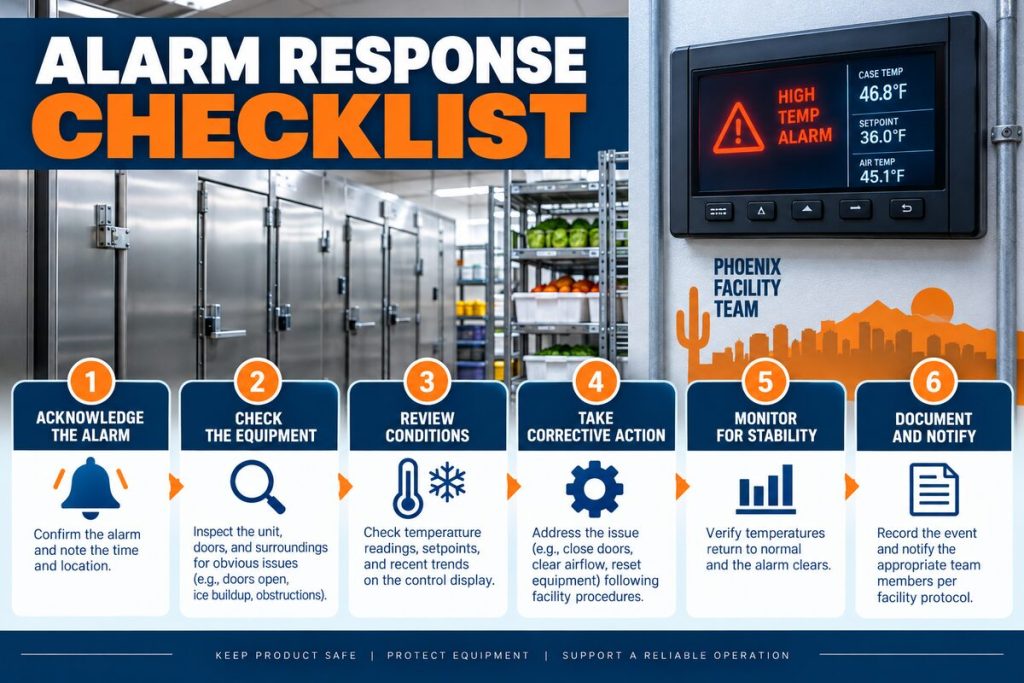
Buzzing, grinding, repeated clicking, or a fan striking ice also deserves attention. If the cooler temperature is rising or equipment is cycling abnormally, contact an emergency refrigeration service and follow the facility’s inventory-protection procedure.
Weekly Maintenance Responsibilities
Clean spills and accessible surfaces
Clean spills promptly using products and procedures approved for the cooler and stored inventory. Residue can contribute to odors, obstruct drainage, damage finishes, or create slippery conditions. Avoid spraying water toward electrical components, fan motors, controls, or openings in insulated panels.
Keep evaporator airflow clear
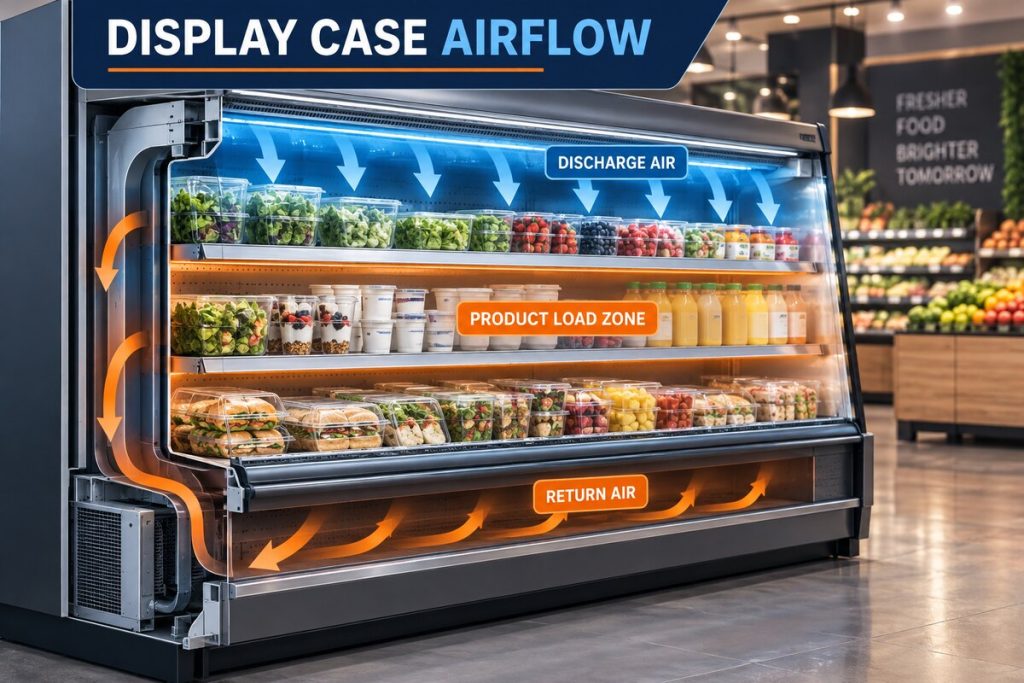
Do not stack boxes directly against the evaporator discharge or return-air area. Product placement should allow cold air to circulate throughout the room. Blocked airflow can produce uneven temperatures even when the refrigeration equipment is operating.
Staff should also look for bent shelving, hanging labels, plastic wrap, or packaging material that could be drawn toward the fan guard.
Inspect the door gasket and hardware
Wipe dirt from the gasket using an approved method and check the entire perimeter. Pay attention to corners and the lower section, where wear and debris commonly appear. If condensation or frost repeatedly forms in the same location, schedule a professional inspection instead of assuming the gasket is the only cause.
Monthly Walk-In Cooler Maintenance Tasks
Review the temperature log
A monthly review can reveal patterns that individual readings miss. Look for gradual increases, repeated afternoon changes, extended recovery after deliveries, or alarms occurring at similar times. These patterns can help separate operational causes from potential sensor, airflow, defrost, or mechanical problems.
Inspect the condenser surroundings
Keep cardboard, storage bins, vegetation, trash, grease, and other obstructions away from the condensing unit. The equipment needs sufficient ventilation to reject heat. In dusty Phoenix locations, visible buildup may appear sooner than expected.
Employees may inspect accessible areas without removing guards or panels. Coil cleaning methods depend on the equipment, contamination, coil condition, and manufacturer instructions. Aggressive brushing, excessive water pressure, or unsuitable chemicals can damage fins and electrical components.
Check panels, penetrations, and the floor
Inspect insulated panels for gaps, loose trim, damaged finishes, or moisture. Check around pipes and electrical penetrations for changes in seal condition. Inside the cooler, look for loose floor sections, damaged thresholds, standing water, or areas that are difficult to clean.
Panel or floor damage can affect sanitation and allow heat or moisture infiltration. Repairs should use materials appropriate for refrigerated commercial spaces.
Review nearby refrigeration equipment
Businesses with several cold-storage units should include them in the same facility review. This may include reach-in coolers and display cases or equipment covered by ice machine maintenance.
Quarterly Professional Maintenance
Quarterly service is a practical baseline for many high-use Phoenix walk-ins, but the final frequency should reflect the unit’s location, operating hours, condition, load, and manufacturer recommendations. During a professional visit, the technician should document findings rather than merely perform a general visual check.
Condenser and evaporator inspection
The technician can evaluate condenser cleanliness, fin condition, fan operation, airflow, and surrounding ventilation. The evaporator should be checked for dirt, frost patterns, fan problems, and evidence of drainage or defrost issues.
Cleaning should be matched to the coil and contaminant. A greasy restaurant condenser may require a different process from a dusty rooftop unit.
Drain and condensate inspection
Drain pans, lines, traps, and terminations should be checked for buildup, leaks, or restrictions. Persistent water inside a cooler may involve the drain, but it can also result from air infiltration, insulation, defrost, or equipment operation. Diagnosis should consider the entire system.
Controls, sensors, and defrost operation
The technician should evaluate temperature controls, sensor placement, system cycling, alarms, and applicable defrost components. A displayed temperature that does not match actual product-space conditions may require testing rather than an immediate control adjustment.
Electrical and mechanical components
Professional maintenance may include inspecting electrical connections, contactors, relays, capacitors, fan motors, wiring, and disconnects as applicable. Guards and access panels should remain in place during normal staff inspections.
If testing points to a serious mechanical issue, the technician can determine whether the unit needs a targeted repair, commercial compressor evaluation, or another corrective service.
Refrigeration-system performance
A technician may assess operating conditions, temperatures, pressures, refrigerant piping, and evidence of leaks when appropriate. Refrigerant should not be added simply because a cooler is struggling. A sealed system that is low on refrigerant requires leak investigation and an appropriate repair plan.
Visible oil residue, suspected refrigerant loss, or recurring performance problems can be evaluated through professional refrigerant leak detection.
Maintenance Tasks Staff Should Not Perform
Daily and weekly observations are valuable, but they should not turn employees into refrigeration technicians. Staff should not:
- Remove electrical or equipment access panels.
- Touch exposed wiring or test live components.
- Adjust refrigerant controls without authorization.
- Add refrigerant or use automotive charging products.
- Chip ice with knives, screwdrivers, or other sharp tools.
- Bend refrigerant tubing or evaporator fins.
- Bypass alarms, door switches, safety controls, or defrost controls.
- Spray water or chemicals into motors, wiring, or control housings.
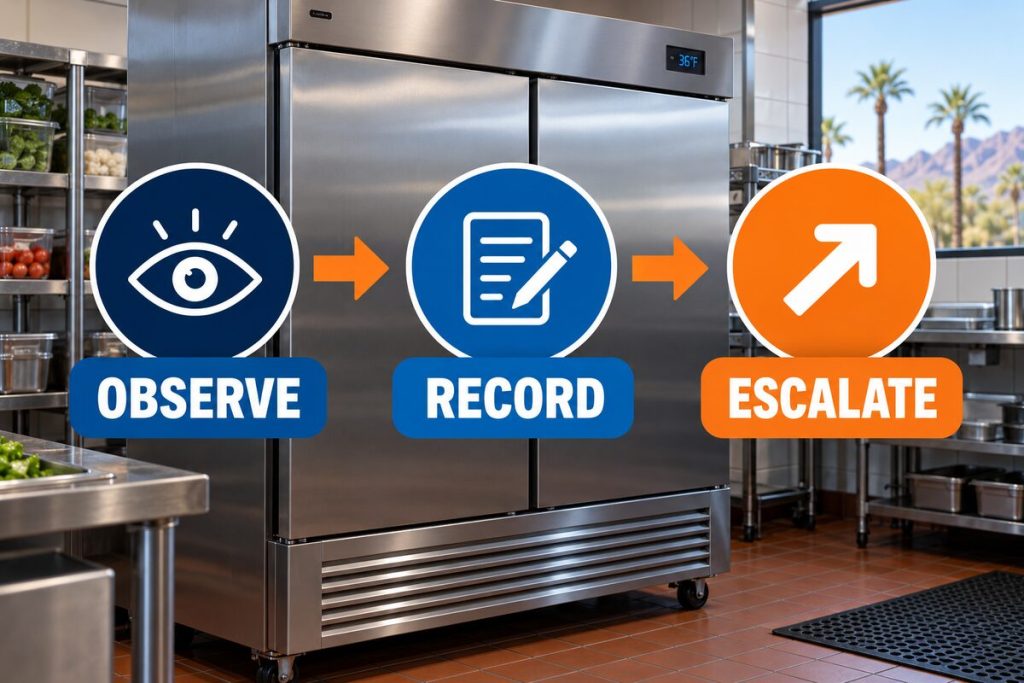
If maintenance reveals a developing fault, the safest next step is to document the symptom and arrange professional commercial refrigeration service.
When to Schedule Service Before the Next Maintenance Visit
Do not wait for the next scheduled inspection when the cooler shows a meaningful change. Contact a technician when you observe:
- A rising or unstable temperature trend.
- Repeated alarms or slow temperature recovery.
- A door that no longer closes or seals consistently.
- Ice forming around the evaporator, drain, ceiling, or door.
- Water repeatedly returning after cleanup.
- A condenser or compressor running unusually long.
- Grinding, rattling, buzzing, or repeated clicking.
- Damaged wiring, burnt odors, oil residue, or suspected refrigerant loss.
- Products blocking airflow because the usable storage layout has changed.
Businesses located outside central Phoenix can also request commercial refrigeration support through the company’s service coverage in Mesa, Scottsdale, Tempe, Chandler, Glendale, Goodyear, Gilbert, and Avondale.
Frequently Asked Questions
Schedule Walk-In Cooler Maintenance in Phoenix
A documented walk-in cooler maintenance Phoenix schedule gives employees clear responsibilities and helps facility managers recognize changes before they disrupt operations. Daily temperature logs, weekly door and airflow checks, monthly condition reviews, and quarterly professional inspections create a maintenance structure suited to Phoenix heat and dust.
Protect Your Commercial Refrigeration Equipment
Schedule walk-in cooler maintenance with Discount AC & Refrigeration of Phoenix. Our team can inspect the refrigeration system, door components, coils, drainage, controls, and operating conditions affecting your equipment.
Call (602) 889-1367 Request ServiceVisit Discount AC & Refrigeration of Phoenix at 10211 N 32nd St #E1, Phoenix, AZ 85028, or call (602) 889-1367 to discuss a maintenance schedule for your commercial walk-in cooler.