
When your AC is running but not cooling, the most common causes here in Phoenix are restricted airflow from a dirty filter, low refrigerant from a slow leak, or a compressor that can no longer do its job. We are the team at Discount AC & Refrigeration of Phoenix, and we diagnose this exact problem every single day across the Valley. In the guide below, we walk you through the symptoms one step at a time, show you the quick fixes you can safely try yourself, and explain the moment it makes sense to call a certified technician. Let’s get your home comfortable again.
Symptoms: The Fan Runs But No Cold Air Comes Out
The classic sign is simple: you can hear the system humming and feel air moving from the vents, but that air is room temperature or only mildly cool. In a Phoenix summer, when outdoor temperatures push past 110°F, even a small drop in performance turns your home uncomfortable within an hour. Before you assume the worst, it helps to read the symptoms carefully, because each one points to a different part of the system. Our professional AC diagnostics follow the same logic you can start at home.
Use the quick-reference table below to match what you are experiencing with the most likely cause, and to see whether it is something you can handle or a job for a licensed pro.
| What You Notice | Most Likely Cause | DIY or Pro? |
|---|---|---|
| Warm air from vents, fan running | Dirty filter or blocked return | DIY |
| Weak airflow, only slightly cool | Clogged filter or dirty coils | DIY / Pro |
| Ice on the copper line or indoor coil | Low refrigerant or airflow restriction | Pro |
| Outdoor unit runs, still no cold air | Failing compressor or capacitor | Pro |
| Set to cool, nothing cold at all | Refrigerant leak or electrical fault | Pro |
| Higher bills, longer run times | Dirty coils, low charge, aging system | Pro |
Filter and Airflow
Restricted airflow is the number-one reason we find an AC running but not cooling, and it is also the easiest to fix. When the return filter clogs with dust, pet hair, and the fine Sonoran Desert grit that blows into every Phoenix home, the blower can’t pull enough air across the evaporator coil. The system keeps running, but there simply isn’t enough warm air moving over the coil to be cooled and returned to your rooms.
Start by pulling the filter and holding it up to the light. If you can’t see through it, replace it. In our experience, homes across Phoenix and neighboring Tempe need a fresh filter every 30 to 60 days during cooling season—far more often than the packaging suggests, because the dust load here is so high. Also confirm that furniture, rugs, or closed vents aren’t blocking supply and return registers, and that the outdoor condenser has at least two feet of clear space on all sides. When airflow problems trace back to leaky or crushed ducts, our ductwork inspection finds the loss your filter change can’t fix, and clean airflow also protects your home’s indoor air quality.
Low Refrigerant
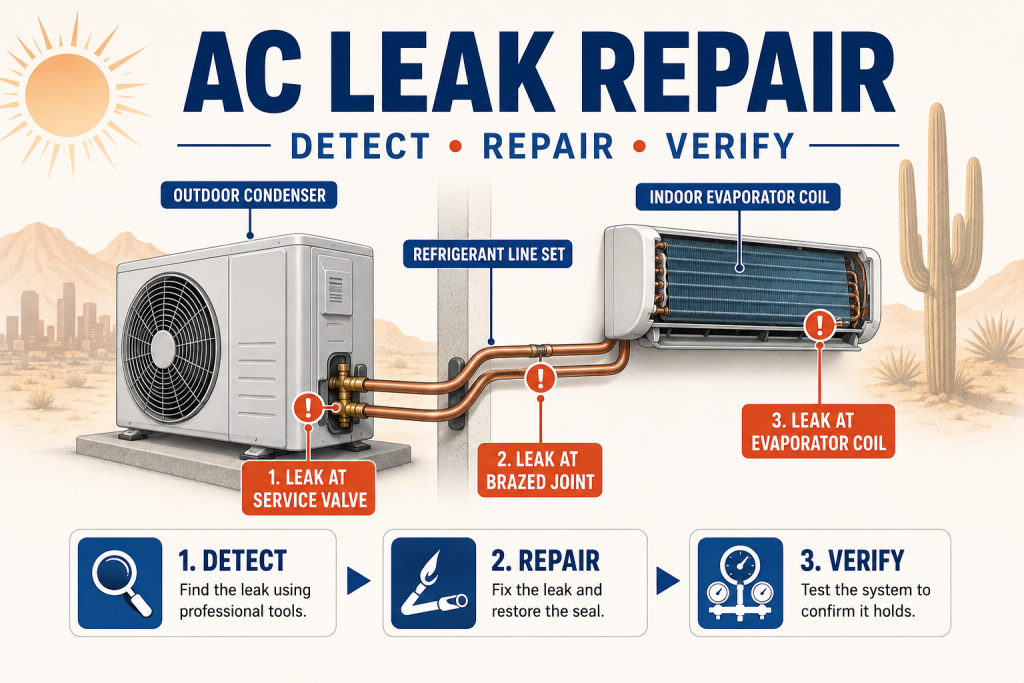
If the filter is clean and airflow feels normal but the air is still warm, the next suspect is refrigerant. Your system doesn’t “use up” refrigerant the way a car uses gas—a low charge almost always means there is a leak somewhere in the coil, line set, or connections. A telltale sign is frost or a block of ice forming on the copper suction line or the indoor coil, because low pressure drops the coil temperature below freezing and the moisture in the air freezes onto it.
This is where the do-it-yourself path ends. Adding refrigerant without repairing the leak is a temporary patch that violates EPA rules and wastes money, so we use electronic refrigerant leak detection to pinpoint the source, seal it, and recharge the system to the manufacturer’s exact specification. Getting the charge right matters: even a slightly low or overfilled system runs less efficiently and shortens the life of every component downstream. If you notice ice, switch the system to “fan only” to let it thaw and call us—running a frozen unit can push liquid refrigerant back to the compressor and cause far more expensive damage.
Compressor
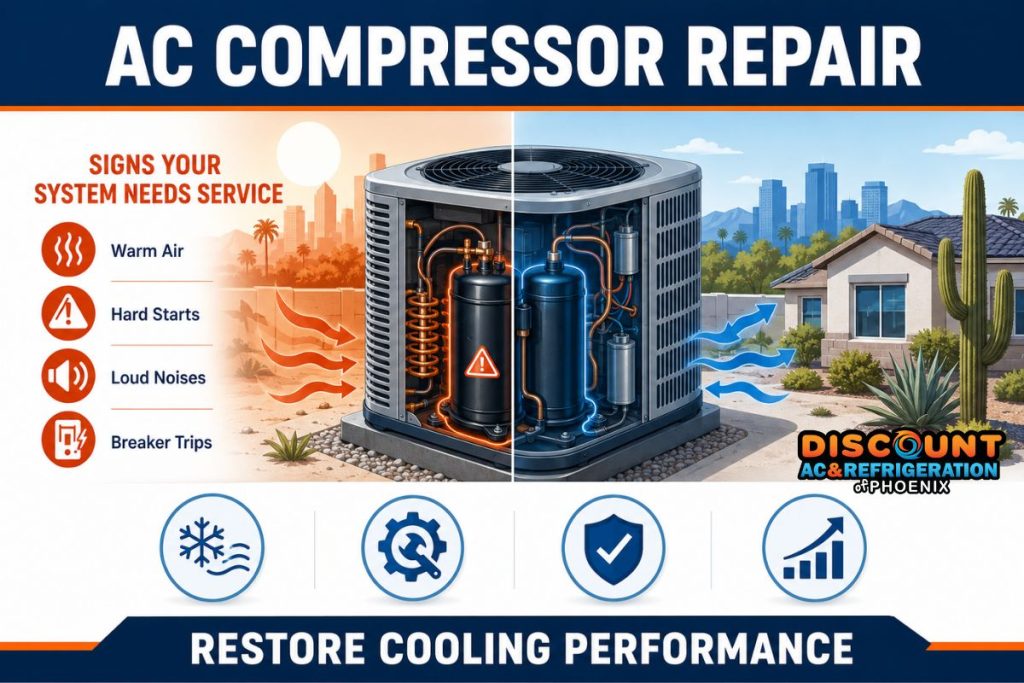
The compressor is the heart of your air conditioner. It pressurizes the refrigerant and drives it through the cycle that pulls heat out of your home. When the compressor struggles or stops, the outdoor fan may still spin and the indoor blower may still run, so everything sounds normal—yet no real cooling happens. Common causes include a failed start capacitor, worn electrical contactors, or a compressor that has simply reached the end of a long service life, especially on systems over 12 to 15 years old that have battled a decade of Phoenix summers.
Diagnosing a compressor issue safely means testing capacitors, contactors, and amp draw with the right meters—work that involves high-voltage components and belongs with a trained technician. In many cases a capacitor or contactor replacement restores cooling the same day at a modest cost. When the compressor itself has failed, we walk you through an honest comparison of compressor replacement versus a full AC installation or replacement, so you can weigh repair cost against the age and efficiency of your current unit without any pressure.
Quick Fixes You Can Try Today
Before you schedule a service call, there are a handful of safe checks that resolve a surprising number of “running but not cooling” complaints. We encourage every homeowner to run through this list first—it costs nothing and often gets cold air flowing again in minutes:
- Replace the air filter. A clean filter is the single most effective fix and the one people skip most often.
- Check the thermostat. Confirm it is set to “cool,” the target temperature is below the room temperature, and the fan is on “auto,” not “on.” Fresh batteries solve more problems than you’d expect.
- Clear the outdoor condenser. Gently rinse away dust, cottonwood fluff, and grass clippings with a garden hose, and pull weeds or debris away from the unit so it can breathe.
- Open and unblock vents. Make sure supply and return registers are open and not covered by furniture, drapes, or rugs.
- Reset the breaker. If the outdoor unit is silent, check the electrical panel and the disconnect box near the condenser for a tripped breaker.
- Look for ice, then stop. If you see ice on the coil or lines, turn the system off, switch the fan to circulate, and let it thaw—this is your cue to call a professional rather than keep running it.
If cool air returns after these steps, wonderful—you have saved yourself a service visit. If nothing changes, or if the problem comes back within a day or two, the underlying issue needs professional tools and training. That is true whether you are in Scottsdale, Mesa, Chandler, or Gilbert—we cover the entire metro through our service areas.
When to Call for Professional Repair
Some problems are simply beyond a homeowner’s tools, and that is exactly what our certified team is built for. If your system is icing over, tripping breakers, showing warm air after a filter change, or has a compressor that won’t start, those are signals that internal components—refrigerant charge, electrical parts, or the compressor itself—need hands-on diagnosis. Continuing to run a system in that condition usually turns a manageable repair into a costly one.
Here is where experience earns its keep. Our technicians are EPA-certified and factory-trained, and we invest in ongoing technician training so the person at your door understands both legacy R-22 equipment and today’s high-efficiency systems. Over years of service across the Valley, our team has diagnosed nearly every failure mode a Phoenix AC can throw at us, and we treat your home and your budget with the same care we’d want for our own. We explain what we find, show you the readings, and quote the repair before we begin—no surprises, no scare tactics.
That transparency is the reason so many neighbors leave us five-star reviews and call us back season after season. Whether the answer is a same-day capacitor swap, a properly sealed refrigerant leak repair, or a conversation about a new system, we give you the full picture. And when the heat can’t wait, our 24/7 emergency AC repair means you are never stuck sweating through a 115°F afternoon.
Keeping Your Phoenix AC Cooling All Summer
The best repair is the one you never need. Because our climate is so demanding, a system that runs flawlessly in April can fall behind by July if it isn’t maintained. A twice-yearly tune-up keeps coils clean, refrigerant at spec, and electrical connections tight—the three things that most often lead to a warm-air call. Homeowners on our seasonal maintenance program catch small issues before they strand them in the heat, and they consistently see lower energy bills and longer equipment life.
Maintenance matters even more for specialized equipment. If you rely on a ductless mini-split for a garage or addition, or a heat pump that both cools and heats your home, regular service keeps performance steady year-round. We handle it all as part of our full range of residential HVAC services, and when winter finally arrives, the same team keeps your furnace and heating running safely. You can browse more seasonal tips anytime on our blog.
Frequently Asked Questions — AC Running But Not Cooling
Why is my AC running but not blowing cold air? +
The three most common reasons are a clogged air filter restricting airflow, low refrigerant caused by a leak, and a failing compressor or capacitor. Start by replacing the filter and checking the thermostat; if the air is still warm, the system needs a professional diagnosis.
Can a dirty air filter really stop my AC from cooling? +
Yes. A clogged filter starves the evaporator coil of airflow, so the system runs but can’t transfer heat efficiently. In severe cases it even causes the coil to freeze. In dusty Phoenix conditions we recommend checking your filter every 30 days during summer.
How do I know if my AC is low on refrigerant? +
Warning signs include warm air despite a clean filter, ice on the copper line or indoor coil, longer run times, and rising energy bills. A low charge means a leak, so it needs certified leak detection and repair—not just a top-off, which is against EPA rules and only masks the problem.
Is it safe to keep running my AC if it isn’t cooling? +
If you see ice or the outdoor unit keeps tripping the breaker, turn the system off. Running a frozen or electrically faulty AC can push liquid refrigerant into the compressor and cause major damage. Switch to “fan only” to thaw the coil and call a professional.
How soon can you come out if my AC stops cooling in Phoenix? +
We offer same-day and 24/7 emergency service across the Phoenix metro, including Scottsdale, Tempe, Mesa, Chandler, and Gilbert. Call us and we’ll get a certified technician to your door quickly so you’re not left without cooling in the heat.
Stay Cool in Phoenix: Let’s Get Your AC Fixed Right
An AC that runs but won’t cool is your system asking for help—and the sooner you answer, the smaller the repair. You now know how to read the symptoms, try the safe quick fixes, and recognize the moment that low refrigerant or a struggling compressor calls for a certified hand. If you’ve worked through the checklist and your home still isn’t cooling, the next step is a proper diagnostic from our team, and if you’re weighing an upgrade, our guide to signs it’s time for a new system on our blog is a helpful read.
Reach out to Discount AC & Refrigeration of Phoenix today at (602) 889-1367, and be sure to visit and follow our Google Business listing on the map to see why so many Valley homeowners trust us with their comfort. You can find our reviews, hours, and directions on that same Google Maps location—and when you’re ready, our certified technicians are standing by to bring cold air back to your home. Stay cool, Phoenix. We’ve got you covered.