
Phoenix summers push air conditioning systems harder than almost anywhere else in the country. By August, outdoor temperatures regularly climb past 110°F, and your AC compressor runs for hours at a stretch just to keep indoor spaces livable. When that compressor starts to fail, the effects show up fast: warm air blowing from the vents, unusual sounds from the outdoor unit, or a system that cycles on and off every few minutes. Discount AC & Refrigeration of Phoenix handles compressor repairs across the Phoenix metro area, and this guide walks you through what causes compressor problems, what the repair process looks like, and when to call a technician.
What the AC Compressor Actually Does
The compressor sits inside your outdoor unit and serves as the mechanical heart of your cooling system. It pressurizes the refrigerant, which allows the refrigerant to absorb heat from inside your home and release it outdoors. Without a functioning compressor, refrigerant cannot circulate, and the system cannot move heat at all.
Phoenix homes typically run central air conditioning systems with single-stage or two-stage scroll compressors. These units run under high thermal stress from June through September, which accelerates wear on internal components including the motor windings, valve plates, and crankshaft bearings.
Common Causes of Compressor Failure in Phoenix
Understanding why compressors fail helps you catch warning signs before the unit fails completely. The most frequent causes in Phoenix-area systems include:
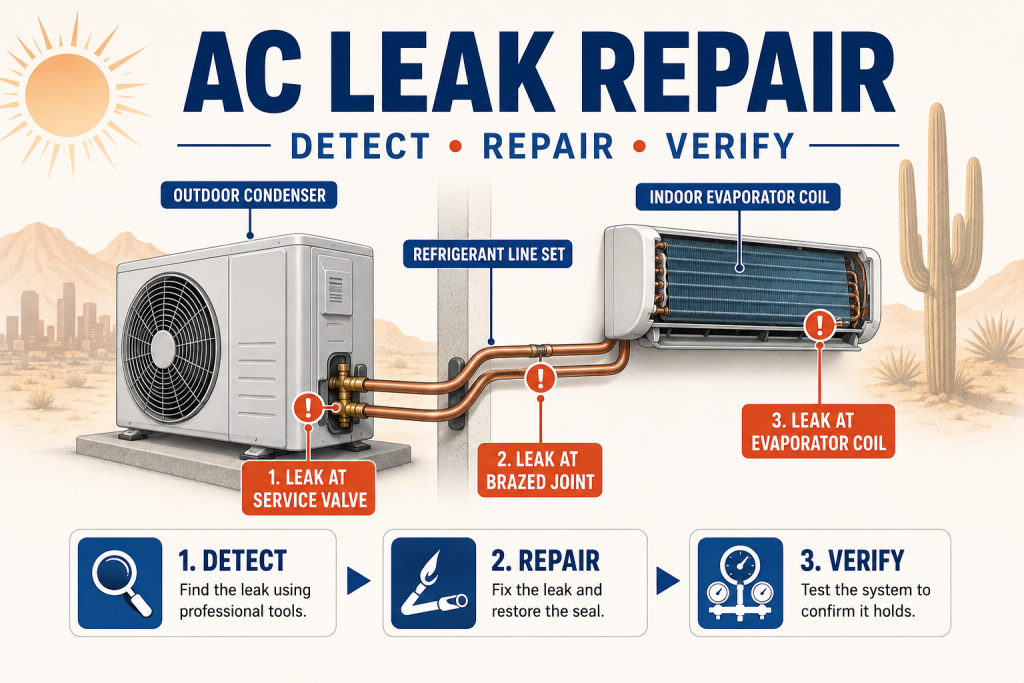
- Low refrigerant levels. When refrigerant charge drops below the manufacturer specification, the compressor runs hotter than designed and the motor windings overheat. Many Phoenix systems develop slow refrigerant leaks at service ports or coil connections over several years.
- Electrical failures. Capacitors and contactors in the outdoor unit deteriorate faster in extreme heat. A failed run capacitor forces the compressor motor to draw more current than it should, which burns out the windings.
- Dirt and restricted airflow. A condenser coil clogged with dust, cottonwood, or debris traps heat around the compressor. Coil cleaning extends compressor life and improves efficiency.
- Overheating from extended run cycles. Systems undersized for the home’s square footage or insulation level run continuously without adequate cooling periods, which causes the compressor to overheat over time.
- Age and normal wear. Most residential compressors carry a 10-year warranty and last 12 to 15 years with proper maintenance. Units approaching or past that range fail more frequently during peak summer demand.
Signs Your Compressor Needs Attention
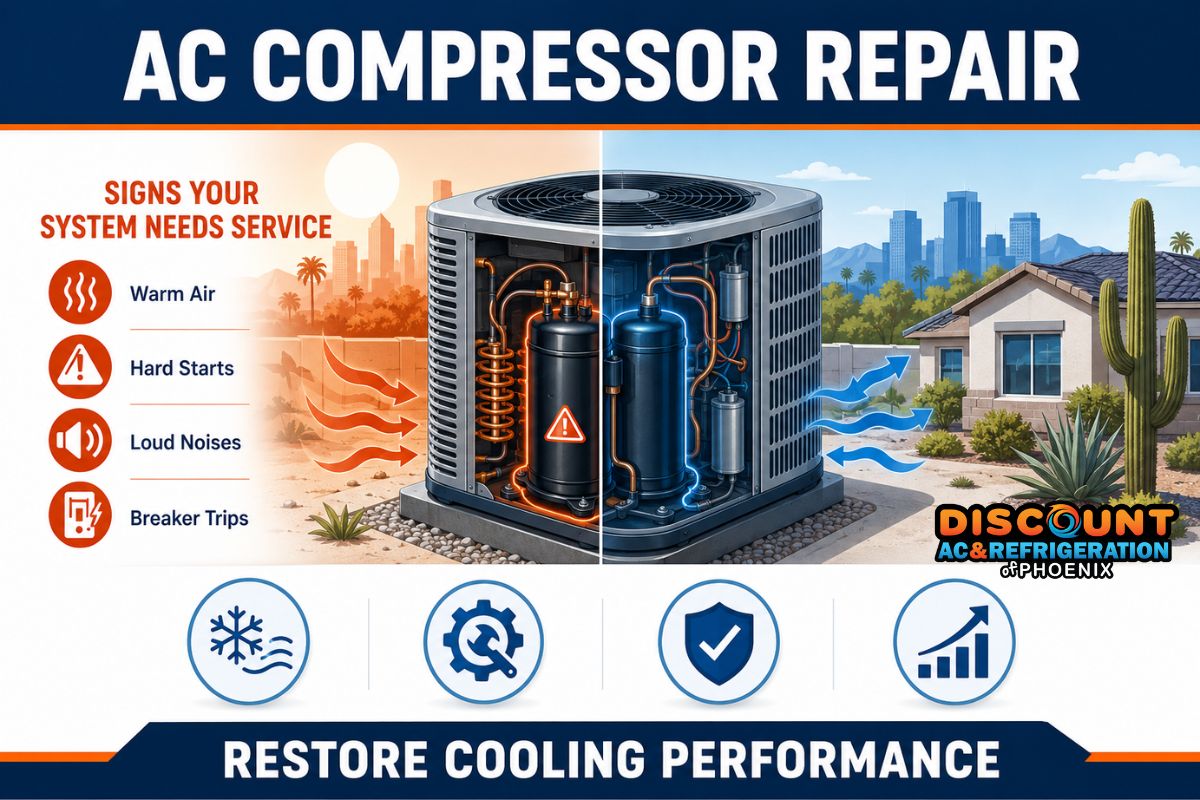
Several symptoms point specifically to compressor problems rather than other system components. Watch for these signs in your Phoenix home:
AC Compressor Warning Signs and Likely Causes
| Symptom | Likely Cause | Next Step |
|---|---|---|
| Outdoor unit hums but fan does not start | Failed run or start capacitor | Capacitor replacement |
| System runs continuously, indoor temp 5°F to 10°F above setpoint | Low refrigerant or undersized system | Pressure test and refrigerant check |
| Grinding or chattering at compressor startup | Worn bearings or valve plates | Internal compressor inspection |
| Circuit breakers trip repeatedly at AC startup | Hard-starting or shorted compressor motor | Motor winding test with multimeter |
| Ice on refrigerant lines near air handler | Low refrigerant from compressor circulation failure | Leak detection and recharge |
- The outdoor unit hums or buzzes but the fan does not start, which often signals a failed capacitor affecting compressor startup.
- The system runs continuously but indoor temperatures stay 5°F to 10°F above the thermostat setting.
- You hear grinding, rattling, or chattering from the outdoor unit when the compressor starts.
- Circuit breakers trip repeatedly when the AC starts up, which can indicate a hard-starting or shorted compressor motor.
- Ice forms on the refrigerant lines near the indoor air handler, which often follows low refrigerant levels caused by a compressor that has stopped circulating properly.
What AC Compressor Repair Involves
Compressor repair covers a range of services depending on what diagnostic testing reveals. A technician from Discount AC & Refrigeration of Phoenix will use digital manifold gauges to check refrigerant pressures, a multimeter to test capacitor microfarad ratings, and an amp clamp to measure motor current draw at startup and during operation.
Repairs may include replacing the run or start capacitor, installing a hard-start kit to reduce startup amperage, recharging refrigerant to the manufacturer-specified charge, or cleaning the condenser coil to restore proper heat rejection. In cases where the compressor motor has failed internally, the technician will compare the cost of a compressor replacement against the age and overall condition of the system before recommending the right path forward.
Compressor replacements on standard residential systems in Phoenix typically take three to five hours. Technicians recover existing refrigerant, remove the failed compressor, install and braze in the replacement unit, pressure-test the refrigerant circuit, pull a vacuum, and recharge the system to spec before verifying operation.
Repair vs. Replacement: How to Make the Decision
A compressor replacement on a system over 12 years old warrants a full-system cost comparison. If the compressor replacement costs more than 50 percent of the price of a new system, and the existing unit uses R-22 refrigerant (which has been phased out of production), replacing the full system generally makes more financial sense. A technician can provide both quotes so you can compare the numbers directly before committing.
Newer systems using R-410A or R-454B refrigerant, especially units under 8 years old, are good candidates for compressor repair rather than full replacement, provided the rest of the system tests within manufacturer specifications.
Get Your Compressor Diagnosed Today
August in Phoenix leaves no margin for a failing AC system. If your system is showing any of the warning signs above, contact Discount AC & Refrigeration of Phoenix now. Our technicians serve the Phoenix metro area and carry the parts to handle most compressor repairs on the same visit.
Frequently Asked Questions
How much does AC compressor repair cost in Phoenix?
Repair costs vary depending on what the diagnostic reveals. Replacing a capacitor typically runs $150 to $300, while a full compressor replacement on a residential unit can range from $1,200 to $2,500 or more depending on the unit size and refrigerant type. Getting a written estimate before any work begins helps you compare options, including whether repair or full unit replacement makes more financial sense given the system’s age.
Is it worth repairing a compressor on an older AC unit in Phoenix?
If your system is within five years of its expected lifespan and the repair cost exceeds half the price of a new unit, replacement often makes more sense. Phoenix’s extreme heat accelerates wear on aging components, so a repaired compressor in an older system may be followed by additional failures within the same season. A technician can review the system’s age, repair history, and energy consumption to help you decide.
How long does an AC compressor repair or replacement take?
Capacitor and contactor replacements usually take one to two hours on-site. A full compressor swap requires evacuating and recharging the refrigerant circuit, which can take four to six hours depending on the system size and refrigerant access. Scheduling early in the day during summer months reduces the risk of delays from heat-related complications during the repair.
Can I run my AC if I suspect the compressor is failing?
Running a system with a failing compressor can accelerate internal damage and turn a repairable situation into a full replacement. If the unit is short-cycling, tripping breakers, or blowing warm air, turning it off and calling a technician promptly reduces the risk of burning out the motor windings entirely. Until the repair is complete, portable fans and closing blinds during peak afternoon hours help manage indoor temperatures.
Does a new AC compressor come with a warranty?
Most replacement compressors carry a manufacturer warranty of five to ten years on the part itself. Labor warranties vary by contractor, so confirm the coverage period in writing before work begins. Registering the replacement part with the manufacturer after installation is often required to activate the full warranty term.
Call us at (602) 889-1367 or visit discount-acr-phoenix.com to schedule a diagnostic appointment. We hold a 5-star rating on Google, and we back every repair with straightforward pricing before any work begins.