
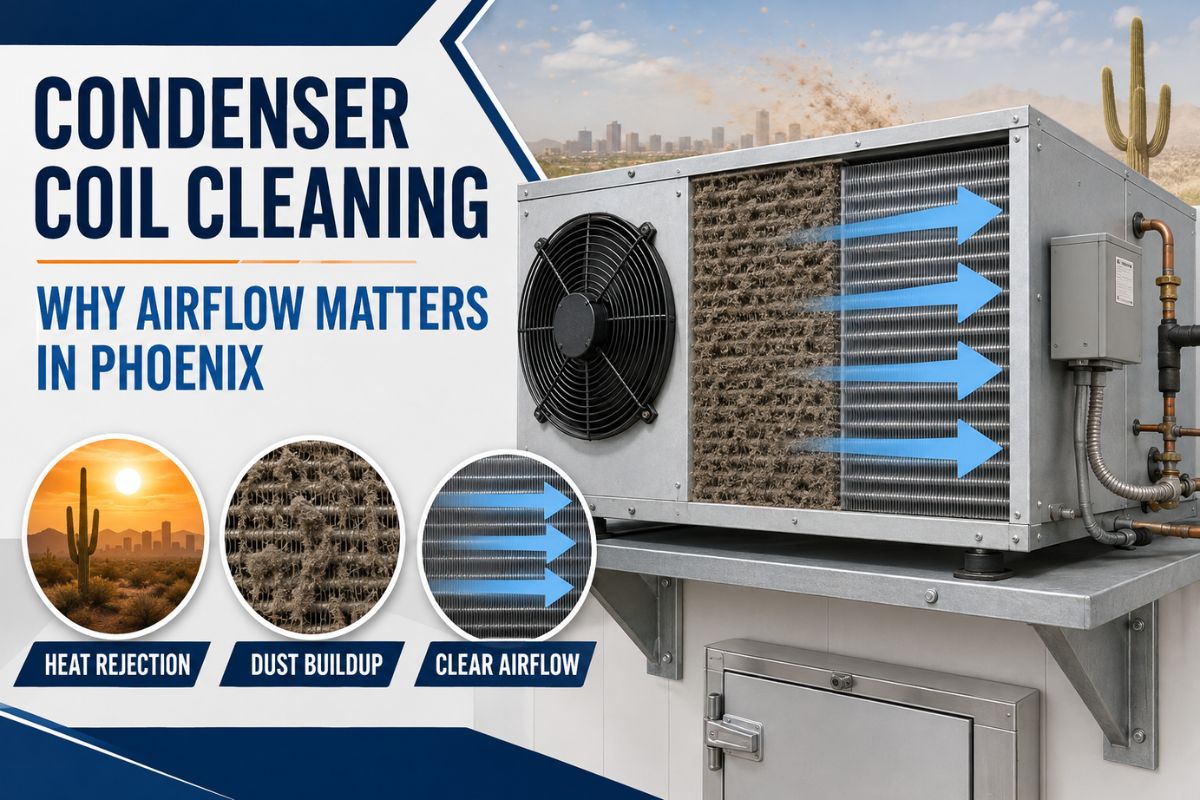
Walk-in cooler condenser coil cleaning helps the refrigeration system release the heat it removes from stored products and the cooler enclosure. In Phoenix, airborne dust and extreme outdoor temperatures can make condenser airflow particularly important. Staff can keep the equipment area clear and report visible buildup, but cleaning the coil itself may require electrical isolation, equipment disassembly, specialized tools, and a qualified commercial refrigeration technician.
A condenser coil does not create cold air. Its role is to release heat from the refrigeration system into the surrounding environment. When dust, grease, leaves, packaging, or other debris restricts airflow through the coil, the system may have difficulty rejecting that heat.
The result can be longer operating cycles, higher system pressures, reduced cooling capacity, and additional stress on the compressor and fan components. If the cooler is already warming, use the safe response steps for a walk-in cooler that is not cooling instead of assuming coil cleaning is the only repair needed.
What Does a Walk-In Cooler Condenser Coil Do?
A commercial refrigeration system moves heat through a repeating cycle. The evaporator absorbs heat from inside the walk-in cooler. Refrigerant carries that heat toward the compressor and condenser. The condenser then transfers the heat to the surrounding air.
The finned condenser coil creates a large surface area for this heat transfer. A fan pulls or pushes outdoor or indoor equipment-room air across the fins. When the coil surface and airflow path are reasonably clear, heat can move from the refrigerant circuit into the passing air.
This heat-rejection process matters to every type of commercial refrigeration system, including walk-ins, reach-ins, display cases, and ice machines. However, the exact coil design, location, access requirements, and cleaning procedure vary by equipment.
Why Airflow Matters More During Phoenix Heat
The condenser must release heat into the air surrounding it. During Phoenix summer conditions, that surrounding air may already be extremely hot. The refrigeration system therefore has less favorable conditions for transferring additional heat out of the coil.
Dust buildup does not create outdoor heat, but it can add another obstacle. A layer of debris between the fins reduces the open area available for air to pass through. This may cause the condensing unit to operate longer or at less favorable conditions while trying to maintain the required cooler temperature.
A clean coil does not guarantee that a cooler will reach its setpoint. Low refrigerant charge, fan problems, electrical faults, control issues, compressor wear, door infiltration, product loading, or evaporator restrictions can produce similar symptoms. Professional diagnosis is important when cleaning does not correct the underlying problem.
How Phoenix Dust Restricts Condenser Airflow
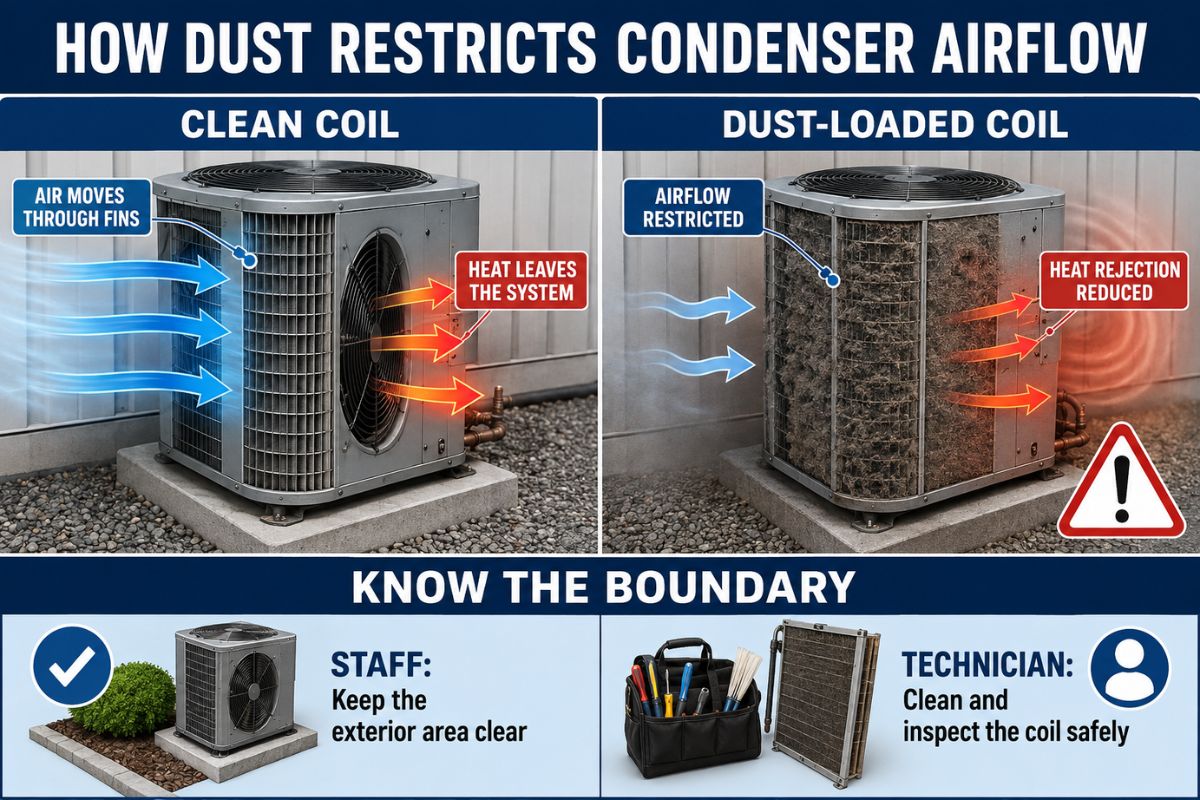
Dust can collect gradually, so declining performance may not be immediately obvious. The material may first gather on the entering-air side of the coil, where it combines with lint, grease, pollen, plant debris, or fibers from nearby storage materials.
As buildup increases, the coil may experience:
- Reduced airflow through the condenser fins.
- Less effective heat transfer from the refrigerant to the surrounding air.
- Longer compressor and fan operating cycles.
- Higher component temperatures or system pressures.
- Reduced capacity during demanding operating conditions.
- Additional stress on the condenser fan motor and compressor.
The effect depends on the severity and type of buildup. Dry surface dust may behave differently from a dense layer of grease and debris. Equipment located near restaurant exhaust, construction, landscaping, loading areas, or unpaved surfaces may require more frequent inspection.
Clean Coil Versus Dust-Loaded Coil
| Condition | Airflow | Heat rejection | Recommended response |
|---|---|---|---|
| Coil appears clear | Air can move through the fin openings with less restriction. | The coil has better conditions for transferring heat to the passing air. | Continue scheduled inspection and exterior housekeeping. |
| Light visible dust | Airflow may be beginning to decline. | Heat-transfer performance may gradually be affected. | Document the condition and schedule inspection based on operating demands. |
| Heavy dust or debris | Fin openings may be visibly restricted. | The system may struggle to release heat during demanding conditions. | Request professional coil cleaning. |
| Grease-packed coil | Grease can trap additional dust and form dense restrictions. | Heat rejection may be substantially reduced. | Professional cleaning and site-condition review. |
| Clean coil but poor cooling | Airflow may appear normal, but another fault may exist. | Heat rejection or refrigeration capacity may still be inadequate. | Complete refrigeration diagnosis. |
Safe Exterior Housekeeping for Staff
Staff can help protect condenser airflow without touching the coil, fan, wiring, or refrigerant components. Exterior housekeeping should focus on the surrounding area and visible operating conditions.
Keep the Equipment Area Clear
Remove boxes, plastic bags, paper, vegetation, stored materials, and loose debris from the surrounding area. Maintain the clearances required by the equipment manufacturer. Do not stack inventory against the condensing unit or use its service platform for storage.
Report Visible Dust and Blocked Air Paths
Staff can inspect the unit from a safe distance and report visible matting, leaves, grease, or debris on accessible exterior surfaces. They should not reach through fan guards, remove panels, or place hands near a fan that may start automatically.
Document Changes in Operation
Record cooler temperatures, alarm activity, unusual sounds, longer run times, and the date visible buildup was noticed. Comparing these observations with the normal walk-in cooler temperature range helps the technician understand how the equipment is performing.
Control Nearby Sources of Debris
Where practical, keep packaging, sweeping dust, landscaping debris, and exhaust discharge away from the condenser’s air intake. Do not install an improvised screen, filter, cover, or enclosure around the unit. These additions can create their own airflow restriction unless approved for the equipment.
What Staff Should Not Do
A condenser may contain energized electrical components, sharp metal fins, automatically starting fans, hot surfaces, and pressurized refrigerant tubing. Cleaning procedures that appear simple can damage the coil or expose staff to hazards.
Staff should not:
- Remove electrical panels, fan guards, or equipment covers.
- Reach into the fan or coil section.
- Spray water toward motors, wiring, controls, or electrical enclosures.
- Use a pressure washer on condenser fins.
- Scrape the coil with screwdrivers, knives, or metal brushes.
- Apply household cleaners, acids, degreasers, or unapproved chemicals.
- Use compressed air without the correct direction, pressure, and safety controls.
- Bend or straighten fins with improvised tools.
- Add refrigerant or adjust pressure controls.
- Assume visible dust is the only reason the cooler is warming.
What Professional Condenser Coil Cleaning Includes
A technician first identifies the condenser design, buildup type, airflow direction, electrical-isolation requirements, and manufacturer recommendations. The cleaning method should be selected according to those conditions rather than applying the same chemical or pressure to every coil.
Professional service may include:
- Safely shutting down and isolating the equipment.
- Removing approved access panels or guards.
- Inspecting both sides and the full depth of the coil.
- Protecting motors, controls, wiring, and nearby surfaces.
- Removing loose debris using appropriate tools and airflow direction.
- Applying an equipment-compatible cleaning product when necessary.
- Rinsing only when required and technically appropriate.
- Inspecting bent fins, corrosion, oil residue, and physical damage.
- Checking fan blades, fan guards, motors, and mounting hardware.
- Restarting the system and verifying operating conditions.
Professional cleaning is often included within broader walk-in cooler and freezer service. This allows the technician to determine whether poor airflow is an isolated maintenance issue or part of a larger refrigeration problem.
How Often Should a Condenser Coil Be Inspected?
There is no single inspection interval for every Phoenix installation. Frequency should be based on condenser location, operating hours, restaurant grease, nearby construction, landscaping, seasonal dust, and the manufacturer’s recommendations.
Staff can include a non-contact visual check in the facility’s routine maintenance program. High-use systems or dust-exposed equipment may benefit from more frequent professional evaluation. A documented commercial equipment maintenance program makes it easier to adjust service intervals based on actual buildup.
Cleaning should be performed according to condition, not simply because a fixed date has arrived. However, waiting until the coil is completely blocked increases the possibility of lost cooling capacity during Phoenix’s most demanding temperatures.
Signs the Condenser May Need Professional Attention
Visible dirt is one reason to schedule service, but other symptoms may indicate restricted airflow or another condenser-side problem:
- Cooler temperature takes longer to recover after deliveries.
- The compressor appears to run longer than normal.
- The condensing unit repeatedly stops and restarts.
- The condenser fan is noisy, vibrating, or not operating.
- Hot air does not appear to move away from the unit normally.
- The coil is covered with dust, grease, leaves, or fibrous debris.
- Temperature alarms occur during the hottest part of the day.
- Cooling remains poor after exterior obstructions are removed.
These symptoms do not confirm that the coil is the only problem. A failing fan motor, control fault, refrigerant leak, or compressor problem can affect condenser performance. A technician may recommend refrigerant leak detection or a compressor evaluation when system measurements support further testing.
When the Problem Requires Repair Instead of Cleaning
Coil cleaning cannot correct a failed fan motor, damaged control, refrigerant loss, defective sensor, compressor fault, or severely damaged coil. If the cooler continues warming, protect the inventory according to the facility’s food-safety procedures and request professional diagnosis.
A business facing active cooling loss can review the warning signs and next steps in our walk-in cooler repair guide. When temperatures threaten stored products or business operations, contact the company’s emergency refrigeration service.
Frequently Asked Questions
Why does a walk-in cooler condenser coil need airflow?
Airflow carries heat away from the condenser coil. When air cannot move through the fins, the refrigeration system may have greater difficulty releasing the heat absorbed from inside the cooler.
Why do condenser coils get dirty so quickly in Phoenix?
Airborne desert dust, landscaping debris, construction, traffic, packaging fibers, and restaurant grease can collect on the entering-air side of the coil. The rate of buildup depends heavily on the equipment’s location.
Can employees clean a walk-in cooler condenser coil?
Employees can keep the surrounding area clear and report visible buildup. Cleaning the coil itself may expose them to electrical components, automatically starting fans, sharp fins, and pressurized tubing, so it should normally be handled by a qualified technician.
Can I use a pressure washer on a condenser coil?
No. High-pressure water can bend the fins, damage electrical components, and push debris deeper into the coil. The appropriate cleaning pressure and method depend on the equipment design and the material being removed.
Does a dirty condenser coil make a walk-in cooler warmer?
A heavily restricted coil can reduce heat rejection and cooling capacity. However, warm temperatures can also result from door infiltration, airflow problems inside the cooler, fan faults, refrigerant issues, controls, or compressor problems.
How often should a Phoenix condenser coil be cleaned?
The interval depends on dust exposure, equipment location, operating hours, grease, landscaping, and manufacturer requirements. A technician can establish an appropriate schedule after inspecting actual buildup at the site.
Can I cover the condenser to keep dust off it?
Do not cover an operating condenser or install an improvised screen. Covers and restrictive screens can block airflow. Any protective accessory must be approved for the specific equipment and installed without violating required clearances.
What are the signs of restricted condenser airflow?
Possible signs include visible debris, long operating cycles, slow temperature recovery, condenser fan problems, recurring alarms during hot weather, or poor cooling. These symptoms require diagnosis because they can have more than one cause.
Will cleaning the condenser coil fix every cooling problem?
No. Cleaning helps when dirt is restricting heat transfer, but it cannot repair a failed motor, electrical fault, refrigerant leak, control problem, damaged coil, or worn compressor.
What should staff do when they notice a dirty coil?
Document the condition, keep the surrounding area clear, monitor approved temperature records, and arrange professional inspection. Staff should not remove guards, open panels, or spray cleaning products into the equipment.
Schedule Condenser Coil Service in Phoenix
Discount AC & Refrigeration of Phoenix can inspect condenser airflow, remove dust and debris using an equipment-appropriate method, and verify the performance of your commercial walk-in cooler.
Request Walk-In Cooler ServiceCall Discount AC & Refrigeration of Phoenix at (602) 889-1367 to request professional condenser coil cleaning, walk-in cooler maintenance, or commercial refrigeration diagnosis in Phoenix, Arizona.