

A walk-in cooler water leaking problem can begin with a blocked drain, melting frost, condensation, warm-air infiltration, or deterioration around the floor and panel seams. The location and timing of the water usually provide important clues, but the visible puddle may be several feet away from the actual source.
For Phoenix restaurants, grocery stores, convenience stores, and commercial kitchens, water around a walk-in cooler should not be treated as an ordinary housekeeping issue. Moisture can create slippery floors, affect stored products, damage building materials, and signal a refrigeration or defrost problem requiring professional diagnosis.
Where Is the Water Coming From?
Water does not always fall directly beneath the failed component. It can travel along insulated panels, refrigerant piping, shelving, ceiling surfaces, or floor seams before becoming visible. That is why an accurate diagnosis begins by tracing the moisture rather than assuming that the nearest component is responsible.
| Where Water Appears | Possible Source | Useful Observation | Recommended Response |
|---|---|---|---|
| Below the evaporator | Drain pan, drain line, or melting frost | Check whether dripping increases during or after a defrost cycle. | Protect inventory and schedule a drain and defrost inspection. |
| Near the doorway | Warm-air infiltration or damaged gasket | Look for condensation, frost, gaps, or a door that does not close evenly. | Reduce unnecessary door openings and request a door inspection. |
| Along walls or ceiling seams | Condensation, panel seam failure, or moisture traveling from above | Note whether the surface is sweating or water is emerging from one seam. | Have the enclosure and refrigeration system evaluated. |
| Across the center of the floor | Overflowing drain, melting ice, or inadequate drainage | Identify the highest or wettest point instead of following only the puddle edge. | Mark the area and keep employees away from the slip hazard. |
| Under or outside the cooler | Floor seam, drain routing, nearby plumbing, or enclosure issue | Observe whether the moisture corresponds with defrost cycles, cleaning, or plumbing use. | Arrange a refrigeration and building-area inspection. |
Blocked or Restricted Condensate Drain
During normal operation, moisture collected around the evaporator moves into a drain pan and then through a condensate drain line. Food debris, dirt, biological buildup, ice, or an incorrect drain slope can restrict this path. Once the pan fills faster than it can drain, water can overflow into the cooler.
A drain-related leak commonly appears beneath or close to the evaporator. The water may show up intermittently, especially following a defrost cycle. Standing water inside the drain pan, recurring puddles in the same area, or moisture that returns shortly after cleaning are useful details to give a refrigeration technician.
The visible end of a drain can be inspected from a safe distance, but internal drain components should not be disassembled while the cooler is operating. A professional walk-in cooler repair visit can determine whether the line is restricted, frozen, incorrectly routed, or affected by another system problem.
Melting Frost Around the Evaporator
Water beneath an evaporator does not always mean the drain itself caused the problem. Excess frost may accumulate first and then release more water than the drainage system can manage when it melts.
Frost accumulation can be associated with restricted airflow, frequent door openings, damaged door seals, control problems, fan performance, or an incomplete defrost process. If you see ice around the evaporator, ceiling, fan housing, or nearby piping, note its exact location before it begins to melt.
Recurring frost deserves a complete diagnostic inspection rather than repeated manual ice removal. The system may need evaluation for airflow, controls, defrost operation, drainage, and operating conditions. Our walk-in cooler and freezer services address these components as one connected system.

The visible puddle may not be directly below its source. Document the drain, evaporator, doorway, wall seams, and floor area.
Condensation Inside or Outside the Cooler
Condensation forms when warm, moisture-bearing air contacts a colder surface. Phoenix has a dry climate for much of the year, but kitchens, dishwashing areas, monsoon humidity, frequent deliveries, and repeated door openings can still introduce significant moisture around a walk-in cooler.
Light surface moisture may be related to operating conditions, but persistent sweating, active dripping, fogging, or water pooling should be investigated. Continuous condensation can indicate that the cooler is not maintaining the intended separation between the refrigerated interior and the surrounding space.
Common areas to observe include:
- The exterior face of the door and frame.
- Ceiling and wall panel seams.
- Refrigerant line penetrations.
- The evaporator housing and drain pan.
- Areas where shelving or boxes touch cold wall surfaces.
For a deeper explanation of moisture formation, see our guide to condensation in commercial refrigeration.
Door Infiltration and Gasket Problems
Every time the cooler door opens, warm air enters and moisture can condense or freeze on cold surfaces. Normal door traffic is part of commercial operation, but a door that remains open, closes unevenly, or has a damaged gasket allows infiltration to continue between uses.
Look for visible gasket tears, flattened sections, food residue, frost around the frame, or daylight showing through a closed door. Also observe whether the door rubs against the floor, fails to latch, or swings back open after an employee releases it.
A dirty gasket can sometimes be cleaned according to the manufacturer’s care instructions. A torn, hardened, incorrectly fitted, or misaligned gasket may need adjustment or replacement. Because door problems add both moisture and heat, they can contribute to leaks while also making the refrigeration system work harder.
Floor, Seam, and Insulation Concerns
Water that appears around the perimeter of the cooler, rises through a seam, or spreads under nearby flooring may involve more than the refrigeration drain. Damaged sealant, separated floor joints, deteriorated insulation, uneven installation, or water entering from another building source can all produce similar symptoms.
A floor concern is more likely when moisture remains after the refrigeration drain has been inspected, appears far from the evaporator, or changes with nearby plumbing and cleaning activity. Soft flooring, lifting surfaces, persistent odors, corrosion, or moisture beneath adjacent materials should be documented.
These situations may require coordination between a commercial refrigeration technician and a qualified building or plumbing professional. The goal is to identify the real entry point before repairing finishes that may become wet again.
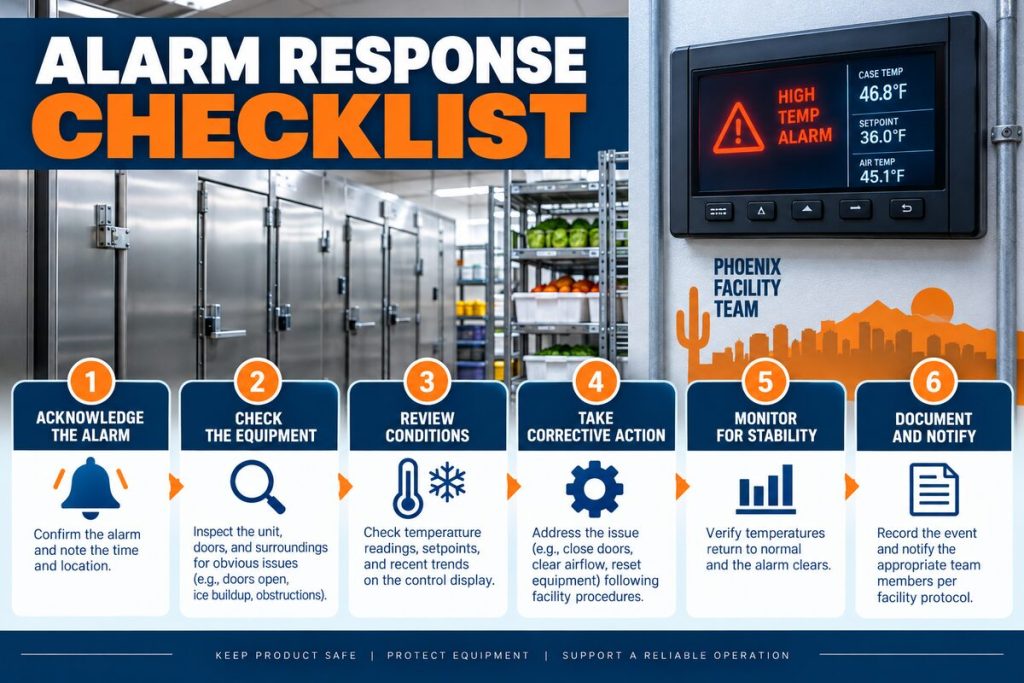
What to Do When You Find a Leak
1. Protect the inventory
Move exposed products away from dripping water without blocking airflow around the evaporator. Follow your company’s food-safety procedures for any packaging or products contacted by uncontrolled water.
2. Control the immediate floor hazard
Place warning signs or barriers around the wet area. Use appropriate floor-drying procedures without pushing water into wall seams, electrical equipment, or other inaccessible spaces.
3. Record the location and timing
Take photographs before drying the area. Record whether the water appeared after defrost, a delivery, heavy door traffic, cleaning, or a change in cooler temperature.
4. Check temperature records
Review the cooler’s displayed temperature and existing temperature log. A leak accompanied by unusual temperatures, reduced airflow, heavy frost, or a running problem should receive prompt professional attention.
5. Avoid unsafe troubleshooting
Do not remove guards, open energized panels, puncture ice, handle refrigerant components, or pour chemicals into an unknown drain. These actions can damage equipment and create safety concerns.
6. Schedule the correct service
Provide the technician with photos, temperature trends, leak timing, and any recent maintenance history. Discount AC & Refrigeration of Phoenix provides commercial refrigeration service in Phoenix for drain, defrost, airflow, door, and enclosure-related problems.
How Professional Diagnosis Separates the Causes
A refrigeration technician will normally trace the moisture path and inspect the systems that create, collect, and remove condensate. Depending on the evidence, the evaluation may include the evaporator, drain pan, drain line, airflow, fan operation, defrost sequence, controls, door alignment, gasket condition, panel seams, and floor transitions.
This whole-system approach matters because multiple conditions can exist together. For example, a leaking door can introduce excess moisture, frost can accumulate on the evaporator, and the resulting meltwater can overwhelm a partially restricted drain. Cleaning only the puddle would leave every contributing condition unchanged.
Routine condenser coil cleaning and planned refrigeration maintenance can also help technicians identify developing airflow, drainage, and operating concerns before they interrupt the business.
When the Leak Needs Prompt Service
Request professional assistance promptly when the leak is recurring, the source is unclear, or water is approaching electrical equipment. Service is also appropriate when you observe:
- Heavy frost or ice around the evaporator.
- Water dripping onto stored products.
- Weak airflow or unusual fan behavior.
- A door that will not close or seal properly.
- Rising or fluctuating cooler temperatures.
- Water emerging from wall or floor seams.
- Soft flooring, corrosion, odors, or repeated moisture damage.
- A drain pan that repeatedly overflows.
Businesses can explore our complete commercial services, including service for reach-in coolers and display cases. Additional maintenance and troubleshooting information is available in our commercial refrigeration blog.
Frequently Asked Questions
Why is my walk-in cooler leaking water underneath the evaporator?
Water beneath the evaporator may come from an overflowing drain pan, a restricted or frozen drain line, or excessive frost melting during defrost. Because these causes can overlap, the drain and defrost system should be inspected together.
Can a clogged drain cause water inside a walk-in cooler?
Yes. If the condensate drain becomes restricted, water collected by the evaporator may overflow the drain pan and enter the cooler. Debris, buildup, ice, poor drain routing, or an incorrect slope can contribute to the restriction.
Why does the leak appear after the defrost cycle?
A leak after defrost may indicate that meltwater is not leaving through the drain correctly. It can also mean that an abnormal amount of frost has accumulated and is producing more water than the drainage system can handle.
Can a damaged door gasket cause water on the floor?
Yes. A damaged or poorly fitted gasket allows warm air to enter continuously. Moisture in that air can condense or freeze inside the cooler and later collect on the floor as water.
Why is water forming around the walk-in cooler door?
Moisture near the door can result from frequent openings, a door left ajar, damaged gaskets, poor door alignment, or condensation on the frame. Frost around the frame is another sign that warm air may be entering.
Is condensation inside a walk-in cooler normal?
A small amount of temporary moisture can occur after heavy door traffic, but persistent sweating, dripping, fogging, or pooling is not something to ignore. It may indicate air infiltration, drainage, defrost, airflow, or enclosure problems.
Can I pour drain cleaner into the condensate line?
Do not pour chemicals into an unidentified or restricted cooler drain. The product may be incompatible with the equipment, contaminate surrounding areas, or fail to address ice and mechanical problems. Have the drain identified and serviced correctly.
Should I remove ice from the evaporator myself?
Do not use knives, screwdrivers, heat guns, or other improvised tools. These can damage coils, wiring, fan components, and drain pans. Heavy or recurring ice requires diagnosis of the condition causing it.
Can a leaking cooler damage the floor?
Yes. Repeated moisture can affect flooring, grout, sealant, insulation, wall bases, and nearby building materials. It can also create slip hazards and conditions that allow odors or microbial growth to develop.
What information should I give the refrigeration technician?
Provide the first visible leak location, photographs, temperature records, the time the water appeared, whether it follows defrost, the location of any frost, and information about recent cleaning, maintenance, or door problems.
Need Help With a Leaking Walk-In Cooler in Phoenix?
Discount AC & Refrigeration of Phoenix can inspect the drainage, defrost, airflow, door, and enclosure conditions contributing to the leak. Protect your inventory and address the source before recurring water damages the surrounding area.
Call (602) 889-1367