
If your relaxation lounge feels like a refrigerator while the sauna hallway runs muggy, you are facing the classic single-system problem. A multi-zone HVAC spa Phoenix setup solves it by giving every room its own independent temperature and humidity control. In this guide we explain how zoning works, which equipment fits each space, and what to budget for design, installation, and upkeep so your guests stay comfortable from the front desk to the wet rooms.
We are Discount AC & Refrigeration of Phoenix, and after years of designing climate systems for day spas, med spas, and wellness studios across the Valley, we have seen how the right zoning transforms both comfort and operating costs. Phoenix summers push outdoor temperatures past 110°F, and a spa packs hot saunas, steamy showers, cool treatment rooms, and a calm reception area under one roof. Asking a single thermostat to manage all of that is a recipe for complaints, wasted energy, and premature equipment wear. A properly engineered commercial HVAC design treats each of those areas as its own zone, so the steam room never bleeds heat into the massage suite and the lobby never feels like a meat locker.
This is the same challenge we address when we handle spa HVAC installation in Phoenix, and it is why so many owners in the Phoenix service area are moving away from one-size-fits-all rooftop units. Below, we walk through the why, the how, and the practical numbers.
Why Spas in Phoenix Need Multi-Zone HVAC
A spa is not one environment — it is six or seven micro-climates sharing a footprint. The relaxation lounge should feel cool and dry. A massage room needs to stay warm and draft-free so clients are comfortable under a sheet. The sauna corridor battles radiant heat, and the steam shower area fights constant moisture. When a single system tries to average all of that, some rooms always lose.
We see the symptoms constantly during a spa repair call in Phoenix: condensation dripping near steam rooms, a thermostat in the lobby that satisfies before the back rooms ever cool down, and energy bills that climb every July. Multi-zone HVAC fixes the root cause by separating the building into independently controlled areas. Each zone gets its own thermostat, its own airflow, and in many cases its own air handler, so comfort no longer depends on a compromise.
The payoff goes beyond guest satisfaction. Zoning lets you shut conditioning off in empty treatment rooms, which trims runtime and protects the compressor. It also keeps humidity where it belongs, reducing the mold and corrosion risk that wet spa environments invite. For a quick reference, here is how we typically target each space.
| Spa Zone / Room | Target Temp (°F) | Target Humidity (RH) | Recommended Zoning Approach |
|---|---|---|---|
| Treatment / Massage Room | 72–75°F | 40–50% | Dedicated mini-split, own thermostat |
| Relaxation Lounge | 73–75°F | 40–50% | Shared zone with fresh-air ventilation |
| Reception / Retail | 72–74°F | 40–50% | High-capacity zone, occupancy setback |
| Sauna Corridor | 75–78°F (adjacent) | Below 50% | Isolated zone + dedicated exhaust |
| Steam / Wet Shower Area | 74–76°F (adjacent) | Controlled — dehumidify | Own zone + dehumidification |
| Hydrotherapy / Tub Room | 76–78°F | Controlled — dehumidify | Moisture-rated equipment, own zone |
| Nail / Facial Studio | 72–74°F | 40–50% | Enhanced ventilation + filtration |
| Back-of-House / Laundry | 75–78°F | Exhaust priority | Modest zone, exhaust heat & moisture |
How Multi-Zone HVAC Works for Spa Environments
The phrase “multi-zone” simply means one cooling and heating system serving several independently controlled areas. There are two main ways we deliver that for spas, and we often combine them.
Ductless Mini-Splits and VRF/VRV Systems
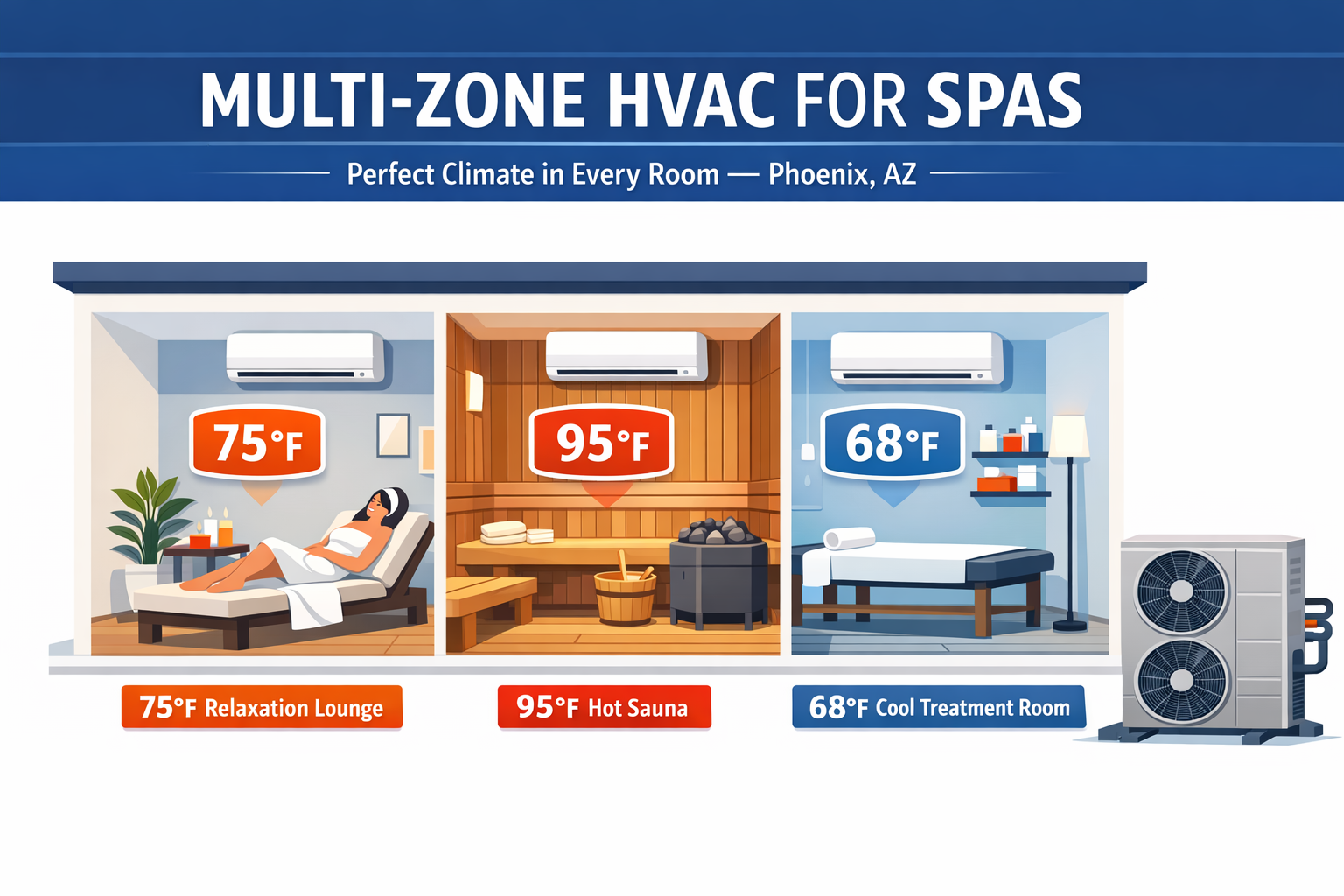
For most boutique and mid-size spas, we lean on ductless mini-split systems and their larger commercial cousins. A single outdoor condenser connects to multiple indoor air handlers, and each handler answers to its own remote or wall thermostat. That means the facial room can sit at 72°F while the lounge holds 75°F, all from one compact outdoor unit.
Larger or multi-floor spas usually call for a VRF/VRV system. Variable Refrigerant Flow technology modulates exactly how much refrigerant each zone receives, and the best units can heat one room while cooling another at the same time — ideal when a warm massage suite sits next to a cool retail floor. These inverter-driven systems sip power at part load, which matters when you run long hours in the Arizona heat. When a project needs ducted distribution instead, we still zone it with motorized dampers tied to a smart controller.
Zoning Dampers and Smart Thermostats
If your spa already has a central system and good ductwork, we can often add zoning without replacing everything. Motorized dampers open and close branches of the duct system on demand, and a zone control panel coordinates them with multiple thermostats. Pair that with modern programmable or smart thermostats and you gain scheduling, occupancy setbacks, and remote monitoring from your phone. We frequently recommend this approach during a system installation or replacement when the existing equipment still has life left but the comfort is uneven.
Whichever path fits your building, the goal is the same: deliver the right amount of conditioned air to the right room at the right time, instead of flooding the whole spa to satisfy one sensor.
Designing the Right Zones for Each Spa Room
Good zoning starts with grouping rooms that share comfort needs and usage patterns. We map your floor plan, note where heat and moisture are generated, and then draw zone boundaries that make sense for how the spa actually operates.
Treatment Rooms and Relaxation Lounges
Treatment rooms are where comfort earns repeat business. Clients lie still, often lightly covered, so we keep these zones a few degrees warmer — typically 72–75°F — with gentle, draft-free airflow. Each room ideally gets its own thermostat so a therapist can nudge the temperature for a client without affecting the room next door. Relaxation lounges, by contrast, stay cooler and benefit from steady fresh-air ventilation, which ties directly into indoor air quality upgrades like filtration and controlled outdoor air.
Saunas, Steam Rooms, and Wet Areas
Wet zones are the toughest assignment. Steam rooms and shower corridors pump out humidity that, left unchecked, condenses on cool surfaces and feeds mold. Saunas radiate intense dry heat into adjacent hallways. We isolate these areas into their own zones, add dedicated exhaust and dehumidification, and specify corrosion-resistant components. Managing moisture here is so important that we treat it as its own discipline — the same expertise we apply to water quality and med spa HVAC in Phoenix, where equipment longevity depends on controlling what is in the air and water.
Reception, Retail, and Back-of-House
The front desk, retail display, and waiting area form a high-traffic zone with doors opening to 110°F afternoons. This zone needs more cooling capacity and a smart setback schedule so you are not over-conditioning at 6 a.m. before guests arrive. Back-of-house areas — laundry, break rooms, mechanical spaces — can run on their own modest zone, and the laundry’s heat and humidity should be exhausted, not pushed into client areas. Grouping these correctly is what separates a comfortable, efficient med spa HVAC system in Phoenix, AZ from one that fights itself all day.
Humidity, Air Quality, and Equipment Protection
In a desert climate it is easy to forget about humidity, but inside a spa, moisture is everywhere. Steam, hot towels, hydrotherapy tubs, and showers raise indoor relative humidity well above the comfortable 40–50% range. Excess moisture does three bad things: it makes guests feel clammy, it accelerates corrosion on coils and fasteners, and it invites mold behind walls and inside ducts.
Multi-zone design lets us attack humidity room by room rather than for the whole building at once. We add dedicated dehumidification to wet zones, balance exhaust so damp air leaves before it migrates, and select coils and cabinets built to handle moisture. Strong filtration and fresh-air management keep the breathing air clean, which is essential in a setting built around wellness. These same principles guide our preventive maintenance programs, where we catch moisture problems before they become expensive repairs. When a zone does fail, having independent systems means the rest of your spa keeps running while we handle the fix — and our 24/7 emergency service covers the cases that cannot wait.
Installation, Sizing, and What to Expect in Phoenix
A multi-zone system is only as good as its design. Oversized equipment short-cycles and never removes enough humidity; undersized equipment runs constantly and still loses to the heat. Getting it right takes real load calculations, not guesswork.
Load Calculations and Right-Sizing
Before we quote anything, our technicians perform a Manual J–style load calculation for each zone, accounting for square footage, ceiling height, glass, insulation, occupancy, and the heat and moisture each room generates. A steam suite and a retail floor of the same size need very different capacity. This engineering step is where experience pays off — we have sized systems for spas of every layout, and we bring that knowledge to every commercial AC installation we perform. For owners weighing options, we also explain how zoning compares to traditional rooftop unit setups and where each makes sense.
Maintenance That Keeps Every Zone Comfortable
Zoned systems have more components — multiple air handlers, dampers, and controls — so seasonal upkeep matters. We clean coils, check refrigerant charge, test dampers, calibrate thermostats, and verify each zone hits its target before peak season. Enrolling in a maintenance program keeps the whole system tuned and extends equipment life, which protects the investment you made up front. If something does drift out of range, our AC repair and diagnostics team isolates the issue to the affected zone instead of tearing into the entire building. We follow a detailed routine, much of which lives in our spa HVAC maintenance checklist for Phoenix.
Our technicians train continuously and hold industry certifications, and we believe in transparent recommendations — you will always know why a piece of equipment is specified and what it does. You can read more about our technician training and our team and experience, or browse customer feedback and projects on our blog. Whether you run a single-room studio or a multi-floor wellness center, the same standards apply across our full range of commercial services.
Frequently Asked Questions — Multi-Zone HVAC for Phoenix Spas
How much does a multi-zone HVAC system for a Phoenix spa cost? +
Cost depends on the number of zones, the equipment you choose, and your building’s layout. A small studio with two or three ductless zones costs far less than a multi-floor med spa on a VRF system. Because pricing varies so much, we always start with a free on-site assessment and a per-zone load calculation, then give you a transparent, itemized quote with no inflated add-ons.
What is the difference between a mini-split and a VRF system? +
Both connect multiple indoor units to outdoor equipment, but a VRF/VRV system modulates refrigerant flow more precisely and can heat one zone while cooling another simultaneously. Mini-splits are ideal for boutique and mid-size spas; VRF suits larger or multi-floor facilities. We recommend the right fit after reviewing your floor plan and usage.
Can I add zoning to my spa’s existing HVAC system? +
Often, yes. If your central system and ductwork are in good shape, we can add motorized dampers, a zone control panel, and multiple smart thermostats to create independent zones without replacing the whole system. We evaluate the existing equipment first to confirm it has enough capacity and life left to justify the upgrade.
How do you control humidity in spa wet areas? +
We isolate steam rooms, showers, and hydrotherapy areas into their own zones with dedicated exhaust and dehumidification, and we specify moisture-rated coils and cabinets. This keeps damp air from migrating into treatment rooms, protects equipment from corrosion, and prevents mold — a key part of every spa system we design.
Does a multi-zone system really save energy in Phoenix? +
Yes. Because you condition only the rooms in use and inverter-driven systems run efficiently at part load, zoning typically lowers runtime and energy use compared with a single system that floods the whole building. Occupancy setbacks for empty treatment rooms and the lobby add further savings during long Arizona cooling seasons.
How often should a zoned spa HVAC system be serviced? +
We recommend professional maintenance at least twice a year, ideally before the cooling and heating seasons. Zoned systems have more components — air handlers, dampers, and controls — so regular tune-ups keep every zone accurate and extend equipment life. A maintenance program is the easiest way to stay ahead of issues in Phoenix’s demanding climate.
Bring Balanced Comfort to Your Phoenix Spa Today
Your guests notice the difference between a spa that feels effortlessly comfortable and one where every room is a gamble. A well-designed multi-zone HVAC spa Phoenix system removes that gamble, giving each treatment room, lounge, and wet area its own perfect climate while keeping energy use in check. We have built our reputation across the Valley by engineering these systems room by room, backing them with certified technicians and honest guidance — never inflated promises. If uneven temperatures, lingering humidity, or rising bills sound familiar, those problems are entirely solvable.
If you are also weighing whether to repair or upgrade existing equipment, our guide to spa HVAC installation in Phoenix is a useful next read. When you are ready, our team is here to help across every service area we cover, including Phoenix and the surrounding cities.
Call Discount AC & Refrigeration of Phoenix at (602) 889-1367 to schedule a zoning assessment, or contact us online for a free consultation. You can also find us and read reviews on our Google Maps listing — stop by, leave a review, or get directions to our local listing here. Let us design the perfect climate for every room in your spa.