

Reviewed for commercial refrigeration service planning in Phoenix, Arizona.
Walk in cooler preventive maintenance is more than a quick visual check or a coil rinse. A useful service visit evaluates how the refrigeration system rejects heat, moves air, seals the refrigerated space, drains moisture, responds to controls, and records operating conditions. For Phoenix businesses, this scope matters because desert heat, airborne dust, kitchen grease, frequent deliveries, and long operating hours can expose small weaknesses before they become temperature problems.
This guide explains what a professional maintenance visit should include, what documentation a business should receive, and which observations employees can safely make between appointments. It does not replace model-specific service procedures or qualified electrical and refrigerant work.

What Should Walk-In Cooler Preventive Maintenance Cover?
| Inspection area | What the technician evaluates | Why it matters |
|---|---|---|
| Condenser and evaporator coils | Cleanliness, damage, airflow, frost and heat-transfer conditions | Restricted heat transfer can reduce capacity and increase operating stress |
| Fans and motors | Rotation, sound, vibration, guards, mounting and air delivery | Weak airflow can create uneven temperatures and coil icing |
| Doors, gaskets and hardware | Seal contact, alignment, closer action, hinges and sweeps | Warm-air infiltration adds moisture and refrigeration load |
| Drains and condensate | Flow path, pan condition, blockages, leaks and refreezing | Drain problems can cause water, ice and floor hazards |
| Controls and electrical | Temperature inputs, alarms, contactors, connections and protection | Control or electrical faults may imitate mechanical failures |
| Refrigerant indicators and records | Operating data, oil traces, patterns, service history and recommendations | Trend information supports diagnosis before a failure |
1. Establish the Cooler’s Operating Baseline
A productive visit begins with context. The technician should ask about the equipment’s normal setpoint, recorded product and air temperatures, recent alarms, door traffic, delivery schedules, unusual sounds, frost, water, and prior repairs. A snapshot taken without this history can miss an intermittent condition.
Technicians may compare the display with an independent temperature measurement and review the difference between setpoint, return-air temperature, supply-air temperature, and actual product temperature. Our guide to walk-in cooler temperature fluctuations explains why a single display reading does not tell the entire story.
2. Inspect and Service the Condenser Side
The condenser must release heat removed from the cooler plus heat created by the refrigeration process. Dust, grease, packaging material, bent fins, blocked clearances, or a struggling condenser fan can reduce that ability. In Phoenix, outdoor and semi-outdoor equipment can accumulate debris quickly, especially during windy periods and heavy summer operation.
Maintenance should examine coil condition, airflow path, fan operation, mounting, vibration, and the condition of surrounding panels. Cleaning must match the coil construction and manufacturer guidance. Excess pressure, harsh chemicals, or careless brushing can damage fins and electrical components. See our detailed explanation of walk-in cooler condenser coil cleaning.
3. Evaluate the Evaporator Coil and Airflow
Inside the box, the evaporator absorbs heat while fans distribute cooled air. The visit should check the coil face, frost pattern, fan blades, guards, motors, housings, drain pan, and airflow obstructions. Product should not block supply or return paths, and damaged packaging should not be able to contact a fan guard.
Heavy frost is not automatically a defrost-control failure. It may relate to warm-air infiltration, weak fan performance, drainage, sensor placement, or refrigeration conditions. Our walk-in cooler icing guide maps ice location to possible system areas, while the evaporator fan guide explains common airflow symptoms.
4. Check Gaskets, Hinges, Closers and Sweeps
The door is part of the refrigeration system. A gasket may look intact yet fail to contact evenly because the door is out of alignment, a hinge is worn, the closer is weak, the threshold is damaged, or the sweep does not meet the floor. Technicians should inspect the full perimeter rather than replacing a gasket based on one loose area.
Condensation, frost near the frame, light visible through the opening, or a door that rebounds can point to infiltration. The visit should document whether cleaning, adjustment, hardware repair, or gasket replacement is appropriate. For seal-specific information, review walk-in cooler door gasket replacement.
5. Inspect Drains, Pans and Moisture Patterns
Meltwater and condensate need a clear route away from the evaporator. Maintenance should evaluate the drain pan, line, trap or termination where applicable, insulation, pitch, signs of biological buildup, and evidence of refreezing. Water can also come from door infiltration, melting coil ice, plumbing above the box, or panel deterioration, so clearing a drain is not always the complete answer.
If water is already present, our guide to a walk-in cooler leaking water helps distinguish common patterns. Employees should keep people away from slippery areas and protect inventory according to the facility’s food-safety plan.
6. Review Controls, Sensors and Defrost Operation
A maintenance visit should compare control readings with verified measurements, inspect sensor placement and attachment, review alarm or event history, and assess the defrost sequence when the system uses one. Repeatedly changing the setpoint can hide useful evidence and may make performance harder to interpret.
Control evaluation should consider the thermostat or electronic controller, sensor condition, programmed differential, defrost timing, termination, fan delay, and the manufacturer’s sequence of operation. Learn more in our guide to walk-in cooler thermostat problems.
7. Perform Qualified Electrical Checks
Commercial refrigeration relies on disconnects, breakers, contactors, relays, fan motors, heaters, controllers, compressor components, wiring, and safety devices. A qualified technician may inspect for heat discoloration, loose or damaged connections, abnormal current, failing contacts, improper protection, and evidence of moisture or vibration.
Do not open electrical enclosures, tighten energized terminals, bypass safeties, or reset a repeatedly tripping breaker. Electrical tests and corrections require proper training, instruments, personal protective equipment, and lockout procedures.
8. Look for Refrigerant-System Indicators
Preventive maintenance can identify evidence that justifies deeper sealed-system diagnosis: loss of cooling capacity, abnormal temperature split, unusual frost distribution, extended run time, oil residue near a joint, or operating data outside expected conditions. These indicators do not prove the system simply needs refrigerant.
Refrigerant does not get consumed like fuel. If charge is low, a technician should determine why, locate and repair the leak when feasible, follow recovery and evacuation requirements, and charge according to equipment specifications. Review the company’s commercial refrigeration services and walk-in cooler and freezer services for professional support.
9. Document Findings and Priorities
The business should receive a readable service record. It may include equipment identification, measured temperatures, notable operating data, coil and drain condition, door findings, electrical observations, refrigerant indicators, work completed, photographs, unresolved concerns, and recommended follow-up. Documentation lets managers compare visits instead of starting from zero each time.
Recommendations should separate immediate safety or temperature risks from corrective repairs and longer-term planning. A record of recurring symptoms is especially useful when evaluating compressor concerns; our walk-in cooler compressor repair guide explains why diagnosis should come before replacement.
Safe Between-Visit Checklist for Staff
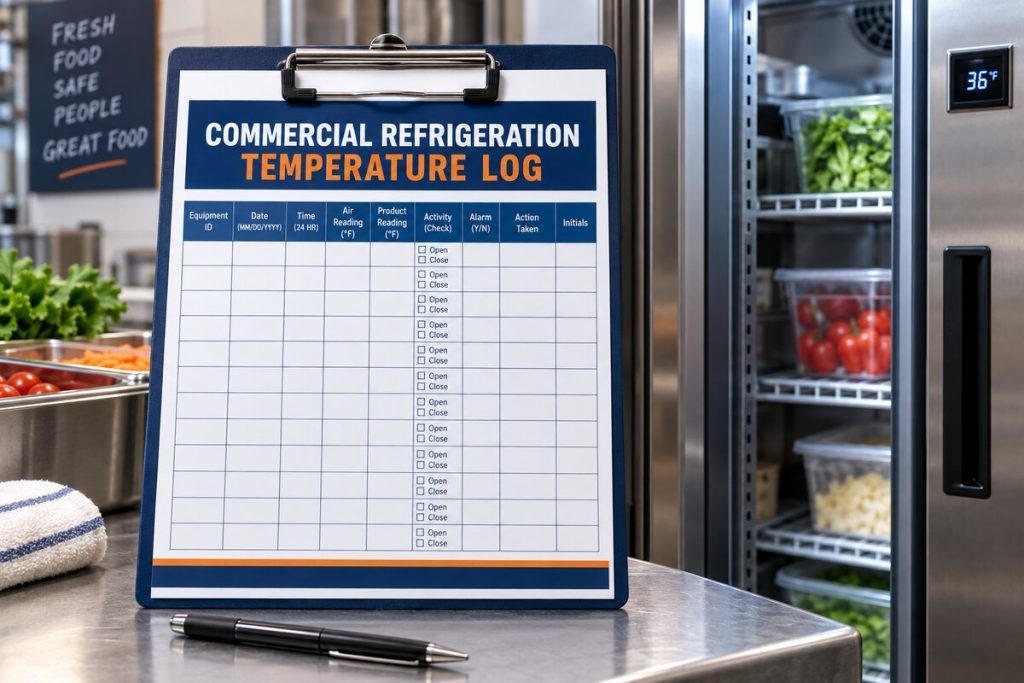
- Record the displayed temperature at consistent times and note unusual changes.
- Confirm the door closes without cartons, floor mats, or ice blocking it.
- Keep product clear of marked air paths and evaporator discharge.
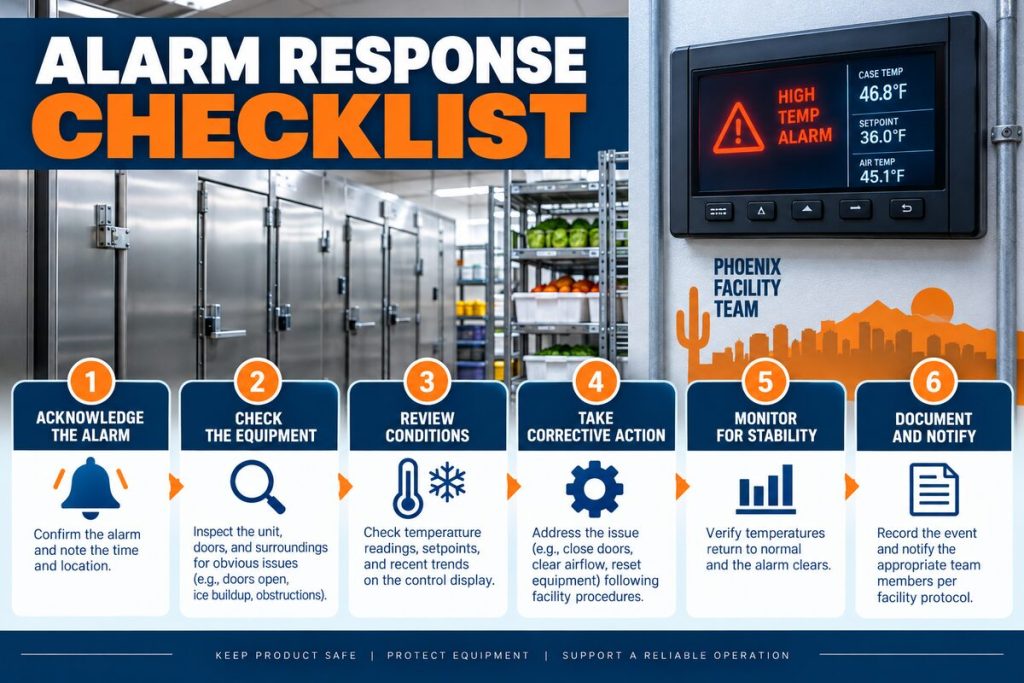
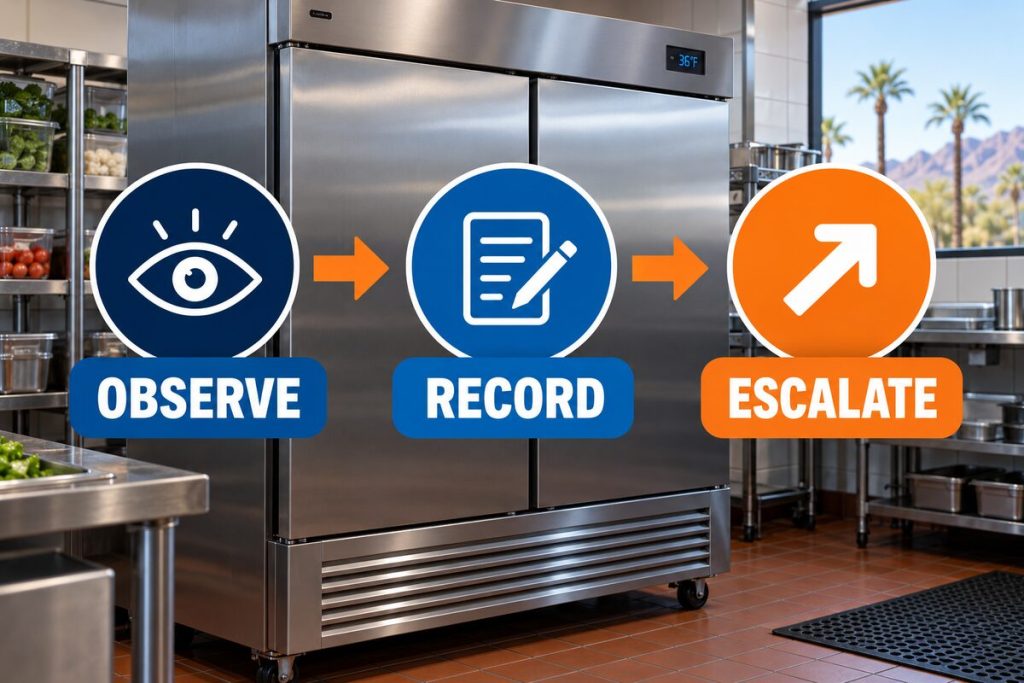
- Report new sounds, water, frost, odors, alarms, or extended run time.
- Keep the area around the condensing unit free of stored items without removing panels.
- Preserve service reports and record deliveries or operational changes.
- Follow the facility’s inventory and food-safety procedures whenever temperature is uncertain.
Staff observations complement—not replace—professional service. If the cooler is not maintaining temperature, use our safe walk-in cooler troubleshooting guide and contact a qualified refrigeration provider.
Schedule Walk-In Cooler Preventive Maintenance in Phoenix
Discount AC & Refrigeration of Phoenix can inspect the coils, fans, doors, drainage, controls, electrical components, and refrigeration indicators that affect commercial cooler performance. We provide clear findings so your team understands what was checked and what requires follow-up.
Frequently Asked Questions
What is included in walk in cooler preventive maintenance?
A thorough visit commonly includes operating-history review, coils, fans, doors, gaskets, drains, controls, qualified electrical checks, refrigerant-system indicators, temperatures, and written documentation.
How often should a walk-in cooler be serviced?
The appropriate interval depends on equipment design, location, operating hours, door traffic, dust, grease exposure, and manufacturer requirements. A technician can recommend a schedule after evaluating the site.
Does maintenance include adding refrigerant?
Not automatically. Refrigerant should be added only when measurements and the manufacturer’s charging method justify it. A low charge requires leak investigation rather than repeated topping off.
Should the technician clean both coils?
Both condenser and evaporator conditions should be assessed. Cleaning method and necessity depend on accessibility, contamination, coil construction, and manufacturer guidance.
Why should doors be part of refrigeration maintenance?
A poor seal introduces warm, humid air. That increases load and may contribute to condensation, frost, longer run time, and uneven temperatures.
Can employees perform electrical checks?
No. Employees can report visible or audible symptoms, but energized testing, enclosure access, wiring work, and safety-control diagnosis require qualified personnel.
What records should a service company provide?
Useful records identify the equipment, work completed, measured conditions, observed defects, photographs when appropriate, recommendations, and items requiring follow-up.
Will preventive maintenance guarantee no breakdowns?
No maintenance program can eliminate every failure. Its value is identifying developing problems, supporting consistent operation, and creating a documented service history.
Does Phoenix weather affect maintenance needs?
High ambient temperatures, airborne dust, and demanding summer operation can increase condenser loading and make airflow condition especially important.
When should a maintenance visit become a repair call?
If testing finds unsafe electrical conditions, active leakage, failing components, uncontrolled icing, water hazards, or inability to maintain required temperature, corrective service should be discussed promptly.
Plan Maintenance Around the Whole System
Walk in cooler preventive maintenance should connect visible condition, measured performance, operating history, and clear documentation. The goal is not to check boxes; it is to understand how the cooler is operating and identify conditions that deserve attention before they disrupt the business. Phoenix-area operators can review our commercial refrigeration blog or contact Discount AC & Refrigeration of Phoenix to plan a service visit.